Harry Margulies explores whether Mars colonisation could become a one-way trip as settlers adapt to the Red Planet's low gravity and what that means for humanity's future.
There's something about Mars that grabs hold of the imagination. It's the closest thing we have to a second chance, a blank canvas for humanity's next big leap. But as Harry Margulies points out in his fascinating exploration, that leap might come with a catch you don't hear about in the glossy mission brochures: you might never be able to come back.
It's not about the rocket fuel or the launch window. The real issue is what the Red Planet's low gravity does to the human body over time. And once you understand that, the whole dream of a Martian colony starts to look less like a vacation home and more like a permanent relocation.
### The Gravity Gap
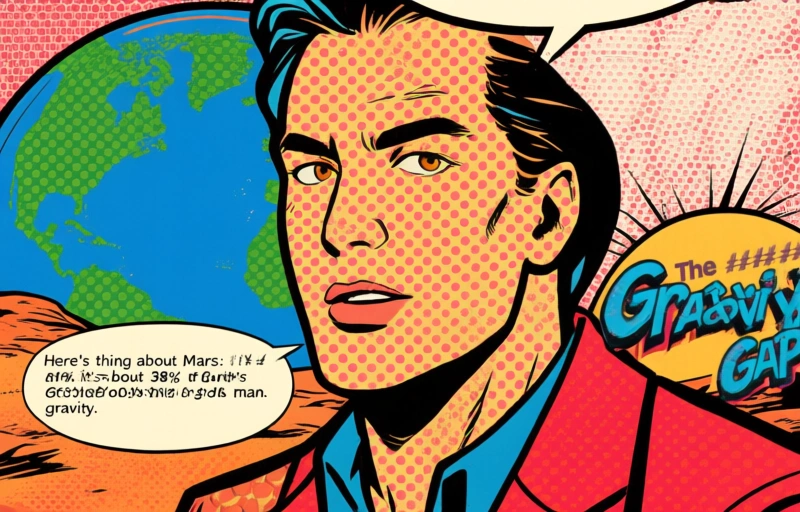
Here's the thing about Mars: it's about 38% of Earth's gravity. That sounds manageable in theory, but our bodies evolved over millions of years to function in Earth's 1G environment. Your bones, muscles, heart, and even your eyes are all calibrated to that specific pull. When you drop to a third of that, things start to change.
Astronauts on the International Space Station deal with zero gravity, and we've seen what that does. Bone density loss, muscle atrophy, and vision problems are all common after just six months. Mars has a bit more gravity than zero, sure, but not enough to keep your body from slowly degrading.
### The One-Way Ticket Reality
Here's where it gets uncomfortable. After a year or two on Mars, your body would start to adapt to the low gravity. Your bones would lose density, your muscles would shrink, and your cardiovascular system would adjust to a lighter workload. That's fine if you plan to stay forever. But if you ever wanted to come back to Earth, you'd be in serious trouble.
- Your weakened bones might not survive re-entry and landing forces
- Your muscles couldn't handle the sudden return to 1G
- Your heart would struggle to pump blood against Earth's gravity
- Your balance and coordination would be permanently altered
It's what scientists call a one-way trip, not because of the rocket, but because of biology.

### What This Means for Colonists
So what does this mean for the people who actually volunteer for this? It means Mars isn't a mission. It's a migration. The first settlers aren't explorers who'll come back with stories. They're the founding population of a new branch of humanity, one that's physically different from us.
Margulies' exploration doesn't shy away from this uncomfortable truth. He frames it as a trade-off: you gain a new world, but you lose the ability to ever truly come home. That's a heavy price, and it's one that every potential colonist needs to understand before they sign up.
### The Ethical Question
There's also a bigger question lurking here. Is it ethical to send people on a trip where they can never return? Even if they volunteer, even if they understand the risks, we're talking about essentially exiling people from their home planet. That's a profound decision, and it deserves more than just a quick checkbox on an application form.
Some argue that it's no different from the first European settlers crossing the Atlantic. They knew they'd never see their homelands again. But there's a key difference: those settlers could still breathe the air and walk on solid ground. Martian colonists will live in artificial habitats, wearing suits to go outside, and dealing with radiation levels that would give an oncologist nightmares.
### The Bottom Line
Mars is humanity's greatest adventure, no doubt about it. But it's also a one-way trip in ways we're only beginning to understand. The low gravity isn't just a minor inconvenience. It's a fundamental change to what it means to be human.
So before you start packing your bags for the Red Planet, ask yourself: are you ready to say goodbye to Earth forever? Because once you're there, your body will make that decision for you.
Margulies' piece is a sobering reminder that the biggest challenge of Mars isn't the journey. It's the fact that the destination changes you in ways you can't reverse.