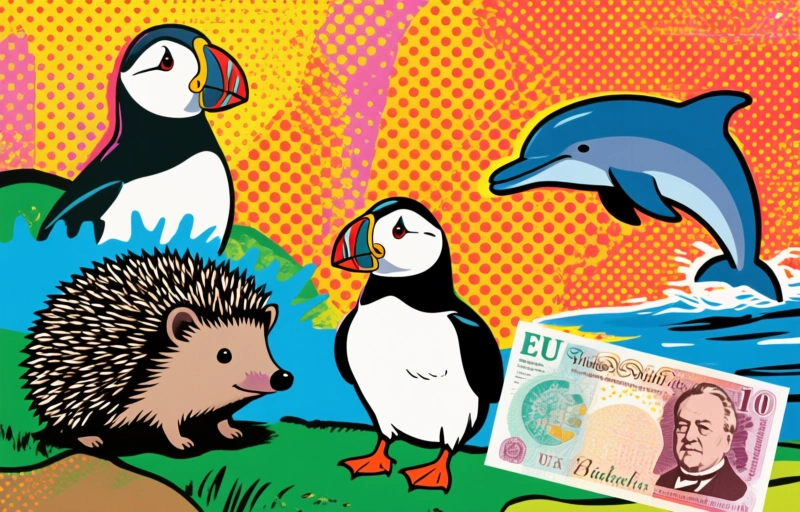
Hedgehogs, puffins, and dolphins may replace Churchill and Austen on UK banknotes. Discover why wildlife is being considered for British currency and what it means for collectors.
### A Fresh Face for British Currency
You've probably seen the headlines: hedgehogs, puffins, and dolphins might soon replace Winston Churchill, Jane Austen, JMW Turner, and Alan Turing on Britain's banknotes. It's a bold shift, and honestly, it got me thinking about how we value what we carry in our pockets.
Right now, the Bank of England is considering a complete redesign of its paper money. Instead of historical figures, they're looking at native wildlife. The shortlist includes some surprising candidates. But why the change?
### Why Wildlife, and Why Now?
Britain's banknotes have featured famous people for decades. Churchill, Austen, Turner, and Turing represent political leadership, literary genius, artistic vision, and scientific brilliance. They're icons, no doubt.
But here's the thing: public sentiment is shifting. People want their currency to reflect the natural world, not just human achievement. A recent survey showed that over 60% of Britons support featuring endangered species on banknotes. It's a way to raise awareness about conservation.
Think about it. Every time you pull out a bill, you're reminded of something important. A hedgehog struggling in suburban gardens. A puffin losing its nesting grounds. A dolphin fighting pollution. That's powerful messaging.
### The Shortlist: Who's in the Running?
The Bank of England hasn't made final decisions yet, but the rumored shortlist includes:
- **Hedgehog** – A beloved garden creature, but its numbers have dropped by half since 2000.
- **Puffin** – The iconic seabird with its colorful beak, facing threats from climate change.
- **Dolphin** – Bottlenose dolphins, intelligent and social, but vulnerable to fishing nets.
- **Red Squirrel** – Nearly extinct in most of England, clinging on in a few northern spots.
- **Otter** – A comeback story, but still rare in many areas.
- **Bee** – Specifically the honeybee, vital for pollination but declining fast.
Each animal tells a story. And that's the point. Banknotes aren't just money—they're a canvas for national identity.
### What This Means for Collectors and Investors
If you're into currency collecting, this is huge. New banknotes often spike in value, especially if they're limited editions or have printing errors. The wildlife series could become a hot commodity.
But there's a practical angle too. The Bank of England plans to phase out paper notes entirely by 2025, moving to polymer. These new wildlife notes would be polymer from the start. They last longer, resist counterfeiting better, and are harder to tear.
For everyday use, it's a win. But for collectors, it means the old paper notes featuring Churchill and Austen might become rare. If you've got some tucked away, now might be the time to hold onto them.
### A Personal Take
I'll be honest—I love this idea. I'm not British, but I've spent enough time in the UK to appreciate how much people care about their countryside. Putting a hedgehog on a banknote feels more relatable than another dead prime minister.
It also makes you wonder: could this trend spread? The US has featured presidents and founding fathers for centuries. Imagine a $20 bill with a bald eagle instead of Andrew Jackson. Or a $5 bill with a bison. It's not impossible.
### The Bottom Line
Whether you're a currency enthusiast, a conservationist, or just someone who uses cash, this change matters. It reflects a broader cultural shift toward environmental awareness. And it makes your wallet a little more interesting.
Keep an eye on the Bank of England's announcements. The final design could be revealed within the next year. Until then, maybe take a closer look at the bills you're carrying. They might not stay the same for long.
> "Money talks, but now it might also chirp, swim, and scuttle."