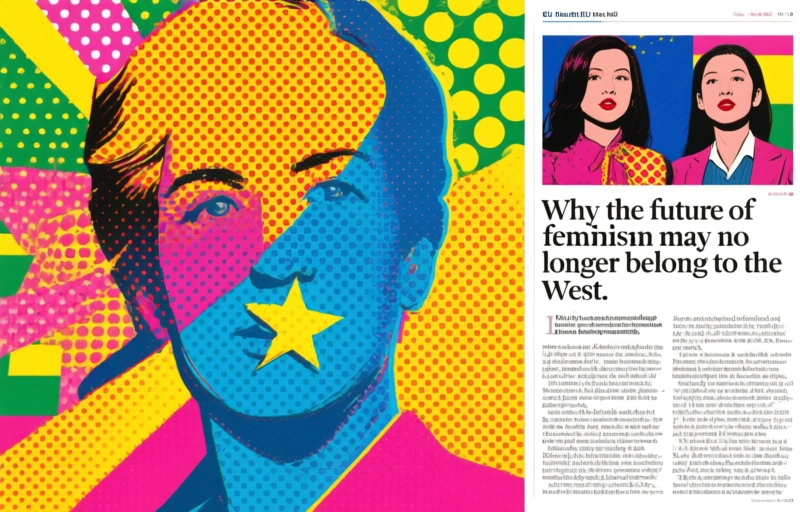
From Vietnam to India, Asian societies are reshaping feminism as Western gender politics becomes polarized. This shift offers lessons in adaptation and local solutions for equality.
From Vietnam to India, Asian societies are reshaping feminism as Western gender politics becomes increasingly polarized and contested. This shift isn't just a trend—it's a fundamental rethinking of what equality means, rooted in local cultures and practical needs rather than imported ideologies.
### The Western model under pressure
In the United States and Europe, feminism has become a lightning rod for culture wars. Debates over identity, representation, and institutional power often dominate headlines, but they can feel disconnected from everyday struggles like equal pay, childcare access, or safety on the streets. Many women in the West are tired of the infighting and the feeling that their concerns get lost in abstract arguments.
This polarization has created an opening for alternative approaches. In Asia, feminist movements are emerging that don't just copy Western playbooks. They're building something new, blending local traditions with modern demands. Think of it like this: if Western feminism is a noisy debate in a crowded room, Asian feminism is a quieter, more practical conversation happening over tea. Both have value, but they're speaking different languages.

### What's happening in Asia?
Countries like Vietnam and India offer compelling examples. In Vietnam, women are leading grassroots initiatives that focus on economic empowerment—think small business cooperatives and microfinance networks. These efforts don't just talk about equality; they create it by giving women the tools to support their families and communities. It's feminism built on action, not just words.
In India, movements have taken on issues like workplace harassment and dowry practices, but they often do so through local institutions like village councils or religious groups. This approach can be messy and imperfect, but it's rooted in real-life challenges. For example, a woman in rural India might prioritize getting her daughter into school over attending a protest in a city. That's not less feminist—it's just a different kind of fight.
### Why this matters for the West
This shift has implications beyond Asia. For American professionals watching EU Inc news or considering startup incorporation in Europe, the lesson is clear: one-size-fits-all solutions rarely work. Just as Asian feminists are adapting global ideas to local contexts, European entrepreneurs need to tailor their strategies to specific markets.
Consider the EU Inc proposal, which aims to simplify cross-border business incorporation. It's a great idea on paper, but success depends on understanding how different countries actually work. A German startup might need to navigate strict labor laws, while a Spanish one focuses on tax incentives. The same principle applies to feminism: universal goals like equality need local execution.
- **Practical takeaways:**
- Learn from Asian approaches: focus on tangible outcomes, not just ideology.
- Adapt global strategies to local realities.
- Avoid the trap of polarization—find common ground.
### A new kind of feminism
The future of feminism may not be about who leads the conversation, but about how many different conversations can happen at once. Asian societies are showing that equality can look different depending on where you stand. That's not a threat to Western feminism—it's an evolution.
For professionals in the United States, this is a reminder to stay open. Whether you're following EU Inc news or thinking about startup incorporation in Europe, the best solutions come from listening to diverse voices. Feminism, like business, thrives on adaptation.