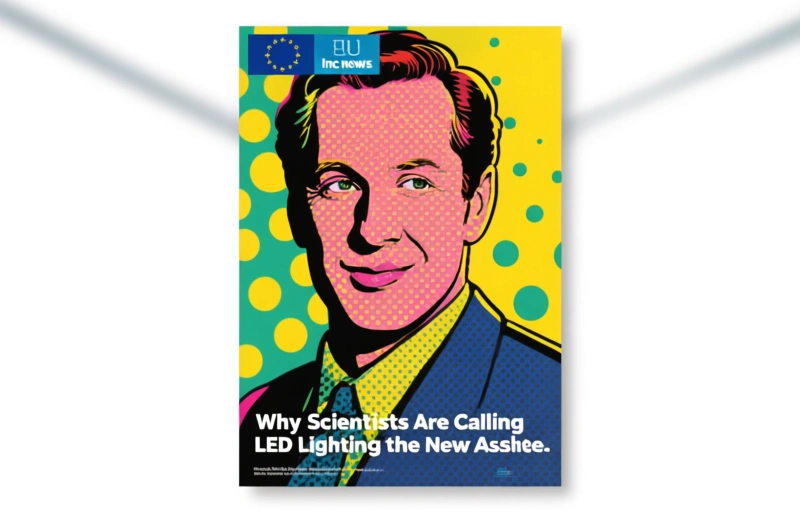
Steve McCauley examines UCL research suggesting LED lighting may disrupt mitochondrial function and create an overlooked public health concern.
### The Hidden Risk in Your Lightbulbs
You probably don't think twice about the lights in your home or office. They're efficient, they're bright, and they're everywhere. But new research from University College London (UCL) is raising a troubling question: could our beloved LED bulbs be quietly damaging our health?
Steve McCauley recently examined this research, and his findings are enough to make you pause before flipping that switch. The concern isn't about the obvious things like eye strain or sleep disruption. It's something far deeper, happening at a cellular level.
### What the UCL Researchers Actually Found
The UCL team's work suggests that LED lighting may interfere with mitochondrial function. Your mitochondria are the powerhouses of your cells, responsible for producing the energy your body needs to function. When they're disrupted, the effects can ripple through your entire system.
The researchers drew a startling comparison: they're calling LED lighting "the new asbestos." That's a heavy label. Asbestos was once everywhere, praised for its fire resistance and durability, until we realized it was causing devastating health problems. The parallel here is that we've adopted LED lighting at massive scale, without fully understanding the long-term consequences.
### Why This Matters for Your Everyday Life
Here's what makes this research so relevant: LED lights aren't just in your ceiling fixtures. They're in your phone screen, your laptop, your television, your car headlights, and even the strip lights under your kitchen cabinets. We're exposed to them virtually every waking moment.
If mitochondrial disruption is real, the potential implications are broad. Mitochondrial dysfunction has been linked to a range of health issues, including:
- Chronic fatigue and low energy levels
- Cognitive decline and brain fog
- Metabolic disorders
- Accelerated aging processes
Now, it's important to note that this research is still emerging. Scientists aren't saying you need to throw out every LED bulb today. But they are saying we need to take a closer look before we continue down this path.
### The Blue Light Problem
Part of the concern centers on blue light. LEDs emit a significant amount of blue wavelength light, which is known to suppress melatonin production. That's why experts have long warned against staring at screens before bedtime. But the UCL research suggests the issue may go beyond just sleep disruption.
There's also the question of flicker. Many LED bulbs have subtle flicker rates that are invisible to the naked eye but may still affect sensitive individuals. Some people report headaches, eye strain, and even migraines when working under certain LED lighting conditions.
### What Should You Do About It?
If you're feeling a bit anxious right now, that's understandable. But let's keep things in perspective. The research is important, but it's not a reason to panic. Here are some practical steps you can consider:
- **Choose warm white LEDs** over cool white or daylight varieties. They emit less blue light.
- **Use dimmers** to reduce light intensity, especially in the evening hours.
- **Take screen breaks** throughout the day to give your eyes and your mitochondria a rest.
- **Maximize natural light** during daytime hours to reduce your overall LED exposure.
### The Bigger Conversation
This research opens up a much larger conversation about how we adopt new technologies. We often embrace innovation for its immediate benefits, efficiency, cost savings, and convenience, without fully understanding the long-term trade-offs.
The asbestos comparison is a powerful reminder of that lesson. It took decades for the full health impact of asbestos to become clear, and by then, millions of people had already been exposed. The UCL researchers are hoping we don't repeat that pattern with LED lighting.
### Looking Ahead
More research is needed to confirm these findings and understand the scope of the problem. In the meantime, the best approach is informed caution. Stay curious, stay aware, and make choices that feel right for your health.
After all, the lights we use today will shape the health we experience tomorrow. And that's a thought worth sitting with, even if it means turning off a few of those LEDs along the way.