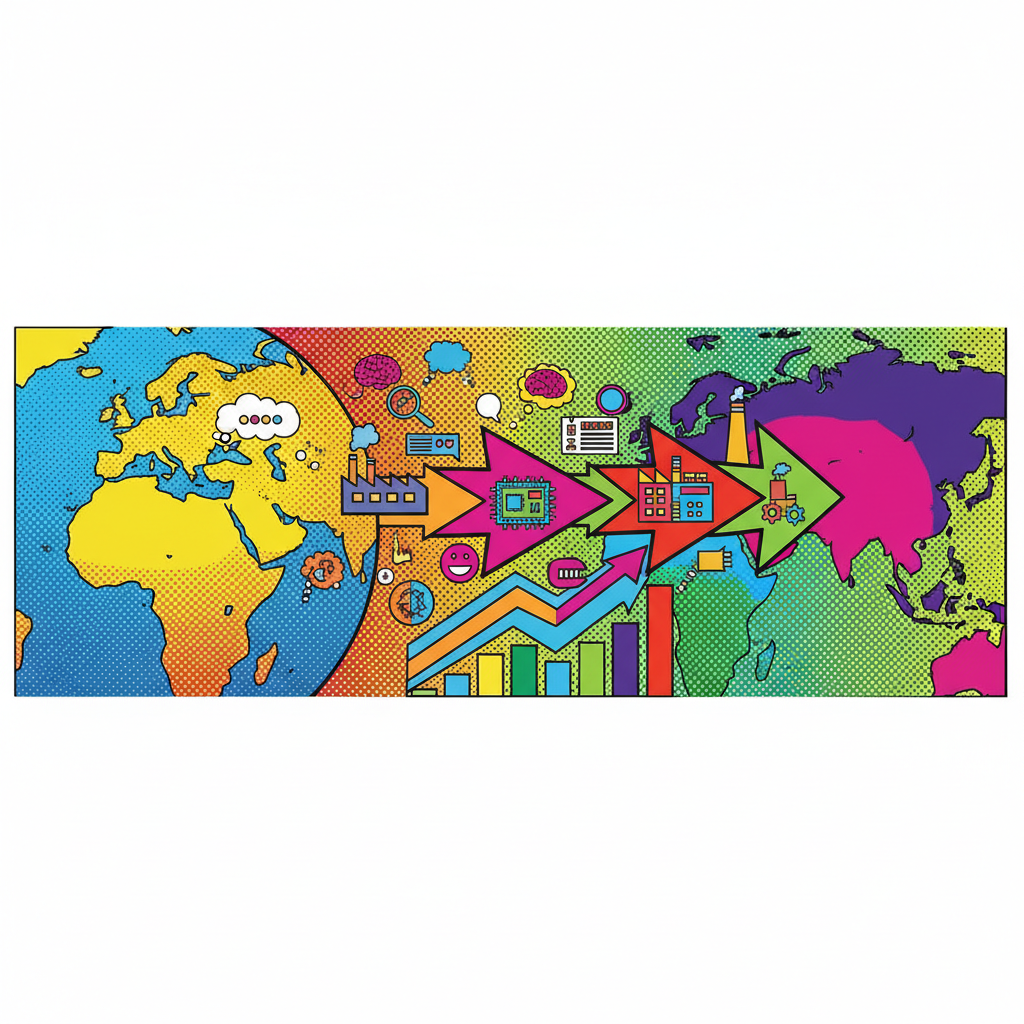
Western European companies are moving factories east, and now R&D and engineering teams are following. Here's why the split model is unsustainable and what it means for the future of innovation.
You've probably noticed the headlines: Western European companies are moving their factories east. But here's the thing nobody's talking about enough. This shift doesn't just change where products are built. It's quietly pulling the brains of those companies along with it.
Let's start with what's happening on the ground. BMW just opened a massive new plant in Hungary in late 2025. It's their most innovative factory yet, designed to run entirely without fossil fuels. Meanwhile, they're scaling back production in Germany. Bosch is doing something similar. They're shrinking their German manufacturing footprint while expanding in Poland. This isn't a small trend. It's becoming the standard playbook.
### Why Companies Are Making the Move
So why are they doing this? It's not just about cheaper labor anymore. The reasons are more practical than you might think.
- **Regulatory pressure** in Western Europe keeps getting heavier. Every year, there are more rules, more paperwork, and longer approval cycles.
- **Administrative burdens** make even simple changes a headache. You want to tweak a production line? Good luck getting that approved quickly.
- **Eastern Europe offers fewer barriers.** Lower operational costs, yes, but also a more flexible attitude toward industrial development.
Here's the real kicker: quality isn't the problem it used to be. Ten or fifteen years ago, you'd worry about standards slipping. Not anymore. Suppliers, operators, and local infrastructure have caught up in a big way. Companies can now get the same quality with less friction. That combination is what's really driving the shift.
### The Split That Nobody Wants
But here's where it gets tricky. Even though production has moved east, most of the "brain" of these companies is still in Western Europe. Headquarters stay put. R&D centers, engineering teams, and product design departments stay near corporate offices. They're tied to the universities, networks, and ecosystems that built the company's advantage in the first place.
So you end up with a split model. Production happens hundreds of miles away, while engineers and designers stay in the West. They try to bridge the gap with messages, reports, and video calls. But it's not the same as being on the factory floor. Decisions get delayed. Small problems turn into bigger ones. Solving them takes way longer than it would if everyone was in the same place.
Right now, companies are managing with this setup. But the strain between where things are built and where they're designed is getting harder to ignore.
### Why This Separation Is Unsustainable
Let me paint you a picture. An engineer in Germany designs a component. It meets all the specs on paper. But when it hits the assembly line in Poland, it causes headaches. Workers create unofficial fixes on the spot. The engineer doesn't find out for weeks. By then, timelines are already slipping.
This separation makes quick improvements almost impossible. If a design change is needed, the engineer has to wait for feedback. Production either pauses or adapts without full guidance. Costs go up. Timelines stretch. And sometimes, mistakes just keep repeating because nobody can see the situation in real life.
> "Being physically close to the manufacturing process allows engineers to test, adjust, and refine in real time. Being far from the factory means little problems build up over time."
That's the core problem. When you're hundreds of miles apart, you lose the ability to iterate fast. And for complex products, that's a huge disadvantage.
### What This Means for the Future
So here's the big question: if production keeps moving east, how long before R&D and engineering follow? It's already starting to happen. Companies are realizing that the split model has real costs. Not just in dollars, but in time, quality, and innovation.
Some are opening small engineering outposts near their factories. Others are shifting entire teams. The logic is simple: if you want to stay competitive, you need your designers close to where things are built. Otherwise, you're just adding friction to your own process.
This isn't about Western Europe losing its edge. It's about companies following the path of least resistance. And right now, that path leads east. If you're in R&D or engineering, you might want to keep an eye on this trend. Because the manufacturing shift is just the beginning.