US vs EU AI Regulation: The End of Brussels Effect?
Jan de Vries ·
Listen to this article~5 min
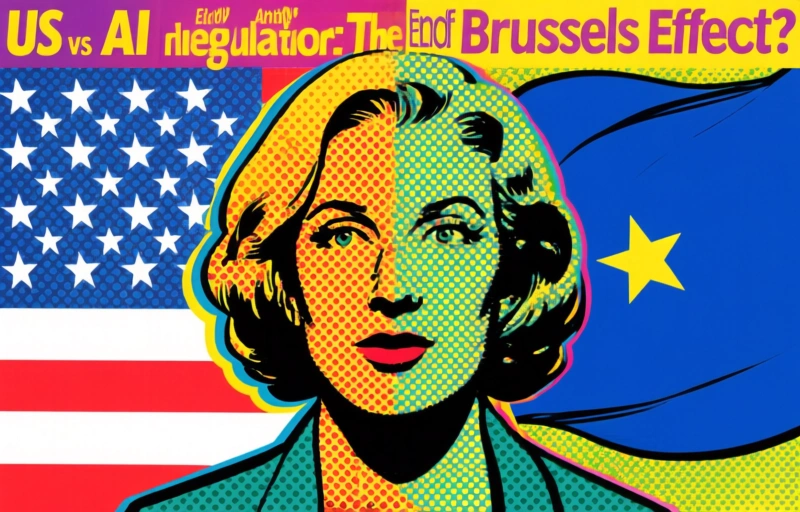
The US and EU are taking different paths on AI regulation, challenging Europe's traditional global influence. This divergence creates new challenges and opportunities for businesses navigating the future of artificial intelligence standards.
Let's talk about something that's been buzzing in boardrooms and tech circles lately. The whole AI regulation landscape is shifting, and it's creating some fascinating tension between two major players: the United States and the European Union. You know how this usually goes, right? The EU sets strict rules, and the world follows along. That's been called the "Brussels Effect" for years.
But something's changing. The US is taking a different path with AI regulation, and it's making everyone wonder if Europe's influence is starting to fade. It's like watching two friends trying to organize the same party with completely different rulebooks.
### What Exactly Is the Brussels Effect?
First, let's break down what we mean by the Brussels Effect. For decades, when the European Union created regulations—whether for data privacy, consumer safety, or environmental standards—companies around the world would adapt. Even American firms would often adopt EU standards globally because it was easier than maintaining separate systems.
Think of it like this: when your strictest friend sets the house rules for the party, everyone else just follows along to keep things simple. That's been Europe's role in global regulation for years. Their GDPR rules on data privacy? They didn't just affect European companies—they changed how tech giants operate worldwide.

### The American Approach: A Different Philosophy
Now, the US is charting its own course with AI. While the EU tends toward comprehensive, precautionary regulation (basically, "prove it's safe first"), the American approach leans more toward innovation-friendly guidelines. It's less about strict rules and more about flexible frameworks.
Here's how I see it: The EU builds guardrails before the car hits the road. The US prefers to drive first and adjust the rules based on what happens. Both approaches have their merits, but they're fundamentally different philosophies.
- The EU focuses on risk assessment and human oversight
- The US emphasizes innovation and competitive markets
- Europe wants AI systems to be transparent and explainable
- America wants to avoid stifling technological advancement
### Why This Matters for Business Leaders
If you're running a company that uses AI—and honestly, who isn't these days?—this regulatory divergence creates real challenges. You might need to develop different AI systems for different markets, or navigate conflicting requirements about data usage and algorithmic transparency.
I was talking with a client last week who put it perfectly: "It feels like we're building two different products for two different planets." The compliance costs alone could be staggering for smaller firms trying to compete globally.
### The Future of Global AI Standards
So where does this leave us? Some experts think we're seeing the beginning of a multipolar regulatory world. Instead of one dominant standard-setter (Europe), we might have several competing frameworks. Others believe market forces will eventually push toward some middle ground.
As one industry observer noted recently: "The question isn't whether AI will be regulated, but whose regulations will shape its future."
What's clear is that businesses can't afford to wait and see. You need to be tracking both regulatory landscapes, understanding how they differ, and planning your AI strategy accordingly. The days of simply adopting EU rules for your global operations might be ending.
### Practical Steps for Navigating This Divide
Here's what I'm telling my clients right now:
First, map your AI use cases against both regulatory frameworks. Where are the biggest gaps? Second, build flexibility into your systems from the start. Don't lock yourself into architectures that can't adapt to different requirements. Third, engage with policymakers on both sides of the Atlantic—your voice matters in shaping these rules.
Most importantly, don't treat this as just a compliance issue. How you approach AI regulation affects your brand, your customer trust, and your competitive advantage. The companies that navigate this well won't just avoid fines—they'll build stronger, more resilient businesses.
The conversation about AI regulation is just getting started. Whether we end up with harmonized global standards or competing regional frameworks will shape technology for decades to come. One thing's for sure: the old playbook isn't going to work anymore.