Umlaut.bio Secures $3.2M Pre-Seed for Cancer & Immunology Research
Jan de Vries ·
Listen to this article~4 min

Umlaut.bio extends its pre-seed funding to $3.2M with BaseLaunch's support, accelerating its novel tRNA-modifying therapy research for cancer and autoimmune diseases amid strong European biotech investment.
There's a fresh wave of momentum in European biotech, and a company called Umlaut.bio is riding it. This German-Swiss startup, focused on the tricky worlds of cancer and autoimmune diseases, just announced a significant boost. They've extended their pre-seed funding round, bringing the total to roughly $3.2 million, thanks to the support of BaseLaunch.
This isn't just about cash. It's a major vote of confidence. The backing from BaseLaunch, a well-known accelerator, brings deep expertise and a powerful industry network to the table. It signals that Umlaut's unique approach—targeting tRNA modifications—has real, tangible potential.
### What This Funding Means for Umlaut.bio
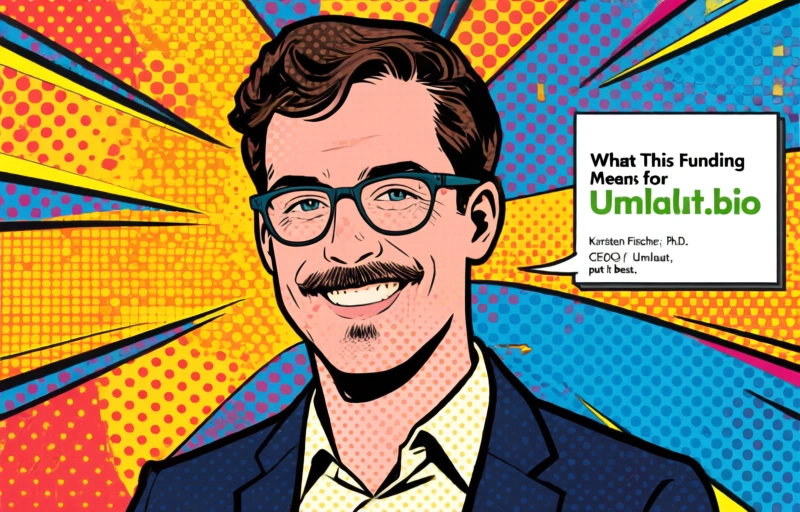
Karsten Fischer, Ph.D., the CEO of Umlaut, put it best. He said, “With BaseLaunch and the addition of Professors Distler and Suzuki, we've added serious expertise and a top-tier pharmaceutical network. This lets us take the next crucial steps in developing therapies based on a novel biological principle.”
In simpler terms? They now have the fuel and the expert navigators to accelerate their journey from lab research toward clinical development. It's a big leap forward for their plan to create 'first-in-biology' small molecule therapies.
### The Bigger Picture: European Biotech is Booming
Umlaut's news is part of a much larger trend. Investment in European oncology, immunology, and related biotech sectors is strong. Let's look at a few other recent deals to see the scale:
- In the UK, T-Therapeutics secured a massive $29.4 million Series A extension for T-cell receptor therapies.
- Spain's Highlight Therapeutics raised $16 million to advance immunotherapy for skin tumors.
- Earlier-stage companies are also thriving. For instance, Vienna's Graph Therapeutics got $3.2 million for an AI drug discovery platform.
All together, these disclosed rounds represent over $55 million flowing into the sector. Umlaut's $3.2 million pre-seed fits right into the typical range for early-stage platform biotechs, while the bigger checks go to companies already in or near human trials.
### Umlaut's Novel Approach to Treatment
So, what makes Umlaut.bio, founded just last year, so special? They're going after a new 'regulatory layer' in biology. Instead of targeting individual proteins, which cancer cells often bypass, they're focusing on tRNA modifications.
Think of it like this: if a cell's growth instructions are a chaotic, overplayed radio signal, current treatments try to fix one broken speaker. Umlaut wants to tune the radio station itself. By inhibiting key steps in tRNA modification, they aim to prevent the widespread overactivation of signaling pathways that drive uncontrolled cell growth in cancer and autoimmune diseases.
### Strengthening the Scientific Brain Trust
A key part of their strategy is building an all-star scientific team. The funding will help them add two world-class experts to their Scientific Advisory Board:
- **Prof. Dr. Oliver Distler:** A leading authority on Systemic Sclerosis. He'll guide Umlaut's program in this complex autoimmune condition, bringing experience from shaping treatment guidelines and working with major foundations.
- **Prof. Dr. Tsutomu Suzuki:** A top-cited expert in RNA biochemistry from the University of Tokyo. His deep knowledge of tRNA modifications will be invaluable in spearheading the development of Umlaut's pioneering small molecules.
Adding this level of expertise is a smart move. It bridges the gap between groundbreaking science and practical drug development. The company believes that making this new biological layer 'druggable' could finally address the shortcomings that plague many current cancer and autoimmune treatments. It's a bold bet on a new frontier in medicine, and now they have the resources and the team to explore it.