UK Supermarkets End Live Lobster Sales Before Animal Welfare Ban
Jan de Vries ·
Listen to this article~4 min
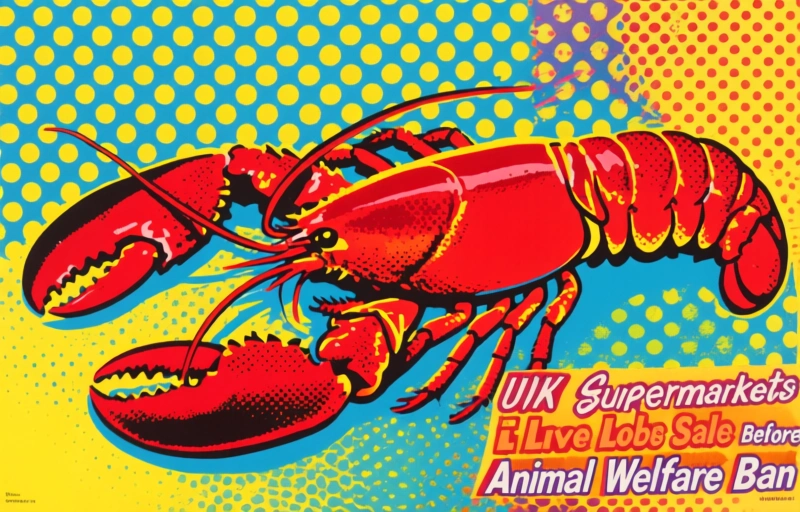
UK supermarkets are proactively removing live lobster and crab tanks ahead of a government ban, marking a major shift driven by evolving animal welfare standards and changing consumer expectations.
You've probably seen them—those tanks in the supermarket with lobsters and crabs crawling around. Well, they're disappearing. UK supermarkets are phasing out live crustacean sales entirely, and they're doing it ahead of a government ban that's coming down the pipeline. It's a big shift, driven by tightening animal welfare standards that are changing how the entire industry operates.
It makes you think, doesn't it? For years, it was just a normal part of grocery shopping. But the conversation around how we treat animals, even seafood, is evolving fast. This isn't just about a few stores making a choice. It's a wholesale move across major chains, signaling a new normal.
### Why This Change Is Happening Now
The planned UK ban is the catalyst, but the wheels were already in motion. Public sentiment has been shifting for a while. People are asking more questions about where their food comes from and how it's treated. Supermarkets are reading the room. By acting before the law forces them to, they're positioning themselves on what they see as the right side of this issue.
It's also a practical move. Storing and selling live crustaceans is complex. It requires specific systems, and let's be honest, it raises ethical questions for a growing number of shoppers. Removing them simplifies operations and aligns with a brand image focused on modern welfare standards.

### What This Means for the Industry
This decision sends a ripple effect far beyond the supermarket aisle.
- **Supply chains are adapting.** Suppliers who focused on providing live product are now pivoting to prepared or frozen options.
- **Restaurants and fishmongers are watching.** They're likely next to feel the pressure to review their own practices.
- **It sets a precedent.** Other countries, and other sectors of the food industry, will be looking at this move as a case study.
It's a clear sign that animal welfare is becoming a non-negotiable part of corporate responsibility, even in areas we didn't scrutinize much before. One industry consultant put it well: "Consumer expectations are reshaping retail from the ground up. What was once acceptable is now being re-evaluated through a lens of ethics and sustainability."
### The Bigger Picture of Ethical Consumption
This story about lobsters and crabs is really a small piece of a much larger puzzle. We're in an era where consumption is becoming more conscious. People want to know the story behind their food. They care about environmental impact and animal suffering. Supermarkets are, in a way, catching up to where many of their customers already are.
This move preempts the ban, but it also meets a demand. It's a business decision rooted in changing social values. And that's a powerful combination. It shows how regulation and market forces can sometimes push in the same direction, leading to faster change.
So, the next time you're at the grocery store, that empty space where the tank used to be is more than just a layout change. It's a marker of how our relationship with food is transforming. It's about asking better questions and expecting better answers from the companies we buy from. This shift with crustaceans is just one step, but it's a significant one that tells us a lot about where things are headed.