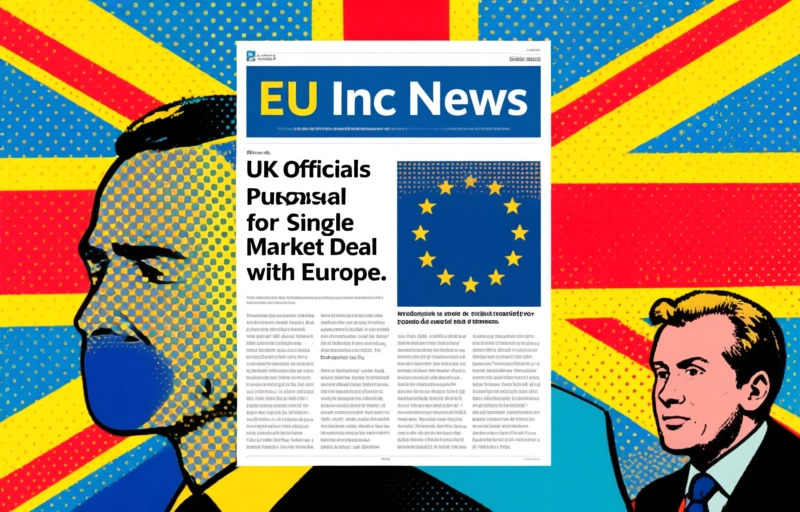
UK officials have proposed a single market for goods with Europe, a move that could simplify trade and cut costs for businesses. This BBC report signals a potential shift in post-Brexit relations, offering hope for smoother exports and imports.
### A Surprising Shift in UK-EU Trade Talks
In a move that caught many by surprise, UK officials have reportedly suggested creating a single market for goods with Europe. This comes straight from a BBC report, and it signals a potential thaw in post-Brexit relations. For years, the idea of a single market was a non-starter in British politics, but now it seems pragmatism might be winning out.
What does this mean in plain English? Well, imagine if you could sell your products from London to Berlin without any customs checks or tariffs. That's the dream of a single market. It's not about rejoining the EU or bringing back free movement of people. Instead, it's a focused attempt to smooth out trade for physical goods.
### Why This Matters for Businesses
If you're running a business that relies on exporting or importing goods between the UK and Europe, this proposal could be a game-changer. Right now, companies face a ton of paperwork, delays, and extra costs. Think about the added expense of customs brokers, VAT adjustments, and the risk of goods sitting at borders for days. That all adds up.
- **Lower costs**: No tariffs or customs checks mean your bottom line improves.
- **Faster delivery**: Goods could move as quickly as they did before Brexit.
- **Simpler rules**: One set of standards for products, instead of juggling UK and EU regulations.
But here's the catch: this proposal is just a suggestion for now. It's not a done deal. The EU has to agree, and there are plenty of political hurdles on both sides. Still, it's a sign that both parties are looking for ways to make trade easier.
### The Political Landscape
You might be wondering why this is happening now. Well, the UK economy has been under pressure, and many businesses have been vocal about the challenges of trading with Europe. The government seems to be listening. But don't expect a quick resolution. These talks take time, and there's always the risk of negotiations falling apart.
One thing to keep an eye on is how this plays out in the US. American companies with UK subsidiaries could benefit if trade barriers drop. It might make the UK a more attractive hub for serving the European market. But for now, it's all speculation.
### What's Next?
So, where do we go from here? The BBC report is just the beginning. We'll likely see more leaks and official statements in the coming weeks. If you're in e-commerce or logistics, now is the time to start planning. Even if this proposal doesn't go through, it shows that the conversation is shifting.
> "The single market for goods is a pragmatic step that could rebuild trust and boost trade without reopening old wounds."
That's the kind of quote you'll hear from optimistic analysts. But skeptics will point out that the devil is in the details. For example, how do you handle food safety standards or environmental regulations? Those are tough questions.
### Final Thoughts
This is a developing story, and it's worth watching closely. Whether you're a startup founder or a seasoned e-commerce pro, changes in UK-EU trade could have a big impact on your supply chain. Stay informed, stay flexible, and don't be afraid to adjust your strategy as new information comes out.
For now, the key takeaway is this: the UK is signaling a willingness to compromise on trade. That's a positive sign for businesses that have been struggling with post-Brexit red tape. Let's hope the politicians can turn this suggestion into reality.