How Trump's Rise Reveals a Centralized US System
Jan de Vries ·
Listen to this article~4 min
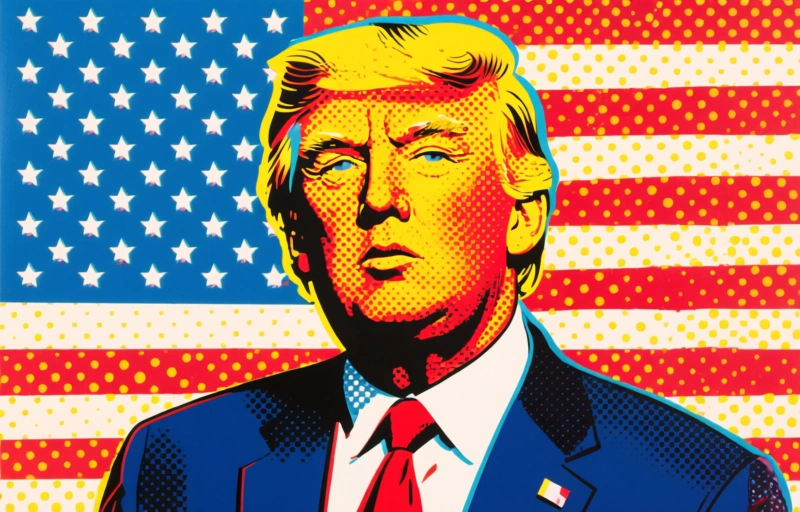
Trump's political rise highlights a deeper trend: the increasing centralization of the U.S. system, clashing with cultural myths of independence. This tension offers key insights for professionals evaluating governance and business stability abroad.
You know, it's funny how we talk about American independence. We've got this cultural mythos of the rugged individual, the pioneer spirit, the 'don't tread on me' mentality. But when you step back and look at the actual system, especially in recent decades, a different picture emerges. It's become incredibly centralized. Power, influence, decision-making—it all seems to flow toward fewer and fewer points. And that's the real story behind a political rise like Donald Trump's. It's not just about one person; it's about a system that created the conditions for that kind of figure to thrive.
Think of it like a river. Over time, smaller streams get diverted or dry up, and all the water funnels into one main channel. That channel gets deeper, faster, and more powerful. Our political system has felt a lot like that. The rise of a singular, dominant executive figure is a symptom, not the cause. It reflects a structure where too much hinges on the presidency, where Congress often seems gridlocked, and where state and local voices can feel drowned out by the national noise.
### The Clash Between Myth and Reality
This creates a fascinating, and frankly stressful, tension. On one hand, we're told we're a nation of self-starters and local control. On the other, the practical reality of modern governance—national security, economic policy, even pandemic response—demands a level of coordination that feels a lot like centralization. We want both independence and effective solutions, and those two desires are constantly butting heads. Trump's appeal, for many, tapped directly into that frustration with 'the swamp'—a shorthand for that centralized, bureaucratic reality.
So, what does this mean for professionals, especially those looking at business structures abroad? It highlights why understanding governance systems is crucial. The framework of a country—how power is distributed, how decisions are made—directly impacts stability, regulation, and opportunity.
- **Centralized systems** can offer speed and uniformity in decision-making, but they also concentrate risk.
- **Decentralized systems** might be more resilient and adaptable to local needs, but they can be slower and less consistent.
It's a balance every nation struggles with, and the U.S. experience is a powerful case study. For an e-commerce consultant or a business professional, this isn't just political theory. It's a practical lens for evaluating any market, including those in the EU.
### A Lesson in Evaluating Business Environments
When you're considering forming a company, whether in Delaware or Denmark, you're not just picking a location. You're buying into a system. You need to ask: How does power work here? Is the regulatory environment predictable? Does it favor big, centralized players, or is there room for agile newcomers? The recent American experience reminds us that these aren't abstract questions. They have real, daily consequences for compliance, growth, and long-term planning.
As one observer put it, 'The most successful businesses are often those that best navigate the gap between a country's ideals and its operational realities.' That's the real takeaway. It's about pragmatic understanding, not political endorsement.
Looking at the EU, you see a fascinating experiment in multi-level governance—supranational, national, and regional powers all in play. It's a very different model from the increasing centralization trend observed in the U.S. For a business, that complexity can be a challenge, but it can also be a shield against over-concentration of risk. The key is to do your homework, understand the lay of the land, and choose a structure that aligns with both the system's rules and your company's goals. The central lesson from recent American politics is clear: ignore the underlying structure of power at your own peril.