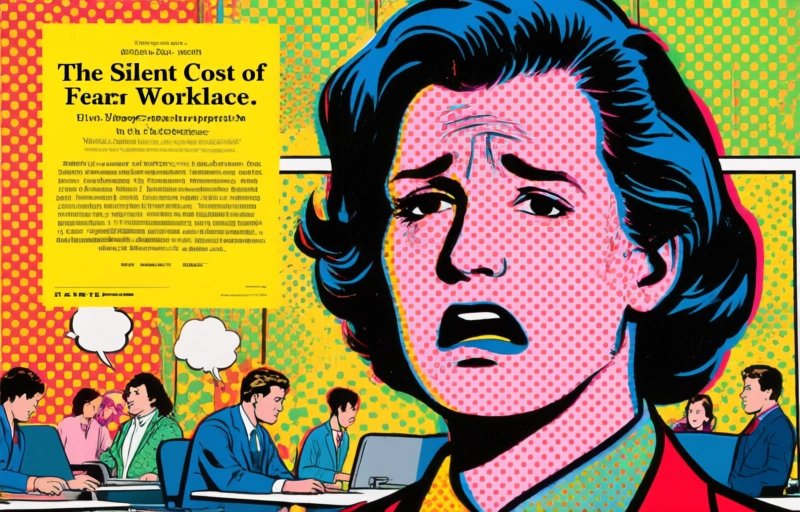
When employees stay silent due to fear of judgment or consequences, organizations lose innovation, challenge, and insight. Discover the hidden costs and how to build a culture where voices are heard.
When employees stay quiet because they're scared of being judged or facing consequences, companies lose more than just a few opinions. They lose innovation, fresh insights, and the kind of honest challenge that drives real growth. It's a quiet drain on potential that most organizations don't even notice until it's too late.
Think about it. How many great ideas never see the light of day because someone was afraid to speak up? How many problems could have been solved early if people felt safe to raise concerns? The cost isn't just theoretical—it shows up in missed opportunities, stagnant cultures, and teams that play it safe instead of pushing boundaries.
### The Real Price of Silence
Silence in the workplace isn't free. Here's what organizations typically lose:
- **Innovation**: New ideas come from open dialogue. When people hold back, creativity dries up.
- **Challenge**: Healthy debate keeps strategies sharp. Without it, groupthink takes over.
- **Insight**: Frontline employees often spot issues leaders miss. Their silence means blind spots stay hidden.
- **Trust**: When people feel they can't speak freely, trust erodes. And trust is the foundation of any strong team.
I've seen this play out in companies big and small. A junior employee might notice a flaw in a process but stay quiet because they don't want to rock the boat. A team member might have a better approach to a project but hesitates to share it for fear of being dismissed. Over time, these small silences add up to a culture of compliance rather than contribution.
### Why People Stay Silent
It's not always about overt fear. Sometimes it's subtle—a raised eyebrow in a meeting, a dismissive comment, or a history of ideas being ignored. People learn quickly when their voice isn't valued. They adapt by staying quiet.
Other common reasons include:
- **Fear of looking stupid**: Nobody wants to be the one who asks a "dumb" question.
- **Fear of conflict**: Some people avoid speaking up to keep the peace.
- **Fear of retaliation**: In toxic environments, speaking out can lead to punishment.
- **Lack of psychological safety**: If the culture doesn't support risk-taking, people play it safe.
### Building a Culture Where Voices Are Heard
The fix isn't complicated, but it takes intention. Leaders need to actively create space for honest dialogue. That means listening without judgment, rewarding candor, and showing that every voice matters.
Start with small steps:
- Ask open-ended questions in meetings and wait for answers.
- Thank people for raising concerns, even when it's uncomfortable.
- Model vulnerability by admitting your own mistakes.
- Make it clear that feedback is a gift, not a threat.
When people feel safe to speak, the whole organization benefits. Ideas flow more freely, problems get solved faster, and teams become more resilient. It's not about being nice—it's about being smart.
### The Bottom Line
Silence might feel safe in the short term, but it's a long-term liability. Organizations that ignore the cost of fear pay for it in lost potential and missed opportunities. The best investment you can make is in creating a culture where people feel free to speak their minds.
Because when employees can't speak freely, everyone loses. But when they can, the possibilities are endless.