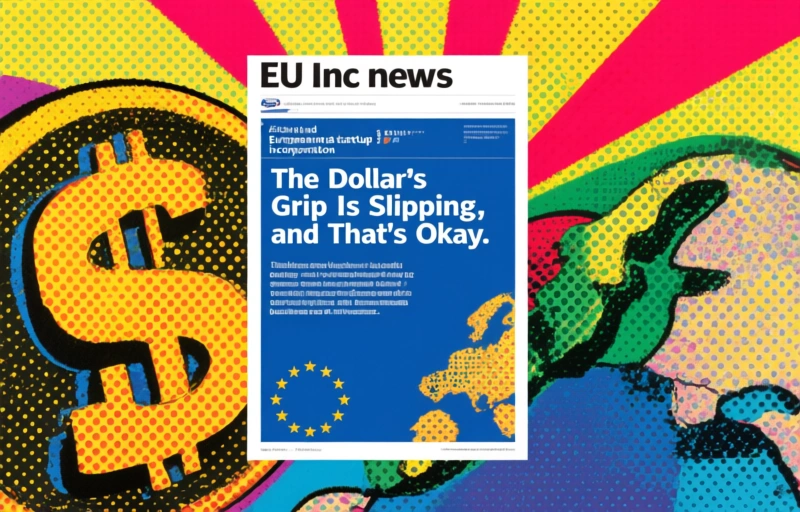
The US dollar's dominance is weakening gradually as global finance becomes more fragmented and diversified. This isn't a collapse, but a natural evolution. Learn what this shift means for businesses and investors.
The US dollar has been the world's go-to currency for decades. It's what countries use to trade oil, buy goods, and stash their savings. But things are shifting. Slowly, the dollar's dominance is fading as global finance gets more fragmented and diversified.
This isn't a crisis. It's not like the dollar is about to collapse overnight. Think of it more like a slow, natural evolution. The world is getting more complex, and relying on one currency for everything just doesn't make as much sense as it used to.
### Why the Dollar Has Been So Dominant
For a long time, the dollar was the only real option. After World War II, the US had the strongest economy, the most stable government, and the deepest financial markets. Other countries needed dollars to trade, so they kept them on hand. This created a cycle: the more people used the dollar, the more useful it became.
This setup had big benefits. It made international trade smoother. It gave the US low borrowing costs. And it meant that when global crises hit, everyone rushed to buy dollars, keeping their value high. But that cycle is starting to slow.
### What's Changing Now?
The shift isn't dramatic, but it's real. Here are a few key factors:
- **China's rise**: The Chinese yuan is gaining ground in trade, especially in Asia and Africa. More countries are settling deals in yuan, not dollars.
- **Digital currencies**: Central banks are experimenting with their own digital currencies. This could make it easier to bypass the dollar system for cross-border payments.
- **Sanctions and geopolitics**: The US has used the dollar's dominance to impose sanctions. This has pushed some countries, like Russia and Iran, to look for alternatives.
- **Diversification**: Central banks are slowly reducing their dollar reserves. They're buying gold and other currencies to spread out risk.
It's not that the dollar is losing its value in a big way. It's that its role is shrinking from "the only game in town" to "one of several games."
### What This Means for Businesses and Investors
If you're a startup founder or an investor in the US, you might wonder if this matters to you. The short answer is: not today, but maybe tomorrow.
In the near term, the dollar will still be the world's main currency. Most global trade, especially in commodities like oil, is still done in dollars. Most central banks still hold mostly dollars. The US economy is still huge and stable.
But over the next decade, you might see small changes. For example:
- **More currency volatility**: As the system becomes more multipolar, exchange rates could swing more wildly.
- **New trade routes**: If countries start settling trade in other currencies, your supply chain costs might shift.
- **Hedging becomes key**: Smart companies will start hedging against a weaker dollar, just in case.
### The Bottom Line
The dollar isn't collapsing. It's just starting to matter a little less. Think of it like a star that's still bright, but you can now see other stars in the sky too. That's not a bad thing. It's just a sign that the world is getting more balanced.
For now, keep doing what you're doing. But keep an eye on the trends. The financial landscape is changing, and the early movers will be the ones who benefit.