Tesla's Self-Driving Gets EU Green Light in Netherlands
Jan de Vries ·
Listen to this article~4 min
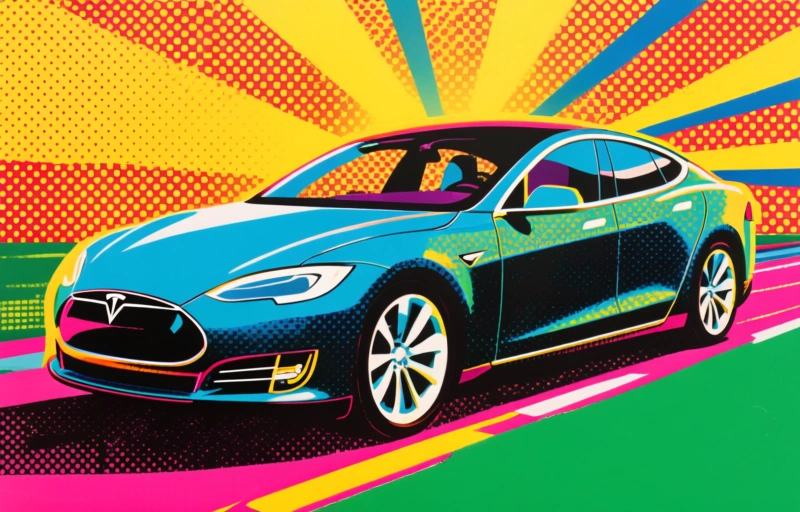
Tesla's supervised Full Self-Driving software receives its first European regulatory approval in the Netherlands, marking a pivotal step for the technology's rollout across the EU and highlighting key differences from full autonomy.
So, Tesla just got a big win in Europe. Their supervised self-driving software just got the official thumbs-up from Dutch regulators. That's a first for the continent, and honestly, it's a pretty big deal. It means Tesla owners in the Netherlands can now legally use the company's most advanced driver-assistance features on public roads. But here's the catch—and it's a crucial one—the driver still needs to be fully attentive and ready to take over at any moment. It's a supervised system, not a fully autonomous one. That distinction is everything when we talk about the future of driving.
This approval doesn't just affect Dutch roads. It's likely to act as a blueprint for other European countries. Regulators across the EU will be watching closely to see how this rollout goes. The Netherlands has a reputation for being forward-thinking with tech regulations, so this move could really accelerate Tesla's ambitions across the whole European market. For American professionals watching from afar, it shows how the regulatory landscape is shifting, piece by piece.
### What This Dutch Approval Really Means
Let's break it down. This isn't about cars driving themselves while you nap. It's about an advanced driver-assistance system (ADAS) getting a formal regulatory nod. The "supervised" part is the key. Think of it like a very skilled co-pilot who handles the steering, acceleration, and braking on highways and city streets, but you, the licensed driver, are still the captain. You're responsible for monitoring the road and being prepared to intervene immediately. It's a significant step beyond basic cruise control, but it's miles away from what we imagine as true "robotaxis."
For the European rollout, this Dutch approval is a critical domino. It creates a precedent. Other national authorities within the EU now have a real-world, regulated case study to examine. They can look at the safety data, the driver monitoring requirements, and the operational limits set by the Dutch. This could streamline future approvals in countries like Germany, France, or Spain, though each will still have its own rigorous evaluation process.
### How It Differs From Full Autonomy
This is where people often get confused. Tesla's current offering is not a fully autonomous vehicle (Level 5). Not even close. Here's the simple difference:
- **Tesla's Supervised FSD (Level 2):** The car can perform most driving tasks, but the human driver must constantly supervise. Your hands should be on or near the wheel, and your eyes on the road. The system will disengage if it doesn't detect your attention.
- **Fully Autonomous (Level 4/5):** The vehicle is designed to perform all driving tasks under specific conditions (geofenced areas) or all conditions. No human driver attention is required. The vehicle is truly self-driving.
The gap between these two levels is enormous, both technically and legally. Europe, like the US, is taking a cautious, phased approach. This Dutch approval is for that supervised Level 2 system. It's a stepping stone, not the final destination.
As one industry analyst recently noted, *"Regulatory approvals like this are less about unleashing the technology and more about learning how to manage its integration safely. It's a controlled experiment on a national scale."*
For businesses and professionals, this signals a market that's opening up, but with clear guardrails. The infrastructure, insurance models, and public acceptance all need to evolve alongside the technology. So, while that Tesla in Amsterdam might seem like it's driving itself, remember there's a very alert person behind the wheel, and a whole new chapter of European mobility regulation being written around them.