Strategic Autonomy: Europe's Business Wake-Up Call
William Williams ·
Listen to this article~4 min
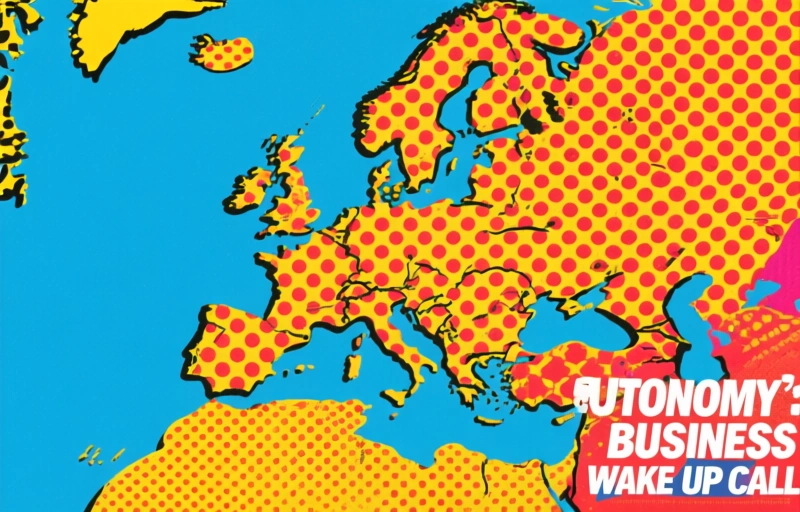
European businesses can no longer rely on outdated global assumptions. Strategic autonomy is now a critical business imperative for building resilience and securing future operations in an unpredictable world.
Let's be honest—we've all been coasting on some pretty comfortable assumptions for a while now. The global supply chains will always flow. The rules-based international order will hold. Our partners will remain predictable. But what happens when those assumptions start to crumble? That's the uncomfortable question European businesses can't afford to ignore any longer.
Strategic autonomy isn't just a political buzzword tossed around in Brussels. It's becoming a business imperative. Think about it like this: you wouldn't build your house on someone else's land without a solid lease, right? Yet for decades, European companies have built complex, interdependent operations on foundations they don't fully control.
### The Shifting Ground Beneath Our Feet
We're seeing it everywhere. Geopolitical tensions are reshaping trade routes overnight. Critical materials, from semiconductors to rare earth elements, are caught in global tug-of-wars. The old playbook of efficiency-first, just-in-time globalism is showing its fragility. It worked beautifully in a stable world. But stability, it turns out, was the assumption we got most wrong.
This isn't about retreating behind walls or abandoning global markets. Far from it. It's about building resilience so you can engage with the world from a position of strength, not dependency. It's the difference between being a passenger on a bus and being the one who knows how to drive if the driver gets sick.
### What Strategic Autonomy Really Means for Your Business
So, what does this look like in practice? It means taking a hard look at your operations and asking some tough questions.
- Where are your single points of failure? Is there one supplier, one region, one route that could bring everything to a halt?
- How transparent is your supply chain beyond the first tier? Do you really know where your components come from?
- What critical skills and technologies are entirely outside your control or region?
It's about diversification, not just of suppliers, but of ideas and partnerships. It might mean investing in local R&D you previously outsourced. It could involve forming new alliances with other European firms to build shared capacity. Sometimes, it's about accepting slightly higher costs for significantly greater security.
As one industry leader recently put it, "The cost of resilience is an insurance premium we forgot to pay. Now the bill is due."
### The Path Forward Isn't a Straight Line
This transition won't be easy or quick. There will be missteps and course corrections. The goal isn't total self-sufficiency—that's a fantasy for a continent as integrated as Europe. The goal is strategic choice. It's having options when the world throws a curveball.
It means building the capability to pivot, to adapt, and to sustain your core operations even when external conditions get rough. This requires a shift in mindset from seeing resilience as a cost center to viewing it as a core competitive advantage. In an uncertain world, the most reliable partner is the one you can count on—yourself and your like-minded neighbors.
The comfortable era of assumptions is over. The new era demands preparation, foresight, and a willingness to build our own foundations. For European business, the time to start laying that groundwork is now, before the next shock tests the assumptions we have left.