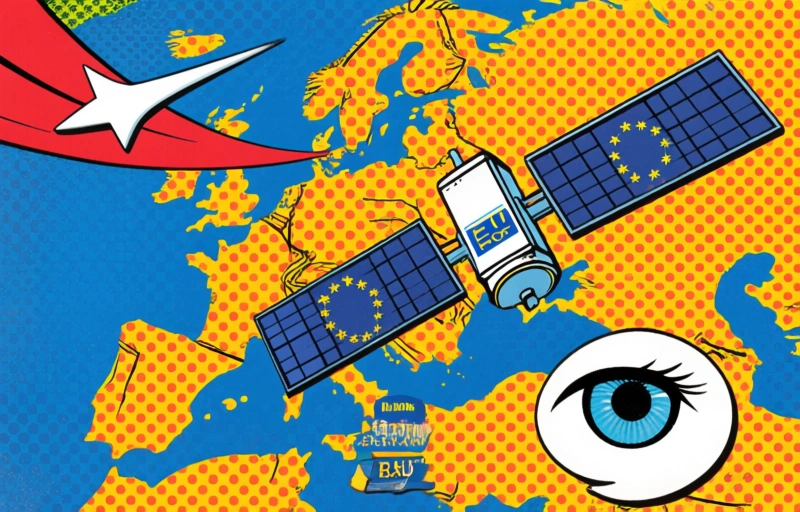
The EU may let Starlink and Amazon buy into mobile satellite spectrum, potentially boosting connectivity and competition across Europe. A game-changer for startups and consumers alike.
The European Union is considering a plan that would allow major players like Starlink and Amazon to buy into its mobile satellite spectrum. This could reshape how connectivity works across Europe, especially in rural areas where traditional internet infrastructure is tough to build.
### What's the Big Deal?
Right now, the EU controls the radio frequencies used for mobile satellite services. These frequencies are a limited resource, like beachfront property. The proposal would let private companies purchase access to this spectrum, potentially opening up new revenue streams for the EU and faster deployment of satellite-based internet.
For Starlink and Amazon's Project Kuiper, this is a huge opportunity. Both companies are racing to build constellations of low-earth orbit satellites that can beam internet down to almost anywhere on the planet. If they can buy into EU spectrum, they could offer seamless coverage across the bloc without having to negotiate with each member state individually.

### The Impact on Startups and Consumers
If this plan goes through, it could mean better, cheaper internet for millions of Europeans. Think about it: remote farmers, small businesses in mountain towns, and even people living in dense cities could all benefit from more competition among providers.
- **For startups**: Lower barriers to entry for satellite-based services, like IoT tracking or drone delivery.
- **For consumers**: More options and potentially lower prices for mobile and home internet.
- **For the EU**: A chance to lead in space-based connectivity and generate billions in spectrum fees.
Of course, there are concerns. Some worry that big US companies could dominate European airwaves, squeezing out local players. Others question whether the EU should sell off public resources at all.

### Why This Matters Now
The timing is interesting. Europe has been lagging behind in 5G rollout and digital infrastructure. Meanwhile, companies like Starlink are already launching thousands of satellites. By inviting them to buy spectrum, the EU might be trying to catch up fast.
But it's not just about speed. It's about control. If Starlink and Amazon get a foothold in European spectrum, they could influence how the internet works here for decades. That's a big decision, and it's one that regulators are likely to debate for months.
### What Could Go Wrong?
There are real risks. Spectrum is a finite resource, and once it's sold, it's hard to get back. Critics argue that the EU should prioritize public access over private profits. There's also the question of security: allowing foreign companies to control parts of the mobile network could raise privacy and surveillance concerns.
Still, the potential benefits are hard to ignore. Faster internet, lower costs, and innovation in areas like autonomous vehicles and smart cities. It's a classic trade-off between openness and control.
### The Bottom Line
This proposal is still in its early stages, but it's a sign that the EU is serious about modernizing its digital landscape. For anyone following EU Inc news, this could be a game-changer. Whether you're a startup founder, a policy wonk, or just someone who wants better Wi-Fi, this is worth watching.
As always, we'll keep you updated as the story develops. For now, it's a reminder that the future of the internet is being shaped not just by code, but by policy and spectrum auctions.