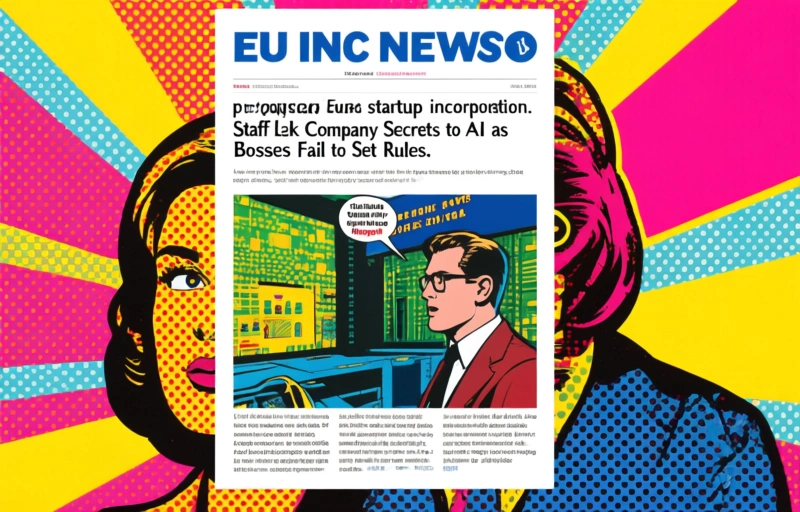
Staff Leak Company Secrets to AI as Bosses Fail to Set Rules
Jan de Vries ·
Listen to this article~4 min
Cybersecurity expert Isabelle Meyer warns that employees are unknowingly exposing sensitive company data through unregulated AI tools, and bosses haven't set rules to prevent it.
Your employees might be handing over your company's most sensitive data to AI tools without even realizing it. Cybersecurity expert Isabelle Meyer has sounded the alarm: staff are unknowingly exposing trade secrets, client lists, and internal strategies through unregulated AI platforms. And the real problem? Bosses haven't set any rules to stop it.
### Why This Happens
It's not that your team is malicious. They're just trying to get work done faster. Tools like ChatGPT, Google Bard, and other AI assistants are incredibly tempting when you're drowning in emails or need to draft a quick report. But here's the kicker—most employees don't know that what they type into these tools can be stored, analyzed, or even used to train the AI's next version.
Think about it. An employee pastes a confidential contract to ask for a summary. Another uploads a spreadsheet with customer data to generate insights. These actions feel harmless, but they're like leaving your office door wide open.
### The Real Cost of Unregulated AI Use
Meyer points out that the risks go beyond just a privacy breach. Once data enters an AI system, you lose control. It can be replicated, shared, or used in ways you never intended. For a business in the United States, that could mean legal trouble under state or federal data protection laws, not to mention the damage to your reputation.
- **Legal exposure**: Non-compliance with regulations like the CCPA or GDPR can lead to fines.
- **Competitive disadvantage**: Trade secrets might end up in the hands of rivals.
- **Trust erosion**: Clients and partners expect you to protect their data.
> "The problem isn't the technology—it's the lack of governance," Meyer says. "Companies need to set clear boundaries, or they're inviting disaster."
### What Bosses Can Do Right Now
The good news is that this isn't a lost cause. You can fix it without banning AI altogether. Here's a practical approach:
1. **Create a simple AI policy**: Spell out what can and can't be shared with AI tools. Make it a one-page document, not a legal maze.
2. **Train your team**: Run a short workshop. Show examples of what's risky—like pasting customer emails or proprietary code.
3. **Use enterprise tools**: Invest in AI platforms that offer data privacy guarantees, like those with on-premise deployment or data anonymization.
4. **Monitor usage**: Regularly check how AI tools are being used in your company. Look for red flags like repeated uploads of sensitive files.
### The Bottom Line
AI is here to stay, and it can boost productivity by miles if handled right. But without rules, you're leaving your company secrets wide open. Meyer's warning is a wake-up call: don't let your staff be the ones who accidentally spill the beans. Set the rules, train your people, and keep your data safe.
This isn't about fear—it's about being smart. In a world where every keystroke can be a risk, a little foresight goes a long way. Start today, and you'll sleep better knowing your company's secrets are secure.