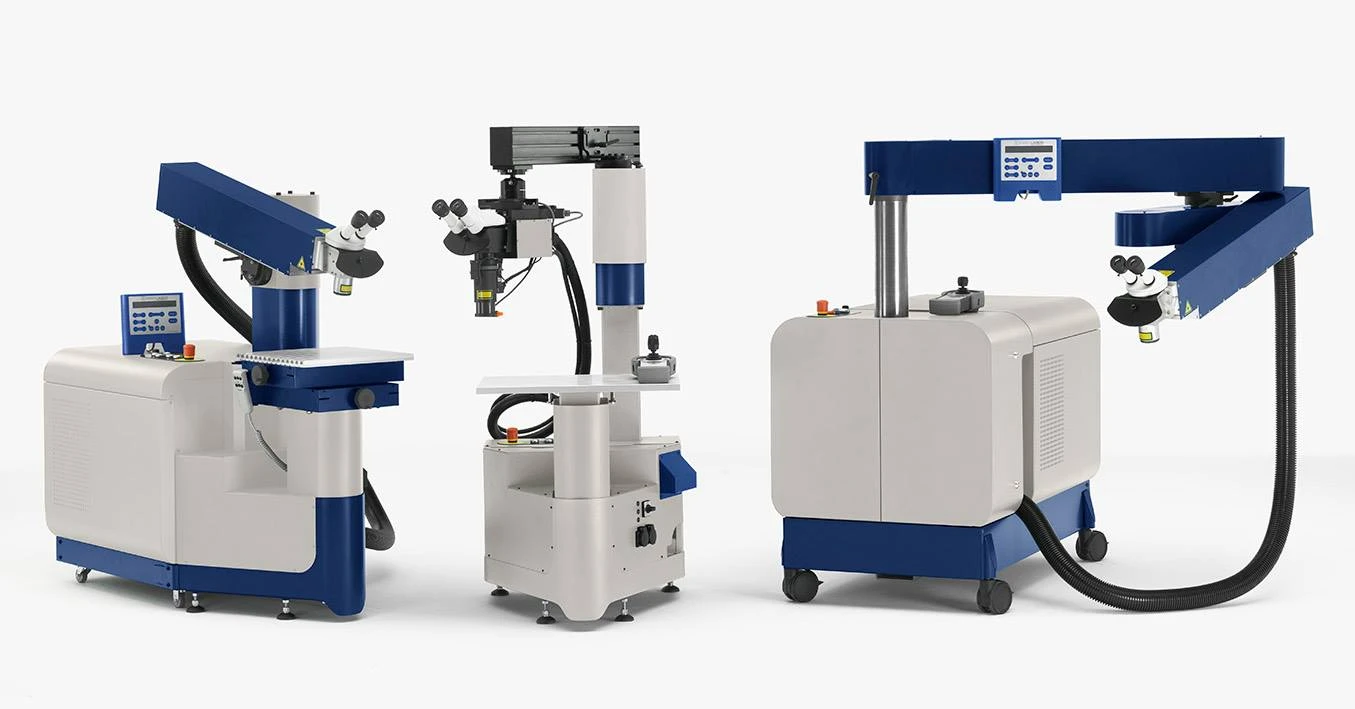
Sigma Laser, a German manufacturer founded in 2005, builds laser welding machines that fix precision tools without distortion. Their six mobile and stationary systems serve tool and mold makers, medical device, aerospace, and electronics manufacturers in over 25 countries.
When a critical mold or die goes down, the clock starts ticking. Every hour of downtime costs money, and traditional repair methods often make things worse. That's where Sigma Laser comes in — a German company that's been quietly revolutionizing how factories handle precision repairs since 2005.
### The Problem With Traditional Repairs
You've probably seen it: a sealing edge wears out, a cavity chips, or a parting line cracks. You could try TIG welding, but the heat-affected zone can warp the part and ruin tolerances. On tool steels, titanium, and nickel alloys, the risk of softening or distortion is even higher. And outsourcing? That means shipping the mold out, waiting in queue, dealing with paperwork — all while your press sits idle. The invoice is just the beginning; lost output and missed deadlines hurt more.
### How Laser Welding Changes the Game
Laser welding adds material only where it's needed, with precise, localized heat. The seam is narrow, the heat-affected zone is tiny, and finishing takes less time. For plant managers, that means getting a tool back to spec without a full strip-down or costly remake. For procurement, it means fewer replacements and longer tool life.
But consistency matters. Documented parameters and stable pulse behavior make repairs repeatable, not operator-dependent. That's exactly what Sigma Laser delivers: in-house, documented, low-distortion repairs on demanding materials.
### Mobile or Stationary? Configure Around Your Process
Sigma Laser's philosophy is simple: fit the machine to the task, not the other way around. Their six systems share an open, five-axis architecture (X·Y·Z·C·D) that brings the optics to the seam at any angle. That's crucial when the part is heavy or already installed on the line.
- **Mobile systems** – Sineo Light, Sineo Fibre, and Sirius Light – are wheeled workstations that come to the part. Maintenance teams roll them right to the press or die cart. No lifting, no trucking, no re-rigging. The open frame means no size or weight limits.
- **Stationary systems** – Sidanus Light, Sidanus Fibre, and Siega Fibre – are built for workshops that need repeatability at a fixed station. Toolrooms use them for planned repairs, geometry additions, and small-series work under fixtures. Saved programs ensure predictable, documented outcomes.
> "The best repair is the one you can do in-house, on your schedule, without compromising the tool." — Jan de Vries, E-commerce Consultant
### Scaling Up With Automation
When a process needs series automation, the Simass modules extend the concept. The Base Unit, Slide, and Rotate modules add flexible motion and part handling for repetitive tasks. Manufacturers can configure a system that grows with their needs.
### Why It Matters for U.S. Manufacturers
While Sigma Laser is based in Hanau, Germany, its impact is global. With customers in over 25 countries — including Airbus, Siemens, and Continental — the technology has proven itself in the most demanding industries. For U.S. tool and mold makers, medical device manufacturers, and aerospace suppliers, the benefits are clear: less downtime, lower costs, and better quality.
In a world where every minute of production counts, having the right repair technology isn't a luxury — it's a necessity. Sigma Laser is making sure that technology is accessible, reliable, and built to last.