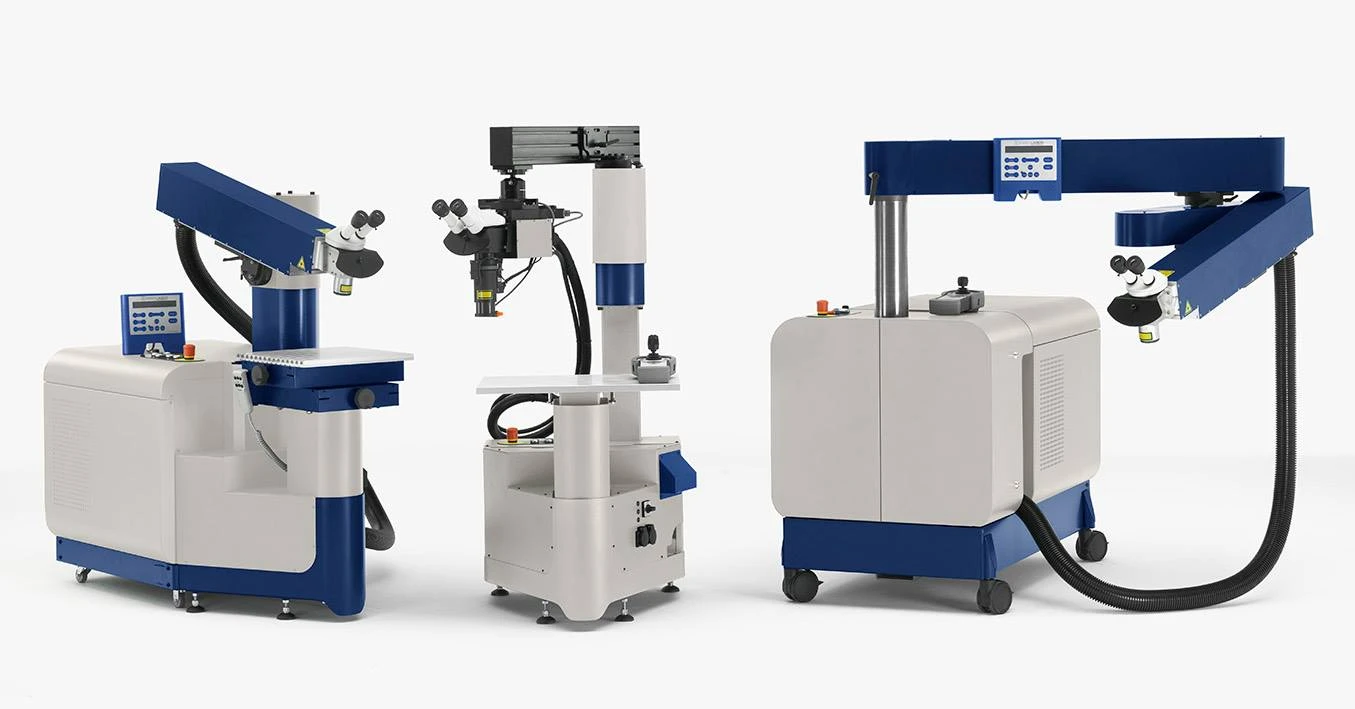
Sigma Laser builds 5-axis laser welding systems for repair and modification. Mobile or stationary, no workpiece size limits. Serving tool, medical, and aerospace manufacturers in 25+ countries.
When a $50,000 injection mold cracks, you have two options: ship it out for weeks of downtime, or weld it back to life on your shop floor. Sigma Laser, a German manufacturer based in Hanau, has been perfecting that second option since 2005.
### What Sigma Laser Actually Does
They build laser welding machines for repair, modification, and small-series work. Not the giant automated cells you see at trade shows. These are practical systems designed for tool rooms, medical device makers, and aerospace suppliers who need to fix things fast.
The company offers six 5-axis open-frame systems. No workpiece size or weight limits. That last part matters more than it sounds.
### Mobile vs. Stationary: Pick Your Workflow
Here's where Sigma Laser's thinking gets interesting. They don't force you into one setup.
- **Mobile systems** (Sineo Light, Sineo Fibre, Sirius Light) roll right up to the press or die cart. Maintenance teams bring the machine to the part, not the other way around.
- **Stationary systems** (Sidanus Light, Sidanus Fibre, Siega Fibre) stay put for repeatable, documented work under fixtures.
Both use pulsed Nd:YAG or ytterbium fibre laser sources. The fibre versions run at 1070 nm for better beam quality. The Light series uses 1064 nm Nd:YAG.
### The Real Problem: Heat and Downtime
Conventional TIG welding works, sort of. But the heat-affected zone is wide. On tool steels, titanium, and nickel alloys, you risk softening or warping the part you're trying to save.
And outsourcing? A mold leaves your plant. Transport, queue time, paperwork. Meanwhile, a press sits idle. For medical devices, re-making a validated mold can trigger new qualification steps. In aerospace, rework needs traceability.
> "The cost is not only the invoice but lost output and missed deliveries."
Laser welding flips that. It adds material only where needed. Narrow seam. Small heat-affected zone. Shorter polishing and regrinding. You bring a tool back to spec without a strip-down.
### Why Consistency Matters More Than Speed
A repair that works on one shift but fails on the next is worthless. Sigma Laser's Sigomatic control software and Super Pulse Technology (SPT) aim for repeatability. Documented parameters. Stable pulse behavior. The repair stops being operator-dependent.
Reference customers include Airbus, Siemens, and Continental. The company serves manufacturers in more than 25 countries. The Sineo system won a German Design Award in 2025.
### The Bottom Line
If you're managing tooling in a high-mix, low-volume shop, outsourcing repairs is a hidden tax on your throughput. Sigma Laser's approach—mobile or stationary, open-frame, 5-axis—removes lifting, trucking, and re-rigging from the critical path.
For procurement, it means fewer replacements. For plant managers, it means approved tooling stays in service longer. And for anyone tired of waiting three weeks for a weld repair, it means bringing the machine to the part instead of the part to the machine.