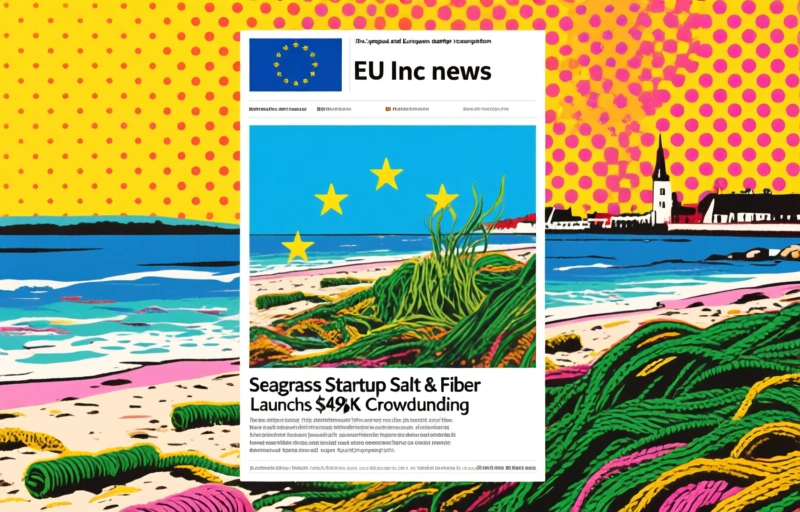
Salt & Fiber, a Malmö-based ClimateTech startup, turns beach-cast seagrass into sustainable yarns. It launched a $49K crowdfunding campaign alongside a $327K pre-seed round to scale production and tackle textile pollution.
Salt & Fiber, a ClimateTech startup based in Malmö, Sweden, is turning beach-cast seagrass into sustainable textile yarns. The company just launched a $49,000 crowdfunding campaign alongside a $327,000 pre-seed investment round.
Founded in 2025 by Annika John, Salt & Fiber tackles two big environmental problems at once. Coastal towns spend millions each year removing seagrass that washes up on beaches. Then they dump it in landfills, where it releases methane—a potent greenhouse gas. Meanwhile, the fashion industry is one of the world's most polluting sectors, and European brands are under pressure to clean up their supply chains.
### The Problem with Conventional Textiles
Traditional textile production guzzles water, relies on pesticides, and often uses synthetic fibers that shed microplastics. New regulations in Europe, like the Corporate Sustainability Reporting Directive (CSRD) and extended producer responsibility laws, are pushing brands to find local, traceable, low-impact materials. That's where Salt & Fiber comes in.
### How Seagrass Fibers Work
Salt & Fiber's fibers come from beached seagrass that doesn't need fresh water, fertilizers, or farmland to grow. The fibers are 100% plant-based and biodegradable—no synthetic polymers, no microplastic shedding. The company says they're safe for people and the environment.
Here's what makes them special:
- No harmful chemicals used in processing
- No toxic by-products generated
- Naturally fire-resistant—fibers are less likely to ignite and can self-extinguish without chemical treatments
### From Pilot to Commercialization
Salt & Fiber is already running pilot production. They've secured a supply agreement with a municipality on Sweden's southern coast. The company is also part of the Älmhult x IKEA incubator, which gives them access to expertise and networks in sustainable design.
Their goal is to reach commercialization between 2027 and 2028. That might sound far off, but developing a new material from scratch takes time—especially when you're proving it works at scale.
### Crowdfunding for a Cause
The $49,000 crowdfunding campaign is a small but strategic move. It helps Salt & Fiber validate demand and build a community of early supporters. The company also plans to donate 5% of proceeds to Baltic Sea seagrass restoration, though that initiative is still being finalized.
### Why This Matters
If Salt & Fiber succeeds, it could offer a real alternative to conventional textiles—one that turns a waste problem into a resource. For coastal communities, that means less landfill waste and fewer methane emissions. For fashion brands, it means a local, traceable material that meets sustainability rules.
It's early days, but the potential is huge. Seagrass grows naturally along coastlines worldwide. If this technology scales, it could reshape how we think about textile raw materials.
*This article is for informational purposes only and does not constitute investment advice.*