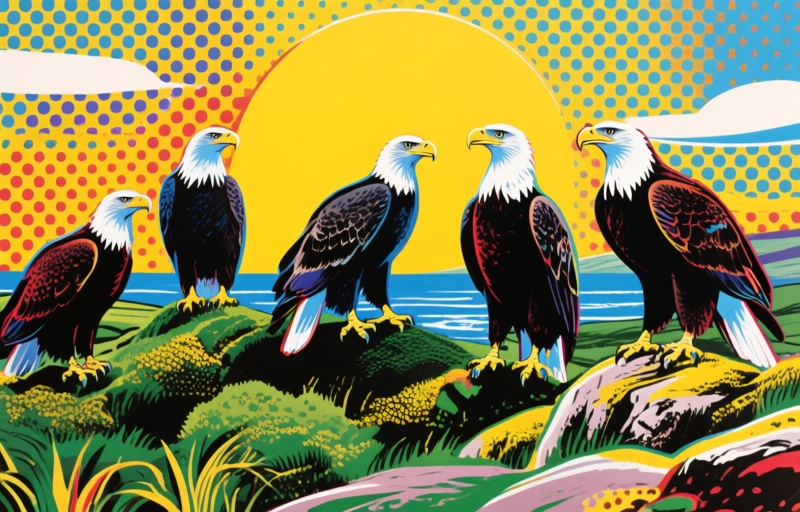
After 200 years, sea eagles have returned to Exmoor in a landmark conservation effort. This reintroduction of six young birds marks a historic step in restoring a lost keystone species to the English landscape.
Imagine a creature that vanished from a landscape before your great-great-grandparents were born. Its shadow hasn't darkened the ground for 200 years. Now, picture that very creature, young and fierce, taking its first flight back home. That's exactly what's happening right now on Exmoor, where a landmark conservation effort is rewriting history. Six young sea eagles are back, and their return is about so much more than just birds.
It's a story of patience, science, and a deep commitment to healing a part of the natural world that was lost. For two centuries, the skies over this rugged English moorland were missing their largest avian predator. The absence was a quiet, long-standing scar on the ecosystem. Bringing them back isn't a simple task of opening a crate; it's a carefully orchestrated act of ecological restoration with implications that ripple far beyond the release site.
### Why This Return Matters More Than You Think
You might wonder, why go through all this trouble for a few eagles? It's a fair question. But these aren't just any birds. Sea eagles, also known as white-tailed eagles, are a keystone species. That's a fancy term for an animal that holds an entire habitat together, like a keystone in an arch. Remove it, and the whole structure weakens. Their return helps control other species, redistributes nutrients, and can even boost eco-tourism in the region. It's about restoring balance to a place that's been out of sync for generations.
Their wingspan is staggering—up to 8 feet across. Seeing one in flight is like watching a piece of living legend. They were once widespread across Britain, but persecution and habitat loss drove them to local extinction in England. The effort to bring them back involves years of planning, collaboration between conservation groups, and meticulous care for the young birds before their release.
### The Delicate Journey From Nest to Wild
So, how do you reintroduce a lost species? It's not as simple as finding some eagles and letting them go. These six juveniles were carefully selected and reared, often with minimal human contact to ensure they retain their wild instincts. They're typically brought to the release site at a young age, housed in a secure hack box (a kind of soft-release aviary) on a cliff or tall tree to acclimatize them to the sights and sounds of their new—yet ancient—home.
After a period of adjustment, the box is opened. That first flight is entirely their choice. There's no guarantee they'll stay, but the hope is that they'll imprint on the area as their territory. Conservationists then monitor them closely using satellite tags.
- **Tracking Every Move:** The tags provide vital data on where they roam, how far they travel (sometimes over 100 miles in a day), and where they establish territories.
- **Ensuring Survival:** The team watches for hazards, though the goal is a self-sustaining wild population that doesn't need human help.
- **A Long-Term Vision:** This isn't a one-year project. Success is measured in decades, as these young birds mature, find mates, and hopefully raise their own chicks on Exmoor's cliffs.
It's a testament to human dedication that we can even attempt to fix mistakes made so long ago. As one project leader put it, 'We're not just releasing birds; we're returning a piece of Exmoor's soul.'
This story connects us to a longer arc of time. It challenges the notion that extinction is forever and shows that with will and science, we can sometimes turn back the clock. For the farmers, hikers, and residents of Exmoor, the return of the sea eagle adds a new, awe-inspiring chapter to their daily lives. It's a reminder that the wild can come roaring back, given half a chance. And for the rest of us watching from afar, it's a powerful dose of hope—proof that even the most profound losses aren't necessarily permanent.