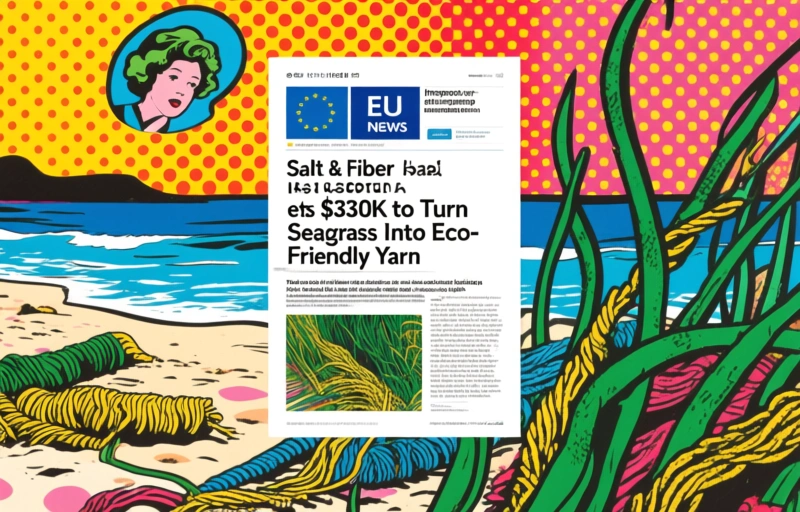
Salt & Fiber, a Malmö-based startup, turns beach-cast seagrass into sustainable textile yarns. It secured $330K in pre-seed funding and launched a $49.5K crowdfunding campaign.
A Swedish startup is turning a coastal nuisance into a sustainable textile solution. Salt & Fiber, based in Malmö, just secured $330,000 in pre-seed funding and launched a $49,500 crowdfunding campaign to scale its work.
### The Problem: Two Sides of the Same Coin
Salt & Fiber tackles two big issues at once. On one hand, coastal towns spend millions hauling away seagrass that washes up on beaches. They dump it in landfills, where it rots and releases methane. On the other hand, the fashion industry is one of the world's dirtiest polluters. European brands are under pressure to cut emissions and follow new rules like the CSRD, plus extended producer responsibility laws. They need materials that are local, traceable, and low-impact.
### How Seagrass Fibers Work
Founder Annika John started the company in 2025. Her idea is simple: take beached seagrass that would otherwise go to waste and turn it into high-quality fibers. The process uses no fresh water, no fertilizers, and no land. The fibers are completely plant-based and biodegradable. They don't shed microplastics or use synthetic polymers. They're safe for people and the planet.
Here's what makes seagrass fibers stand out:
- **No harmful chemicals**: The processing methods skip toxic stuff and don't create dangerous by-products.
- **Naturally fire-resistant**: Seagrass fibers are less likely to catch fire and can self-extinguish without chemical treatments.
### Current Progress and Future Plans
Salt & Fiber is already running pilot production. They've signed a supply deal with a municipality on Sweden's southern coast. They're also part of the Älmhult x IKEA incubator, which gives them access to resources and expertise. The company aims to commercialize between 2027 and 2028.
As part of the crowdfunding campaign, they plan to donate 5 percent of proceeds to Baltic Sea seagrass restoration. That initiative is still being discussed, but it shows their commitment to giving back.
### Why This Matters
This isn't just about making yarn. It's about rethinking how we use natural resources. Seagrass grows along coastlines everywhere, and right now it's treated as waste. By turning it into textiles, Salt & Fiber creates a circular solution that cuts emissions, reduces landfill waste, and gives brands a sustainable alternative.
The fashion industry needs this kind of innovation. With regulations tightening and consumers demanding greener options, materials like seagrass fibers could become a go-to choice. And if the crowdfunding campaign succeeds, it'll prove that people are ready to back solutions that help both the environment and the economy.
### Looking Ahead
Salt & Fiber's journey is just beginning. The pilot production will test scalability, and the supply agreement with the Swedish municipality shows real-world demand. If they hit their targets, we could see seagrass-based clothes hitting the market within a few years. That's a win for the planet, for coastal communities, and for anyone who wants to wear something that doesn't cost the earth.