Robert Isele: Leading Automotive Connectivity Innovation
Jan de Vries ·
Listen to this article~4 min
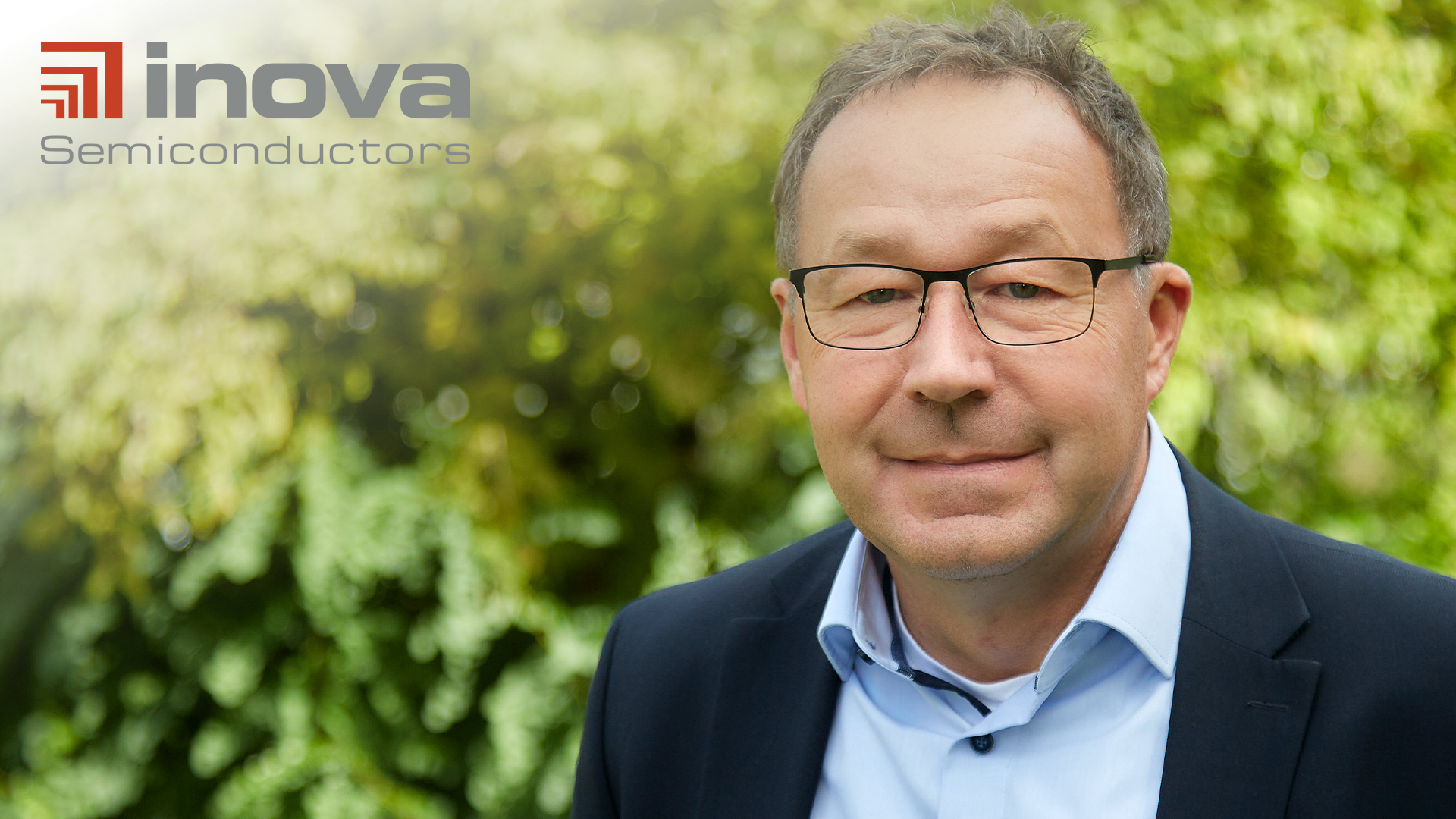
Discover how Robert Isele, CEO of INOVA Semiconductors, is shaping the future of automotive connectivity. Learn about the technologies powering next-generation vehicles and the vision behind his 2026 CEO Excellence Award recognition.
Let's talk about what's really driving the future of cars. It's not just about horsepower anymore. It's about data, connectivity, and the smart systems that make everything work together. That's where Robert Isele comes in. With over 25 years in the automotive industry, he's been at the forefront of this tech revolution. Since 2023, he's been leading INOVA Semiconductors, a company that's quietly building the nervous system for next-generation vehicles.
His recent recognition in the German CEO Excellence Awards 2026 isn't just about personal achievement. It's a testament to the critical work his team is doing. We sat down with Robert to understand how his company is solving some of the industry's toughest challenges.
### The Backbone of Modern Vehicles
INOVA, founded back in 1999, specializes in high-speed data communication for cars. Think of it as the superhighway for information inside your vehicle. Their flagship technology, APIX® (Automotive Pixel Link), has become the go-to standard for moving massive amounts of data quickly and reliably. It's in over 250 million systems already.
But that's just the beginning. They've also created a smart LED ecosystem called ISELED® and a network technology for sensors called ILAS®. More than 60 companies are part of this alliance, working together to make vehicle lighting and sensing smarter and more efficient.
Here's what makes their newer APXpress technology so groundbreaking:
- It acts as a high-speed data backbone for modern vehicle architectures
- Supports over 500 independent data channels
- Moves data at speeds up to 32 Gbps with minimal delay
- Enables true software-defined vehicles (SDVs)
### The Challenge of Complexity
Robert explained it to me like this: "A modern car with partial autonomous driving might have dozens of sensors just for safety systems. Add in everything for the powertrain, comfort, and infotainment, and you're looking at hundreds of sensors. They all need to talk to each other, instantly."
This creates a real dilemma. More connections mean more potential cybersecurity risks. The infotainment system alone can be a major weak point. At the same time, all that traditional wiring adds significant weight – sometimes making the wiring harness one of the heaviest single components in the car. That weight means higher energy consumption and more emissions.
"We're at a turning point," Robert noted. "The industry needs a completely new approach to communication architecture. It has to be high-performance, scalable, and ready for whatever comes next."
### Building for the Long Haul
Today's automotive trends are pushing technology to its limits. Digital cockpits, autonomous driving features, over-the-air updates – they all demand robust, real-time data communication. INOVA works hand-in-hand with major automakers (OEMs) and their top suppliers (Tier 1) to co-develop the solutions that make these features possible.
What really stood out in our conversation was Robert's philosophy on partnerships. "We never think in short development cycles," he said. "Every solution we design has to be robust, flexible, and future-proof. It needs to add value across multiple generations of vehicles."
This long-term mindset is crucial. It transforms them from being just another technology vendor into a true strategic partner. Their goal is simple but ambitious: enable plug-and-play solutions for lighting and communication that don't require complex software and use minimal energy.
### Looking Ahead
For nearly three decades, Robert's career has mirrored the evolution of automotive technology itself. From mechanical systems to electronic systems, and now to fully connected, software-defined platforms. The work his team is doing at INOVA isn't just about making better semiconductors. It's about enabling the next leap forward in how vehicles are designed, built, and experienced.
The future of driving is being written in code and data streams. Companies like INOVA, led by visionaries like Robert Isele, are providing the essential infrastructure. They're making sure that as cars get smarter, they also become safer, more efficient, and more capable than we ever imagined possible.