Red Bull Pilot's Historic Train Landing: An Aviation First
Jan de Vries ·
Listen to this article~4 min
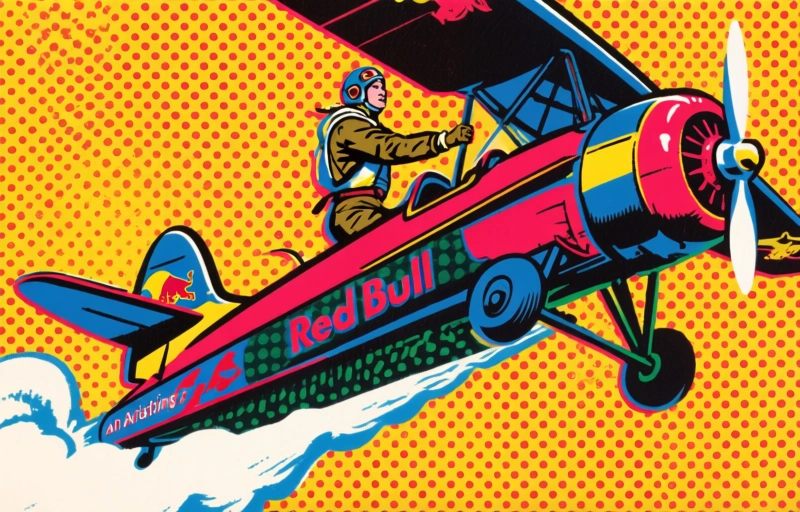
A Red Bull pilot makes aviation history by successfully landing and taking off from a moving freight train, showcasing unprecedented precision and skill in a never-before-seen maneuver.
You know, sometimes you see a headline and you just have to stop and read it twice. That's exactly what happened when I first heard about this. A Red Bull pilot didn't just land a plane on a moving freight train—he took off from it again. It's one of those precision aviation feats that sounds almost impossible, doesn't it?
Let's break down what makes this so extraordinary. We're not talking about a stationary object here. This train was moving, creating a constantly shifting, narrow target. The margin for error? Well, let's just say it was measured in inches, not feet.
### The Precision Behind the Maneuver
Think about landing on a runway. It's challenging, but it's a fixed, predictable space. Now imagine that runway is moving at 50 miles per hour, swaying slightly, and is only a fraction of the width you're used to. That's the mental shift required here.
The pilot had to match the train's speed perfectly while descending. One small miscalculation in timing or alignment could have been catastrophic. It required an incredible blend of skill, nerve, and trust in the aircraft's capabilities.

### Why This Is an Aviation First
While stunt pilots have performed incredible feats for decades, this particular combination—landing and taking off from a moving train—had never been successfully executed before. It pushes the boundaries of what we consider possible in controlled flight.
It's not just about bravery. It's about physics, engineering, and human skill converging at the right moment. The aircraft had to be light enough, responsive enough, and powerful enough to handle the unique demands of the maneuver.
Here are a few key factors that made this possible:
- **Extreme pilot training:** Years of experience in precision flying
- **Specialized aircraft:** A lightweight, highly maneuverable plane
- **Perfect conditions:** Calm weather and a straight, level track
- **Meticulous planning:** Every variable calculated in advance
As one aviation expert put it, 'This isn't a stunt you practice. This is a stunt you calculate, visualize, and execute with absolute confidence.'
### The Human Element of Extreme Aviation
What I find most fascinating is the psychology involved. In moments like these, pilots enter a state of hyper-focus. The world narrows down to the cockpit, the controls, and that moving target ahead. All the planning, all the preparation, comes down to a few seconds of absolute concentration.
It reminds us that aviation continues to evolve. We're not just building faster planes or more efficient engines—we're exploring new dimensions of what skilled pilots can achieve with existing technology.
This achievement sits at the intersection of sport and science. It's a demonstration that sometimes, the most significant advances come not from new technology, but from new applications of existing skills. It makes you wonder what other 'impossible' feats might be waiting just beyond our current imagination.
The next time you see a freight train rolling by, take an extra moment to look at it. Consider the coordination, the precision, and the sheer audacity required to land a plane on that moving surface. It's a reminder that human skill, when paired with courage and calculation, can achieve what once seemed like pure fiction.