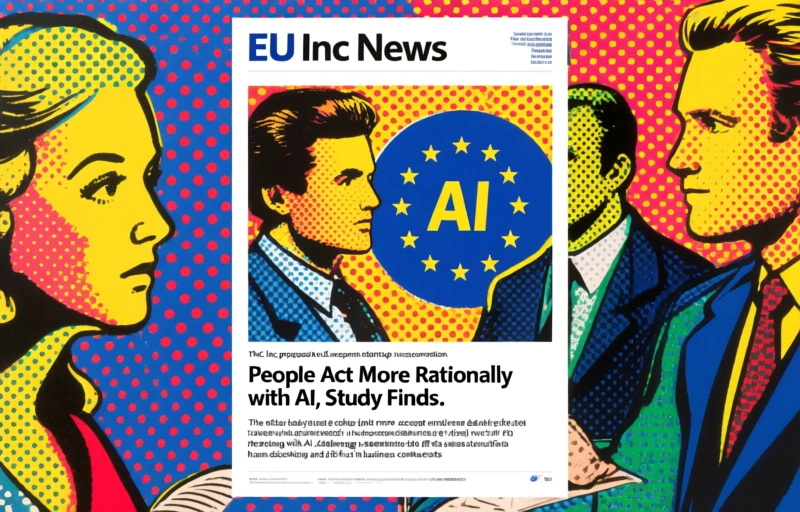
A new study reveals people act more rationally and accept unfair deals more often when interacting with AI, challenging assumptions about human decision-making and trust in business contexts.
A new study reveals something surprising about human behavior: people tend to act more rationally and accept unfair deals more often when they think they're interacting with artificial intelligence. This finding challenges what we thought we knew about decision-making and trust.
### The Study's Key Findings
Researchers designed an experiment where participants played economic games with opponents they believed were either human or AI. The results were striking:
- Participants accepted offers they would normally reject when told the opponent was AI
- They made decisions based on logic rather than emotion
- The "fairness" threshold dropped significantly when dealing with AI
It turns out, we're more willing to settle for a raw deal from a machine than from another person. That's a big deal for businesses using AI in negotiations or customer service.
### Why This Matters for Business
If you're running a company that uses AI for sales, customer support, or negotiations, this study has direct implications. People might be more accepting of automated decisions than human ones. But here's the catch: they might also feel less loyal or connected to your brand.
Think about it this way. When a human agent gives you a price, you might haggle or feel cheated. But when an algorithm sets the same price, you're more likely to accept it as fair. That's a powerful insight for pricing strategies.

### What This Means for European Startups
European startups, especially those in the EU, are increasingly incorporating AI into their operations. The EU Inc proposal aims to streamline startup formation across member states, making it easier to scale. But if you're using AI in customer interactions, you need to understand this behavioral quirk.
Here are some practical takeaways:
- Test your AI's impact on customer satisfaction
- Monitor acceptance rates of AI-generated offers
- Balance automation with human touchpoints
- Consider transparency in AI interactions
### The Emotional Side of AI
We tend to think of ourselves as rational beings. But emotions drive most of our decisions. When we know we're dealing with AI, we switch into a more analytical mode. We suppress the emotional reactions that would normally kick in.
That might sound good on paper. But it also means we might accept terms that aren't in our best interest. For businesses, this is both an opportunity and a responsibility.
### Looking Ahead
As AI becomes more common in everyday transactions, these behavioral patterns will shape how markets work. The study suggests that people are more rational with AI, but that doesn't always mean better outcomes. Sometimes, a little emotion leads to better deals for everyone.
For now, the key is to use this knowledge wisely. Whether you're a startup founder or a corporate executive, understanding how your customers react to AI can give you an edge. Just remember: rational doesn't always mean satisfied.
This research reminds us that AI isn't just a tool for efficiency. It changes how people think and behave. And that's something worth paying attention to.