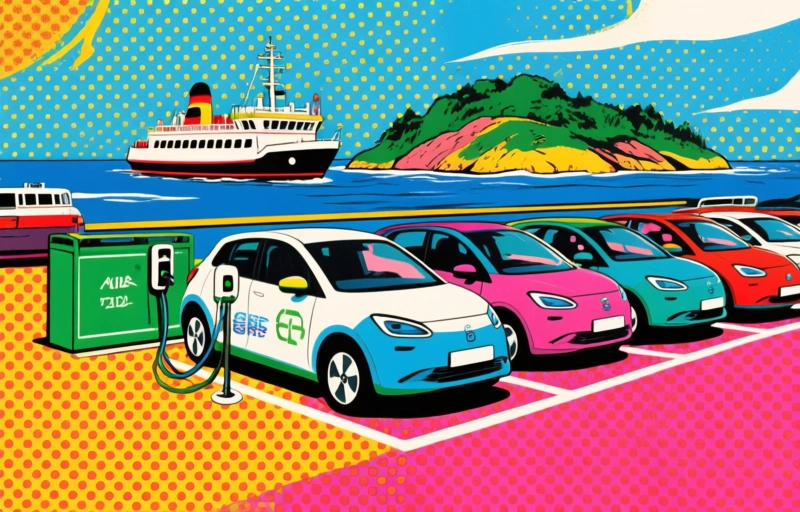
A German trial uses parked electric cars as temporary batteries to power island ferry charging. This vehicle-to-grid test could reshape renewable energy use and inspire US projects.
Imagine a fleet of electric cars parked near a ferry terminal, quietly feeding energy back into the grid to charge the boats that shuttle people to and from a remote island. That’s exactly what a new German trial is testing, and it could change how we think about both renewable energy and electric vehicle (EV) ownership.
Here’s the big idea: instead of just sitting idle while their owners are at work or shopping, EVs could act as temporary batteries for the local power system. In this case, they’d help power the charging stations for island ferries, which often rely on diesel or grid electricity that’s not always clean. It’s a clever way to turn a potential energy drain into a resource.
### How the Trial Works
The pilot project is taking place on a German island, where the ferry system is a lifeline for residents and tourists alike. The plan is straightforward: when cars are parked and plugged in, their batteries can discharge stored electricity back into the grid during peak demand times—like when ferries need a quick charge between trips.
- **Vehicle-to-grid (V2G) tech:** This isn’t just about plugging in. It uses bidirectional chargers that let power flow both ways.
- **Smart scheduling:** The system coordinates with ferry schedules and grid needs, so cars aren’t drained when their owners return.
- **Local impact:** It reduces strain on the island’s grid, which can be fragile and expensive to upgrade.
Think of it like a neighborhood pool of energy. Instead of every house having its own generator, you share resources. That’s what this trial is exploring on a small scale.

### Why This Matters for the US
You might be wondering, “What does a German island trial have to do with me in the United States?” Quite a lot, actually. The same V2G technology could be applied to any place with concentrated EV parking—like office lots, airport garages, or even apartment complexes. Imagine a fleet of EVs in a city like San Francisco helping to stabilize the grid during heatwaves or powering emergency services during outages.
But there are hurdles. The US grid is a patchwork of different utilities and regulations, so scaling this isn’t simple. Still, the German trial offers a proof of concept that could inspire pilot projects here.
### The Tech Behind It
At its core, this relies on bidirectional charging, which is still rare in consumer EVs. Most cars today only take power in, not out. But models like the Nissan Leaf and some newer Ford and Hyundai vehicles already support it. The key is infrastructure: you need chargers that can handle two-way flow, and software that manages the exchange without draining your battery when you need to drive home.
> "This isn't just about saving a few bucks on electricity. It's about rethinking how we use the assets we already own." — Dr. Anna Schmidt, energy systems researcher
### What’s Next?
The German trial will run for several months, measuring how much energy the parked cars can provide and how often. Early results could shape policies in the European Union and beyond. For US readers, keep an eye on similar tests in places like California and New York, where grid flexibility is a hot topic.
If this works, we might see a future where your car earns you money while you sleep, and ferries run on clean energy from cars that would otherwise just sit there. That’s a win-win.
### Quick Takeaways
- **Location:** German island ferry system.
- **Tech:** Vehicle-to-grid (V2G) bidirectional charging.
- **Goal:** Use parked EVs as temporary grid batteries for ferry charging.
- **Potential:** Could reduce grid strain and fossil fuel use.
- **US relevance:** Similar applications possible in dense parking areas.
So next time you plug in your EV, remember: it might one day power more than just your commute.