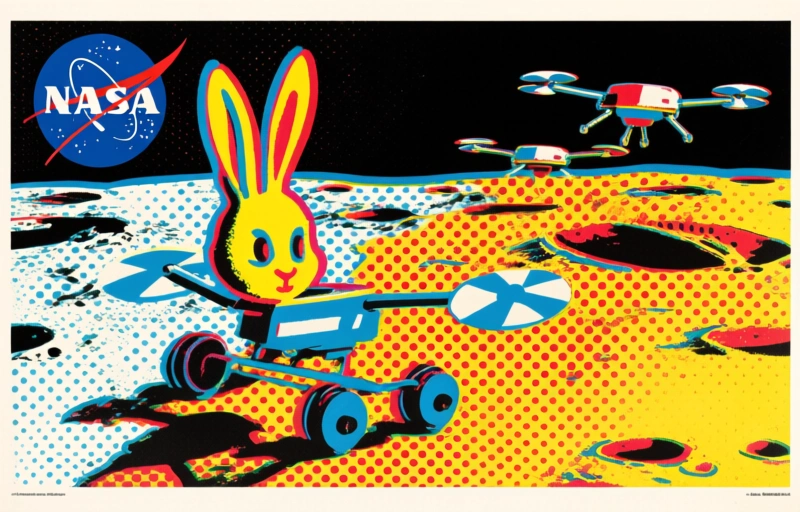
NASA's MoonFall drones will hop across the lunar South Pole to support future Moon Base exploration and habitation plans.
NASA is taking a giant leap forward in lunar exploration with its new MoonFall drones. These aren't your typical rovers. They're designed to hop across the moon's surface like rabbits, scouting the best spots for the first Moon base.
### What Are MoonFall Drones?
The MoonFall project is all about agility and precision. Instead of crawling slowly over rocky terrain, these drones use small thrusters to leap from place to place. Think of them as the parkour experts of space exploration. They can cover more ground faster than traditional rovers, and they're built to handle the harsh conditions at the lunar South Pole.
### Why the South Pole?
Scientists believe the South Pole holds key resources for a permanent base, like water ice in permanently shadowed craters. But the terrain is tough, with steep slopes and deep shadows. MoonFall drones can hop right into these craters, collect data, and report back. It's like sending a scout ahead of the main expedition.
### How They Work
- **Propulsion:** Small, controlled bursts of cold gas thrusters for hops up to 30 feet high.
- **Navigation:** Onboard sensors and AI map the terrain in real time.
- **Payload:** Cameras, spectrometers, and radiation detectors to analyze the environment.
- **Power:** Solar panels and batteries for extended missions.
Each drone weighs about 22 pounds, making them light enough to be carried by a lander. They can operate in temperatures as low as -280 degrees Fahrenheit.
### The Bigger Picture
This isn't just about cool tech. It's about making human settlement on the Moon a reality. By scouting the best locations for a base, these drones help NASA and its partners save time and money. They reduce the risk for astronauts by identifying hazards before anyone sets foot there.
### What This Means for Space Exploration
The MoonFall project could change how we explore other planets too. Imagine hopping drones on Mars or even asteroids. The technology opens up new possibilities for reaching places that rovers can't go.
In short, NASA's rabbit-like drones are a smart, efficient way to pave the path for humanity's next big adventure. And they're a reminder that sometimes the best solutions come in unexpected forms.