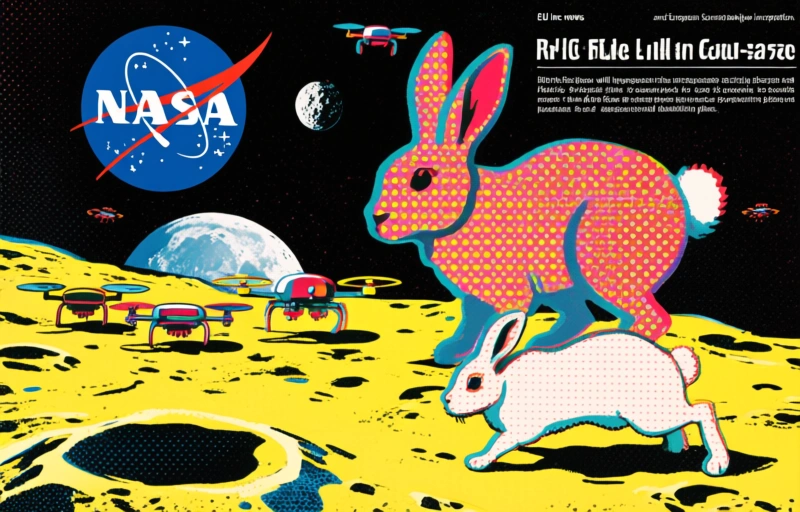
NASA's MoonFall drones will hop like rabbits across the lunar South Pole to scout sites for the first Moon base, supporting future exploration and habitation plans.
NASA is taking a bold leap forward in lunar exploration with its MoonFall drones, designed to hop across the lunar South Pole like rabbits. These innovative machines will play a key role in scouting potential sites for the first permanent Moon base, supporting future exploration and habitation plans.
### What Are MoonFall Drones?
The MoonFall drones are a new type of robotic explorer. Instead of rolling on wheels, they use a hopping mechanism to navigate the rugged, uneven terrain of the Moon's South Pole. This design is inspired by how rabbits move, allowing them to cover ground efficiently and access hard-to-reach areas. It's a clever solution for a challenging environment.
### Why the Lunar South Pole?
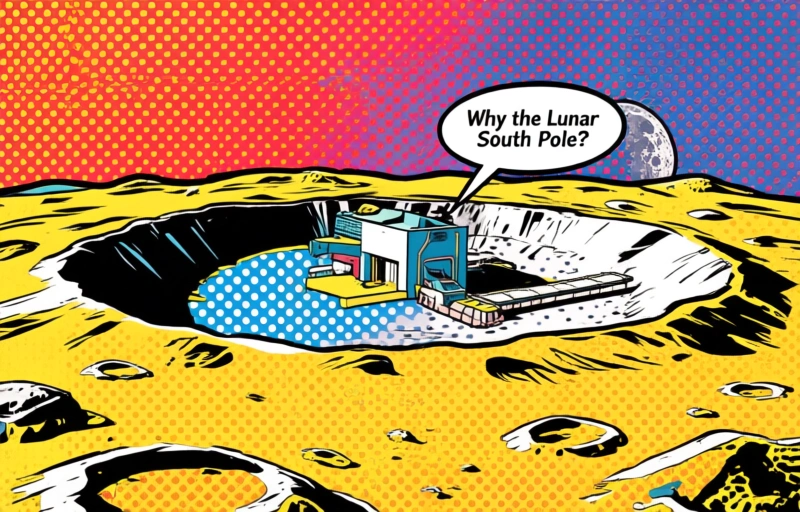
The South Pole is a prime location for a Moon base because it offers unique advantages. There are areas of near-constant sunlight, which can power solar panels, and permanently shadowed regions that may contain water ice. Water is crucial for drinking, breathing, and even making rocket fuel. By scouting this region, MoonFall drones will help identify the best spots for a base.
### How the Drones Work
- **Hopping Mechanism:** The drones use a spring-like system to bounce across the surface, avoiding obstacles like rocks and craters.
- **Sensors and Cameras:** They are equipped with advanced sensors to map the terrain, measure temperature, and analyze soil composition.
- **Autonomous Navigation:** The drones operate independently, using AI to make decisions and avoid hazards.
This approach is more flexible than traditional rovers, which can get stuck or struggle in steep areas. It's a smart way to explore a place where every inch matters.
### The Bigger Picture
This mission is part of NASA's broader Artemis program, which aims to land the first woman and next man on the Moon by 2025. The goal is to establish a sustainable human presence there, with a base that could serve as a stepping stone for missions to Mars. The MoonFall drones are a crucial first step in making that vision a reality.
### What This Means for Space Exploration
For professionals in the space industry, this development is exciting. It shows how creative engineering can solve real-world problems in extreme environments. The hopping design could also inspire future robots for exploring other planets, like Mars or even asteroids. It's a reminder that sometimes the best ideas come from nature.
### Challenges Ahead
Of course, there are hurdles. The Moon's South Pole is incredibly cold, with temperatures dropping to minus 280 degrees Fahrenheit. The drones need to withstand that while maintaining power and communication. Plus, the terrain is unpredictable, with steep slopes and deep shadows. But NASA's track record suggests they're up to the task.
### Final Thoughts
In short, the MoonFall drones are a game-changer. They offer a fresh way to explore the Moon and pave the path for a permanent base. Whether you're a space enthusiast or a professional in the field, this is a development worth watching. The future of lunar exploration is hopping along, and it's moving fast.
For more details, check out the original article at [The European Magazine](https://example.com) (nofollow).