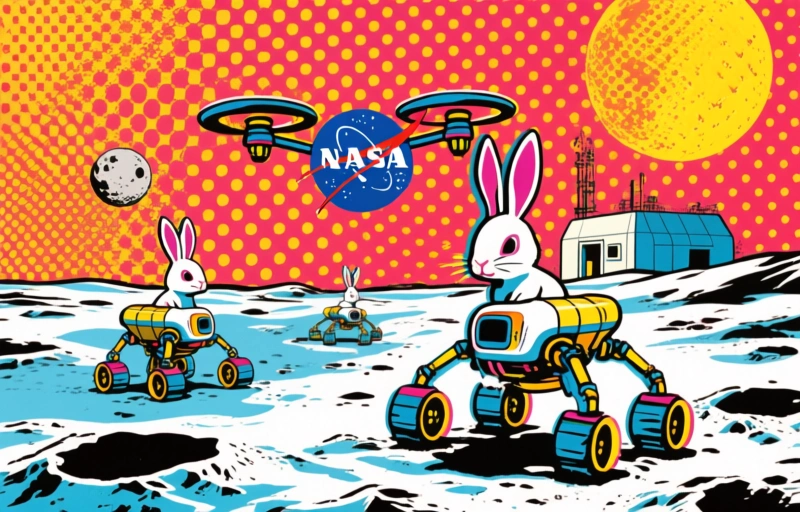
NASA's MoonFall drones, designed to hop like rabbits across the lunar South Pole, will scout sites for the first Moon base. These autonomous drones use a hopping mechanism to navigate rough terrain, map resources, and support future habitation plans.
NASA is taking a bold leap in lunar exploration with its MoonFall drones, designed to hop across the lunar South Pole like rabbits. These innovative drones will play a key role in scouting potential sites for the first Moon base, supporting future exploration and habitation plans.
### Why Rabbit-Like Drones?
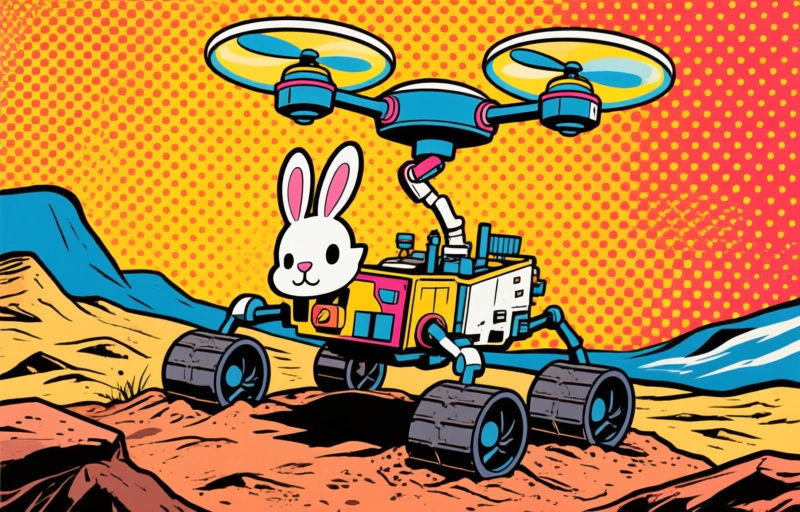
Traditional rovers can get stuck in rough terrain, but hopping drones offer a flexible solution. By mimicking the way rabbits move, these drones can navigate the Moon's uneven surface, covering more ground and reaching hard-to-access areas. This approach could save time and resources during the critical scouting phase.
### The Lunar South Pole: A Prime Location
The lunar South Pole is a top candidate for a Moon base because of its unique features. It has areas that are permanently shadowed, which may contain water ice, and other spots that receive nearly constant sunlight, ideal for solar power. The MoonFall drones will help identify the best spots for landing, building, and sustaining a human presence.
### How the Drones Work
- **Hopping Mechanism**: The drones use a spring-like system to leap up to 30 feet in a single bound, covering distances quickly.
- **Sensors and Cameras**: Equipped with high-resolution cameras and sensors, they can map terrain, measure temperature, and detect resources.
- **Autonomous Navigation**: The drones can operate without real-time control from Earth, making decisions on the fly to avoid obstacles.
### Supporting Future Exploration
These drones aren't just for scouting. They'll also help with:
- **Site Preparation**: Identifying safe landing zones for future crewed missions.
- **Resource Mapping**: Locating water ice and other materials that could be used for fuel or life support.
- **Communication Relay**: Acting as mobile communication hubs to connect astronauts and equipment.
### A Step Toward Sustainable Habitation
NASA's Artemis program aims to establish a long-term human presence on the Moon. The MoonFall drones are a critical piece of that puzzle, providing the data needed to build a base that can support astronauts for extended stays. This work also lays the groundwork for future missions to Mars.
### What This Means for Space Enthusiasts
If you're excited about space exploration, this is a big deal. Hopping drones could revolutionize how we explore other worlds, making it cheaper and safer to send missions. The Moon is just the beginning—similar technology could be used on Mars or asteroids.
### Challenges Ahead
Of course, there are hurdles. The Moon's extreme temperatures, from over 200°F in sunlight to -400°F in shadow, test the drones' durability. Dust and low gravity also pose risks. But NASA's engineers are confident these challenges can be overcome.
### Looking Forward
The MoonFall drones are expected to launch within the next few years, with initial tests on Earth before heading to the Moon. As we get closer to that first Moon base, these rabbit-like drones will be hopping ahead, paving the way for humanity's next giant leap.
- **Key Takeaway**: NASA's innovative hopping drones could transform lunar exploration, making it faster and more efficient to find the perfect spot for a Moon base. This technology isn't just cool—it's essential for our future in space.