Market Turmoil: Trump's Greenland Tariff Threat Hits European Stocks
William Williams ·
Listen to this article~4 min
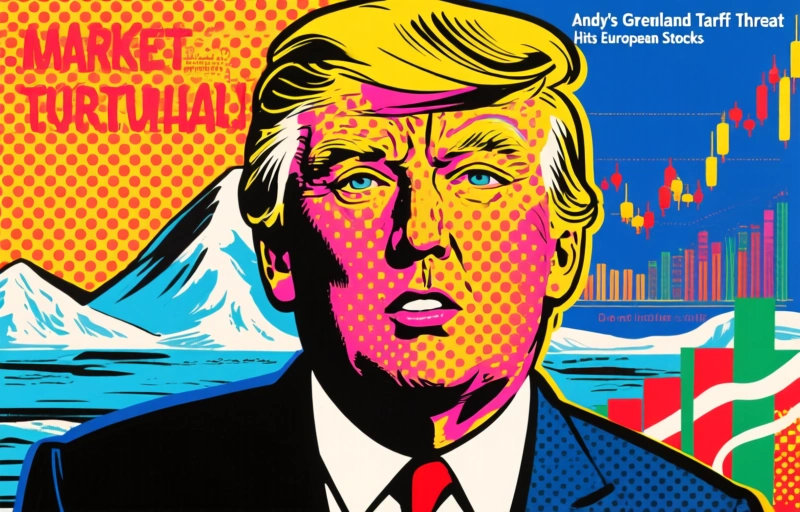
European stocks fell after former President Trump threatened tariffs over Greenland, reigniting trade fears and market uncertainty for businesses navigating transatlantic relations.
So here we are again. Just when you thought the transatlantic trade landscape might settle into something resembling calm, a new flashpoint emerges. This time, it's not about steel, aluminum, or digital taxes. It's about a vast, icy island most of us associate with glaciers and polar bears: Greenland. And the ripple effect is being felt immediately in boardrooms and trading floors across Europe.
Former President Donald Trump's reported threat to impose tariffs on select European nations over Greenland has sent a fresh wave of uncertainty through the markets. European stocks took a noticeable dip as investors processed the news. It's a classic case of geopolitical friction translating directly into financial volatility. One minute you're analyzing quarterly reports, the next you're weighing the implications of a territorial dispute in the Arctic.
### Why Greenland? Understanding the Strategic Stakes
On the surface, it might seem like an odd focal point. But look a little deeper, and Greenland's significance becomes clear. It's not just about ice. It's about immense untapped mineral resources, newly accessible shipping routes due to climate change, and a strategically crucial location between North America and Europe. For global powers, it represents a key piece in the future geopolitical puzzle. When a figure like Trump links trade policy to this territory, markets don't just shrug. They recalculate risk.
The immediate reaction was a sell-off in sectors perceived as most vulnerable to escalating trade tensions. Automotive, aerospace, and luxury goods stocks were particularly jittery. It's a familiar pattern, but no less disruptive for being predictable. Business leaders are now left asking: Is this a serious policy shift or a negotiating tactic? The answer to that question will determine the market's next move.
### The Immediate Impact on European Business
Let's break down what this means for professionals on the ground. First, there's the direct hit to companies with significant export business to the US. New tariffs would squeeze margins and force difficult pricing decisions. Second, and perhaps more insidious, is the return of planning paralysis. How do you commit to long-term investment or supply chain decisions when the rules of trade can change over a remote island?
- **Supply Chain Jitters:** Executives are re-examining logistics and manufacturing footprints, wondering if they need more regional diversification.
- **Currency Fluctuations:** The Euro and Pound often bear the brunt of Euro-Atlantic tensions, adding another layer of complexity for treasurers.
- **M&A Hesitation:** Potential deals and partnerships might be put on ice (no pun intended) until the political air clears.
As one anonymous Frankfurt-based fund manager put it, "We've built resilience for the known unknowns. It's these unexpected, niche geopolitical sparks that are hardest to hedge against."
### Looking Beyond the Headlines
While the headline is about stocks falling today, the real story is about long-term confidence. European businesses have spent years adapting to a new, less predictable trade environment. Each new threat, whether realized or not, chips away at the certainty needed for growth. It pushes companies toward caution, potentially slowing innovation and expansion.
The coming days will be crucial. Will this threat materialize into concrete policy, or will it fade as another headline in a busy news cycle? For now, corporate strategists are advising a stance of vigilant preparation. That means stress-testing financial models against various tariff scenarios and ensuring communication lines with political stakeholders are open.
In the end, the Greenland situation is a potent reminder. In our interconnected world, a dispute in the Arctic can freeze activity in European markets thousands of miles away. The challenge for business leaders is to stay informed, stay agile, and navigate not just the economic currents, but the political tides that shape them.