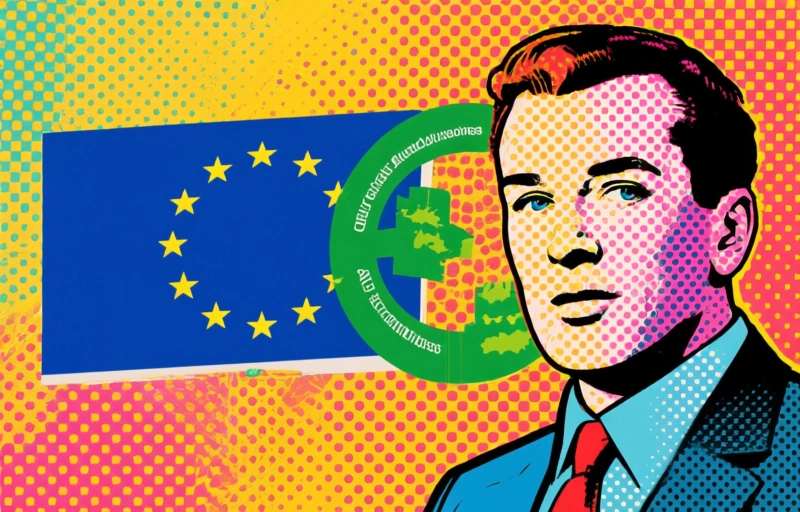
The EU's Circular Economy Act aims to transform how we produce and consume. But for it to succeed, it must work for real businesses. Here's how companies can turn circularity into opportunity and what policymakers can do to help.
The European Union's Circular Economy Act is a big deal. It's not just another regulation. It's a fundamental shift in how we think about resources, waste, and business models. But for it to truly succeed, it needs to work in the real world, for real businesses.
### What is the Circular Economy Act, Really?
At its core, the Act aims to decouple economic growth from resource consumption. That means we can grow our economy without chewing through more raw materials. It's about designing products to last longer, be repaired easily, and eventually be recycled into new products. Think of it as moving from a linear "take-make-dispose" model to a circular one where waste is designed out of the system.
But here's the thing: grand policy ideas often look great on paper. The real challenge is making them practical for companies of all sizes, especially the small and medium-sized ones that form the backbone of the EU economy.
### The Practical Challenges for Businesses
Let's be honest. For many businesses, compliance feels like a burden. They're already juggling supply chain issues, labor shortages, and inflation. Adding new reporting requirements or design standards can feel like just another headache.
Here are some of the key hurdles:
- **Complexity of new rules**: The Act introduces requirements for product durability, repairability, and recyclability. For a small manufacturer, understanding and implementing these requirements can be overwhelming.
- **Upfront costs**: Shifting to circular production often requires investment in new materials, processes, or technology. That's money that could have gone elsewhere.
- **Lack of clear guidance**: Many businesses aren't sure what "circular" looks like for their specific sector. They need concrete examples and roadmaps, not just broad principles.
### How to Make It Work: A Practical Approach
The good news is that many companies are already finding ways to turn circularity into an opportunity. It's not just about compliance. It's about innovation, efficiency, and building stronger relationships with customers.
**Start with your supply chain.** Look at where your biggest waste streams are. Could you use recycled materials instead of virgin ones? Could you design products that are easier to disassemble for repair?
**Think about your business model.** Instead of selling a product, could you lease it? That gives you control over the product's end-of-life and creates a recurring revenue stream. It's a model that's working well for everything from office furniture to industrial machinery.
**Focus on communication.** Your customers care about sustainability. If you're making genuine efforts to be circular, tell them about it. It's a powerful differentiator in a crowded market.
### The Role of Policy and Support
For the Act to truly succeed, policymakers need to do more than just set rules. They need to provide support. This means:
- **Clear, sector-specific guidance** that helps businesses understand what they need to do and by when.
- **Financial incentives** like tax breaks or grants for companies that invest in circular practices.
- **Simplified reporting** that doesn't drown small businesses in paperwork.
When the rules are clear and the support is there, businesses can focus on what they do best: innovating and serving their customers.
### A Future Worth Building
The Circular Economy Act isn't just about the environment. It's about building a more resilient, innovative, and competitive European economy. A system where we waste less, create more value, and build a future that works for everyone.
It won't be easy, and it won't happen overnight. But with the right approach, it's absolutely achievable. And the businesses that embrace it now will be the ones leading the way tomorrow.