Los Angeles Deploys Futuristic Vehicle to Combat Post-Wildfire Pollution
Jan de Vries ·
Listen to this article~4 min
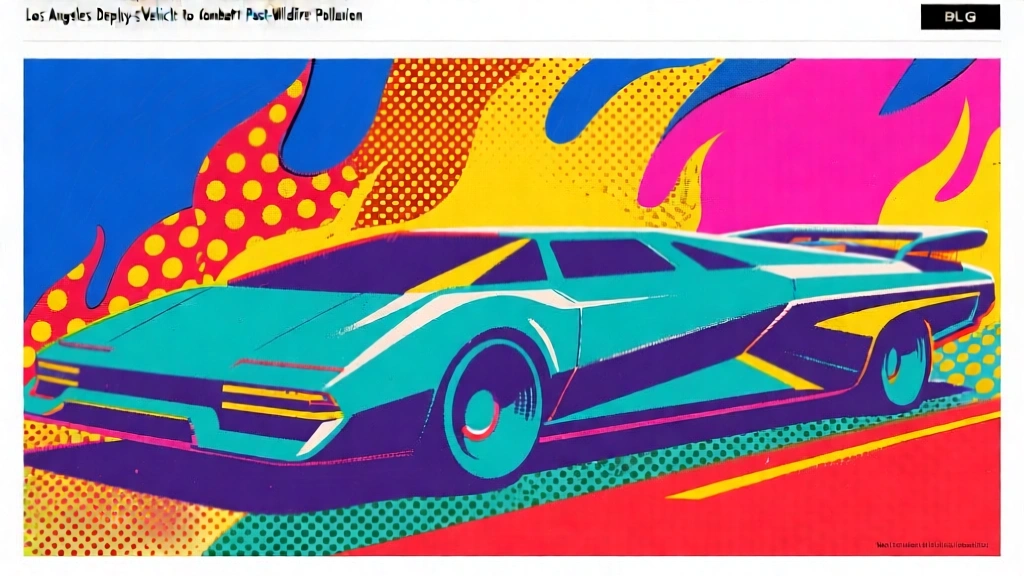
Los Angeles has deployed a futuristic, mobile air purification vehicle to actively clean toxic pollution from the atmosphere following devastating wildfires, targeting the dangerous 'toxic soup' that lingers.
You know how after a wildfire, that lingering haze just hangs in the air? It's more than just smoke—it's a nasty mix of chemicals and particles that can stick around for weeks, making the air dangerous to breathe. Well, Los Angeles just rolled out something straight out of a sci-fi movie to tackle that exact problem. It's a futuristic, Ghostbusters-esque vehicle designed specifically to clean up what officials are calling a post-wildfire 'toxic soup.'
### What This New Vehicle Actually Does
Think of it less like a car and more like a giant, mobile air purifier on wheels. After the devastating wildfires that have hit California, the air quality plummets. This machine is engineered to go into affected areas and actively remove toxic pollutants from the atmosphere. It doesn't just wait for the wind to blow the bad stuff away; it sucks it in, filters it, and releases cleaner air. It's a proactive approach to a problem that usually leaves communities just waiting and hoping for the air to clear.
### Why This Tech Is a Game-Changer
Here's the thing about wildfire aftermath that a lot of people don't realize. The immediate flames are catastrophic, but the air pollution that follows can be just as harmful over the long term. We're talking about microscopic particles that can travel deep into your lungs and even enter your bloodstream. For cities like LA, nestled in basins where air can get trapped, this new vehicle could be a critical tool for rapid response. Instead of telling residents to stay indoors for weeks, this tech aims to actively clean the outdoor environment faster.
It's a shift from passive to active cleanup. The deployment strategy is fascinating too. The city plans to send these units into neighborhoods hit hardest by smoke residue, prioritizing areas near schools and hospitals. The goal is to create cleaner 'bubbles' of air in communities that need it most while the broader environment recovers.
### The Bigger Picture for Urban Air Quality
This isn't just about wildfires, though that's the main event right now. This technology represents a new way of thinking about urban air quality management. If a vehicle can scrub toxic soup from post-wildfire air, what else could it handle? Think about industrial accidents, or even just chronically polluted urban corridors. It opens up a conversation about mobile, on-demand air purification as a public service.
Of course, there are questions. How many of these units would a city need to make a real difference? What's the operational cost, and can the filtration systems handle the intense chemical mix of a burned urban-wildland interface? These are the challenges engineers are working on now. But the very fact that this prototype is on the streets of LA shows a commitment to innovative solutions for environmental health crises.
As one city official put it during the unveiling, 'We can't stop the wildfires from happening every year, but we can get smarter about how we deal with the consequences.' That's really what this is about—adapting to the new reality of climate change with smarter tools. It's a recognition that protecting public health means tackling air pollution at the source, even when that source is the aftermath of a disaster. For residents in fire-prone areas, seeing this kind of innovation offers a tangible bit of hope that the air they breathe can be made safer, faster.