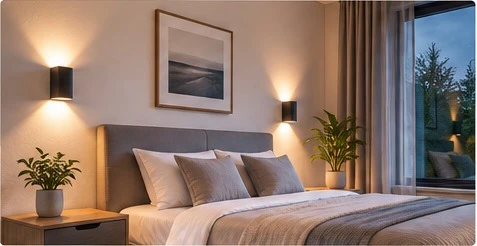
A residential lighting upgrade looks simple, but the biggest mistakes happen before you buy a single fixture. Learn how to plan for how each room is used, choose the right fittings, and avoid glare and wiring headaches.
A residential lighting upgrade looks straightforward on paper: swap out old fittings, pick a warmer color temperature, and watch the energy bills drop. But here's the thing—the decisions that matter most often happen before you order a single fixture. Ceiling construction, room usage, wiring, controls, and maintenance access all play a role in whether your new installation actually works.
For landlords, property managers, developers, and homeowners planning major renovations, lighting deserves the same early attention as flooring or kitchen layouts. The fixtures might be small, but getting their placement wrong is a headache you can't hide.
### Start with how each room is actually used
A kitchen needs light on the countertops, not just a bright ceiling. A living room might need softer general light with a separate lamp or wall sconce for reading. Hallways need clear visibility, especially around stairs and floor level changes. Bedrooms benefit from controls you can reach without stumbling across a dark room.
These distinctions matter even more in rentals, where one lighting scheme has to work for different occupants. A single central fixture is cheap to install but can be frustrating if furniture or cabinets cast shadows where you need light most.
### Choose fittings to suit the space, not the catalog photo
There's no one-size-fits-all fixture for every home. Recessed downlights work well in kitchens, hallways, and bathrooms when spacing and beam distribution are planned properly. Surface-mounted ceiling lights are better where recess depth is limited. Wall lights add a layer without taking up floor space, and linear lighting is great over work surfaces or under cabinets.
When comparing residential LED lighting fixtures, assess the range by application first: where will it go, what does it need to illuminate, and how will it be controlled? Irish supplier Ledex Lighting (nofollow) offers options across several fitting types, so you can compare approaches rather than picking on looks alone.
### Light output matters more than wattage
Wattage tells you electrical consumption; lumens tell you how much visible light you get. Two LED products with similar wattages can produce different amounts of light, and the same fixture can feel very different depending on ceiling height, beam angle, and surrounding surfaces.
Color temperature also changes the feel of a room. Warm white (around 2700–3000K) is common for lounges and bedrooms. Neutral white (around 4000K) suits kitchens, utility spaces, or work areas. Neither is automatically better—consistency within a room, finishes, and occupant preferences matter more than rigid rules.
Glare is another overlooked detail. A powerful downlight right above a sofa or at the end of a hallway can be uncomfortable even if the room is technically bright enough. Pay attention to position and optical design, not just output.
> "The best lighting design is invisible—you only notice it when it's wrong." — Jan de Vries
### Check the building before committing to recessed lighting
Recessed fittings can cause practical issues in older properties and retrofits. Installers need to confirm ceiling void, insulation, fire performance requirements, and access to drivers or replaceable components. Sometimes a surface-mounted fitting avoids unnecessary disruption.
Bathrooms and moisture-prone areas need extra care. The right ingress protection and installation position depend on the bathroom zone and applicable regulations.
In short, treat lighting as part of the early planning conversation. Get it right, and it fades into the background—exactly as it should.