Kosovo's Economy: How Global Conflict Impacts Business
Jan de Vries ·
Listen to this article~4 min
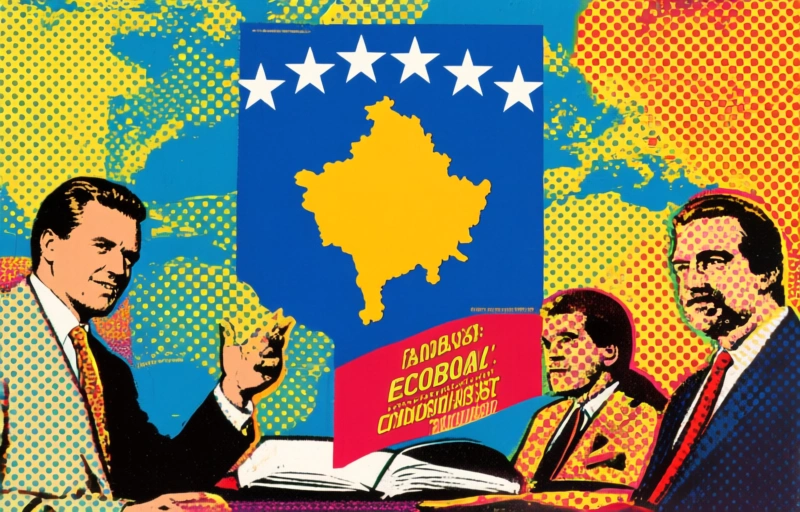
Explore how global conflicts like the Iran war impact Kosovo's vulnerable economy, affecting agriculture and business development in one of Europe's poorest nations.
Let's talk about something that doesn't get enough attention—how global conflicts ripple through small economies thousands of miles away. You're probably wondering how a war in Iran could possibly affect business and agriculture in Kosovo, one of Europe's poorest countries. It's a fair question, and the answer reveals just how interconnected our world has become.
Kosovo sits in southeastern Europe, a landlocked country about the size of Connecticut with a population just under 2 million people. When you're that small and still developing economically, external shocks hit harder. You don't have the cushion that larger economies might enjoy.
### The Agricultural Connection
Kosovo's agricultural sector is particularly vulnerable. We're talking about small family farms, many under 10 acres, growing everything from wheat and corn to fruits and vegetables. These farmers rely on predictable weather patterns and stable input costs—two things that global conflicts can completely disrupt.
When tensions rise in the Middle East, energy prices spike. That means fertilizer becomes more expensive to produce and transport. Fuel costs for farm equipment jump. Suddenly, that small profit margin many Kosovar farmers were counting on disappears. It's like trying to build a sandcastle as the tide comes in—you're working against forces much larger than yourself.
### Business Impacts Beyond the Farm
It's not just agriculture feeling the pinch. Kosovo's developing business sector faces its own challenges:
- Import costs rise dramatically for raw materials
- Export markets become less accessible due to shipping disruptions
- Foreign investment decisions get put on hold
- Local consumer spending drops as prices increase
I've spoken with business owners in Pristina who tell me they're constantly recalculating their budgets. One textile manufacturer explained how cotton prices have become unpredictable—they might quote a client one price on Monday and need to revise it by Wednesday. That kind of uncertainty makes long-term planning nearly impossible.
### The Human Element
Here's what often gets lost in these discussions: the people behind the statistics. We're talking about families trying to make ends meet, young entrepreneurs hoping to build something sustainable, and communities working to improve their standard of living.
One farmer I spoke with put it simply: "When prices go up in places I've never been, my children eat less here at home." That connection—between geopolitical events and daily life—is what makes this topic so important.
### Looking Forward
So what can be done? Kosovo isn't powerless in this situation. There are strategies that can help buffer against these external shocks:
- Diversifying trade partners beyond traditional routes
- Investing in renewable energy to reduce fossil fuel dependence
- Developing more value-added agricultural products
- Building stronger regional economic partnerships
It's about creating multiple pathways instead of relying on single corridors. Think of it like building several bridges instead of just one—if one gets damaged, you still have alternatives.
### Why This Matters to You
You might be reading this from an office in Chicago or a coffee shop in Seattle, wondering why Kosovo's economic challenges should concern you. Here's the thing: in our globalized economy, these disruptions don't stay contained. They affect supply chains, commodity prices, and ultimately, what shows up on store shelves and in investment portfolios.
Understanding these connections helps us make better business decisions, whether we're operating locally or internationally. It reminds us that economic stability anywhere contributes to prosperity everywhere.
Kosovo's story is about resilience in the face of challenges it didn't create. It's about finding ways to thrive when the global winds shift unexpectedly. And honestly, isn't that a challenge we all face in one way or another?