Japan and the Republic of Korea offer significant opportunities for European SMEs in healthcare, clean energy, and advanced technologies. But which market is the better fit? Here are seven factors to consider.
So you're thinking about taking your European SME into Asia. Japan and the Republic of Korea both look promising – especially in healthcare, clean energy, and advanced tech. But which one is right for you? The EU-funded EU Business Hub – Japan and the Republic of Korea programme helps European SMEs explore both markets through targeted business missions. Here are seven factors to consider before you dive in.
### Different Investment Priorities
Japan's energy transition is creating opportunities for European clean-tech suppliers. Under its Green Transformation (GX) strategy, the country aims to mobilize over ¥150 trillion (approximately $1 trillion) in public and private investment over ten years from fiscal year 2023, supporting renewable energy, hydrogen, and industrial decarbonization.
The Republic of Korea has strong electronics, semiconductor, automotive, and medical technology industries, offering opportunities for European suppliers of specialized components and advanced technologies.
For SMEs: Identify where your solution fits into existing industrial supply chains.
### Ageing Populations Drive Healthcare Demand
In Japan, approximately 29% of the population is aged 65 or over, creating demand for elderly care, rehabilitation, assistive technologies, and healthcare efficiency.
The Republic of Korea became a super-aged society in 2024, with over 20% of its population aged 65 or older. Its advanced digital infrastructure creates opportunities in diagnostics, AI-enabled medical devices, and digital health.
For SMEs: Both markets offer healthcare opportunities, but potential customers and applications may differ.
### Local Partnerships Matter
In Japan, European SMEs can explore partnerships with manufacturers, distributors, and engineering companies to reach customers and integrate technologies into established systems.
In the Republic of Korea, medical device distributors, manufacturers, research institutions, and technology companies may provide relevant entry points.
For SMEs: Choose partners with access to your target customers and the technical capacity to support your product.
### Business Practices Require Preparation
Both markets value reliability, product quality, and established business relationships. Decision-making processes, however, vary by company and sector.
European SMEs should prepare technical documentation, evidence of successful applications, and a clear commercial proposition. Local-language support can facilitate negotiations and technical discussions.
For SMEs: Focus on demonstrating measurable value rather than relying on generic market-entry presentations.
### Regulatory Requirements Differ
Medical technologies face distinct regulatory frameworks. In Japan, the Pharmaceuticals and Medical Devices Agency (PMDA) reviews medical products, while in the Republic of Korea, the Ministry of Food and Drug Safety (MFDS) regulates medical devices.
Clean-energy technologies may also require local certification or compliance with technical standards.
For SMEs: Assess regulatory requirements early. European certification does not automatically guarantee market access.
### Test Before Investing
Entering either market does not necessarily require establishing a local office immediately. Distributors, technology partners, and system integrators can provide access to customers and market knowledge.
Trade exhibitions and B2B meetings help companies assess demand, understand technical requirements, and identify potential partners before committing substantial resources.
For SMEs: Validate your commercial proposition before making long-term investments.
### Direct Engagement Makes the Difference
Market research can identify promising sectors, but only direct discussions with potential customers reveal whether a specific technology meets their needs.
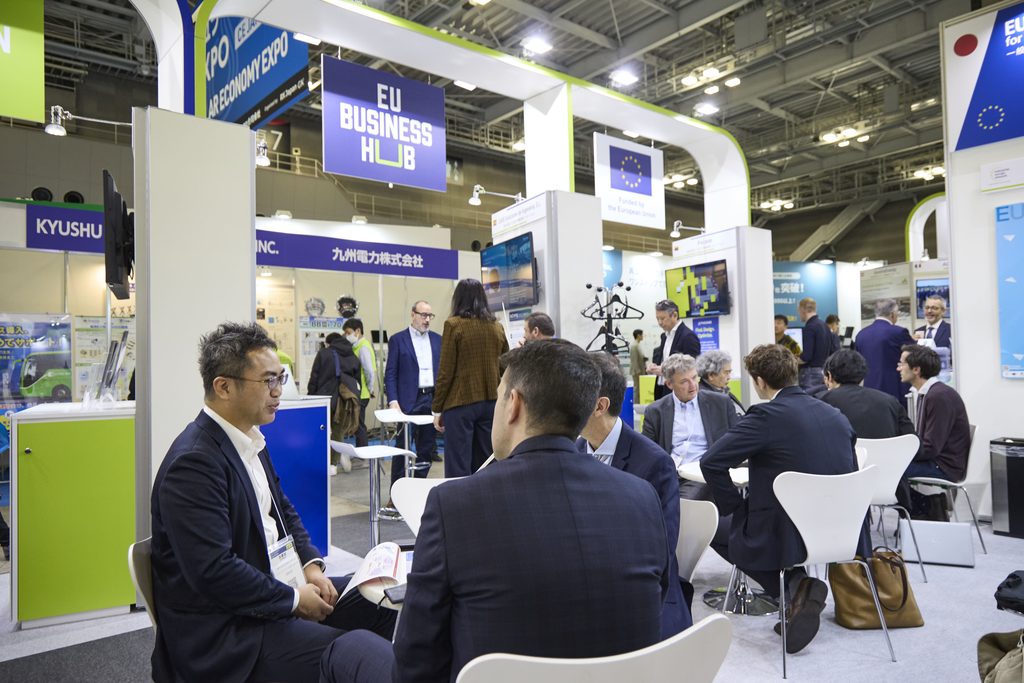
This is where initiatives such as the EU Business Hub come in. They connect European SMEs with key stakeholders in Japan and Korea, helping you navigate the complexities and make informed decisions.
> "Expanding into Asia is a journey best taken with eyes wide open. Do your homework, but also trust your gut – if the market feels right, go for it."
So, which market will it be? Japan or Korea? Each has its own rhythm. Take the time to understand the beat before you start dancing.