Hungary Election Shocker: Orbán Loses to Péter Magyar
Jan de Vries ·
Listen to this article~5 min
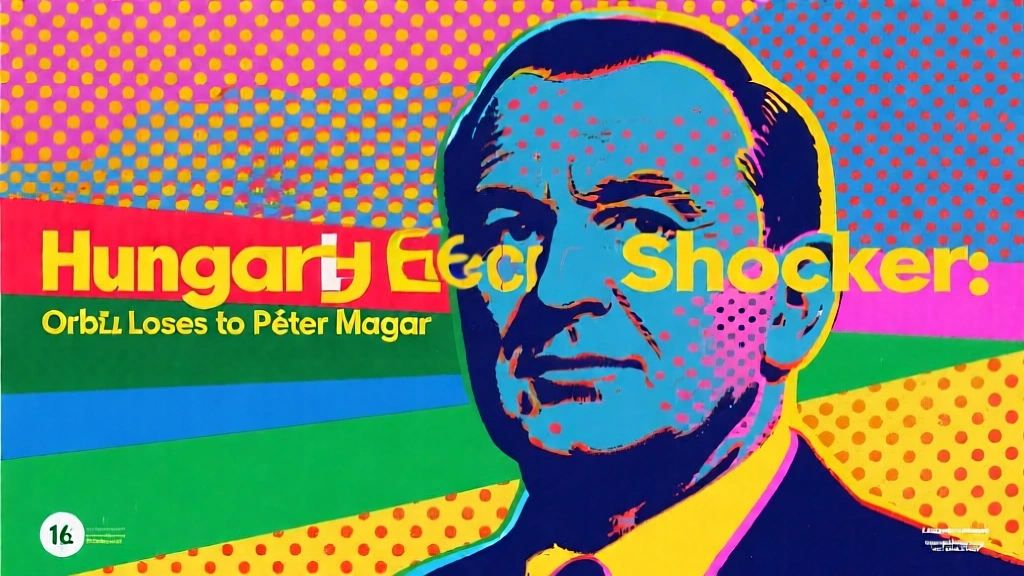
Viktor Orbán's long rule in Hungary ends as Péter Magyar wins a sweeping election victory following record voter turnout, marking a major political shift.
Well, that's a political earthquake you don't see every day. After more than a decade and a half, Viktor Orbán's long rule in Hungary has come to a stunning end. The man who reshaped the country's political landscape, who became a symbol of nationalist conservatism in Europe, has conceded defeat. And the person delivering that defeat? A relative newcomer to the national stage, Péter Magyar.
It's one of those moments that makes you put your coffee down and really pay attention. Because this isn't just about Hungary—it's a signal. A signal about what voters are thinking, about what they're tired of, and about what they hope for instead.
### What Just Happened in Hungarian Politics?
Let's break this down simply. Hungary held an election. The voter turnout was record-breaking—people showed up in numbers we haven't seen before. And when the votes were counted, Péter Magyar's movement had won a sweeping victory. It wasn't a narrow margin. It was decisive enough that Orbán himself acknowledged the loss.
Think about that for a second. Orbán has been in power since 2010. That's fourteen years of his Fidesz party dominating Hungarian politics. His government passed laws, changed the constitution, and positioned Hungary as a conservative bastion often at odds with the European Union's mainstream. And now, seemingly overnight, that era is over.
### Who Is Péter Magyar, Anyway?
If you're outside Hungary, you might be scratching your head. Péter Magyar wasn't a household name on the international scene until recently. He's a lawyer, a former diplomat, and until last year, he was actually part of the political establishment he's now overturning. His rise has been meteoric, fueled by a powerful message of change and renewal.
- He tapped into widespread frustration with corruption
- He promised a break from the polarized politics of the past
- He positioned himself as a pragmatic, unifying figure
- He connected with younger voters and urban centers
His campaign wasn't just about policies—it was about tone. It was about offering a different kind of conversation for Hungary.
### Why This Election Result Matters
You might wonder why an election in a country of under 10 million people should matter to anyone else. Here's the thing—Hungary has been a bellwether. Under Orbán, it pioneered what some analysts call 'illiberal democracy.' It tested the limits of EU unity on issues like migration, rule of law, and media freedom.
As one political observer recently noted, 'When Hungary changes direction, it doesn't just change a government—it changes a paradigm.' This result suggests that paradigm might be shifting. Voters, even in countries with strong nationalist movements, can and do seek alternatives when they feel the current path isn't working.
### The Record Turnout Tells Its Own Story
Let's talk about that voter turnout for a minute. When people who usually stay home decide to show up, they're sending a message. They're saying this election is different. This choice matters. That energy, that engagement, is what propelled Magyar to victory. It wasn't just his supporters voting—it was Orbán's opponents finally feeling like they had someone to vote *for*, not just against.
It reminds me of conversations I've had with friends about politics. Sometimes you don't vote because you're happy with everything. Sometimes you vote because you've reached a breaking point, because you believe change is possible. That seems to be what happened here.
### What Comes Next for Hungary?
So Orbán concedes, Magyar prepares to take office, and Hungary wakes up to a new political reality. The immediate questions are practical. Will there be a smooth transition of power? How will Magyar's government approach Hungary's relationship with the EU and NATO? What policies will change first?
The longer-term questions are bigger. Is this a one-time reaction, or a lasting realignment? Does Magyar's victory represent a new model for challenging entrenched populist leaders across Europe and beyond? Only time will tell.
But for today, the story is clear. A political era defined by one dominant figure has ended. A new one, full of uncertainty but also possibility, has begun. It's a reminder that in politics, as in life, nothing lasts forever. Not even what seems unshakeable.