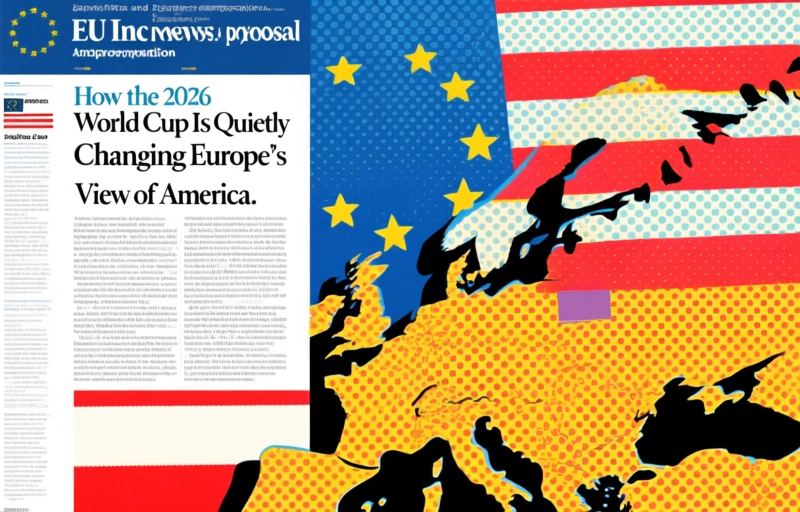
Jing Zhao Cesarone explores how the 2026 World Cup is changing European perceptions of the U.S. through travel and cultural exchange.
When the 2026 FIFA World Cup kicks off across the United States, most Americans will be focused on goals, saves, and penalty shootouts. But something bigger is happening off the pitch. For millions of European fans making the trip across the Atlantic, this tournament is becoming a crash course in what the U.S. is really like — beyond the headlines, the stereotypes, and the Hollywood versions.
Jing Zhao Cesarone, a keen observer of cultural shifts, has been tracking this phenomenon. She argues that the World Cup is doing something no diplomatic summit or trade deal ever could: it's putting ordinary Europeans in American cities, suburbs, and small towns, and letting them draw their own conclusions.
### The Power of Personal Experience
There's a reason why travel changes minds faster than any political speech. When you're standing in line for a hot dog in Houston or taking a selfie in front of the Golden Gate Bridge, you're not thinking about foreign policy. You're thinking about the friendly stranger who helped you find your gate, the surprisingly good public transit in Chicago, or the sheer size of everything.
Cesarone points out that this kind of ground-level interaction cuts through the noise. Europeans who arrive with preconceived notions often leave with a more nuanced view. They discover that the U.S. isn't a monolith. It's a patchwork of regional cultures, each with its own vibe, accent, and way of doing things.

### Travel as a Cultural Bridge
The tournament is expected to draw over 6 million international visitors, with a significant chunk coming from Europe. That's a lot of potential for changed perspectives. These fans aren't just staying in tourist bubbles. They're riding Ubers, shopping at local grocery stores, and striking up conversations with locals in bars.
- They're learning that American friendliness isn't just a TV trope.
- They're discovering that the food is way more diverse than burgers and fries.
- They're realizing that the country is geographically vast — it's over 2,800 miles from New York to Los Angeles, with everything from deserts to forests in between.
### The Economic Ripple Effect
Beyond the cultural exchange, there's a tangible economic impact. European visitors are spending billions of dollars on flights, hotels, tickets, and meals. That spending is spread across 16 host cities, from Seattle to Miami, injecting cash into local economies and creating a temporary boom for small businesses.
But the real long-term gain might be in soft power. When Europeans go home and tell their friends and family about their experiences, they become unofficial ambassadors. They might not change their political opinions overnight, but they'll likely think twice before painting the entire country with one brush.
### A New Kind of Connection
Cesarone suggests that this kind of cultural exchange is more valuable than ever in a world that often feels polarized. The World Cup offers a rare chance for people from different backgrounds to share something joyful and universal — a love of sport. And in that shared experience, barriers tend to come down.
Of course, not every interaction will be perfect. There will be language barriers, culture shocks, and maybe a few arguments over what constitutes a proper penalty call. But that's okay. The goal isn't to create a perfect picture of America. It's to replace a blurry, two-dimensional image with something real and three-dimensional.
### The Lasting Impact
Will the 2026 World Cup permanently change Europe's view of the U.S.? That's probably too big a promise for any single event. But it's a start. Every conversation had, every meal shared, every photo posted to Instagram chips away at the stereotypes.
As Cesarone puts it, the tournament is a chance to see America with fresh eyes. And for many Europeans, that might be the most valuable souvenir they bring home.