Holocaust Survival: Kalman & Leopold's Auschwitz Testimony
Jan de Vries ·
Listen to this article~4 min
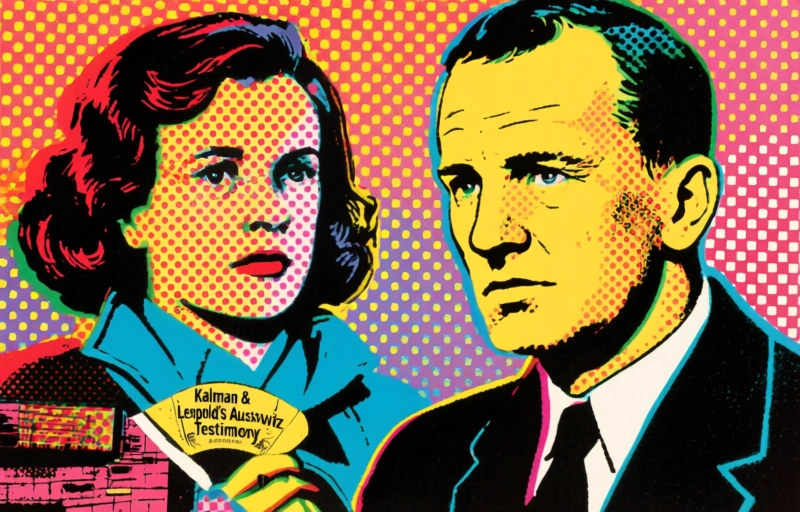
Kalman and Leopold share their survival of Mengele's Auschwitz experiments—one of the last firsthand Holocaust testimonies preserving crucial history before living memory fades.
When we talk about history, sometimes the most important stories come from voices we're about to lose forever. That's what makes Kalman and Leopold's account so vital—they're offering one of the last firsthand testimonies from survivors of Dr. Mengele's brutal experiments at Auschwitz.
I was thinking about this the other day, how we're at this critical moment where living memory of the Holocaust is fading. These aren't just stories in history books—they're real experiences from people who lived through unimaginable horror. And we need to listen while we still can.
### Why Their Story Matters Today
You might wonder why this matters so much right now. Well, we're seeing a rise in Holocaust denial and distortion worldwide. Firsthand accounts like Kalman and Leopold's serve as living proof against those who would rewrite history. They put human faces on statistics that can sometimes feel too large to comprehend.
Their testimony isn't just about survival—it's about resilience in the face of systematic dehumanization. Mengele's experiments represented some of the most extreme cruelty of the Nazi regime, and surviving them meant enduring both physical and psychological torture.
### The Weight of Being Among the Last
There's this heavy responsibility that comes with being among the last witnesses. Kalman and Leopold carry memories that most of us can't even imagine, yet they've chosen to share them. That takes incredible courage, especially when recounting trauma that's decades old but still feels immediate.
What strikes me most is how their account adds nuance to our understanding. History often gets simplified over time, but personal stories keep the complexity alive. They remind us that:
- Survival often depended on chance moments and small acts of kindness
- The psychological scars lasted long after physical liberation
- Each person's experience was unique, even within the same camp
### Preserving Memory for Future Generations
We're at this turning point where soon, no living survivors will remain. That changes how we remember the Holocaust. Written and recorded testimonies become our primary connection to these events. Kalman and Leopold's story isn't just theirs anymore—it becomes part of our collective memory.
I keep coming back to something a historian friend once told me: "When survivors speak, history breathes." That's exactly what's happening here. These aren't dry facts—they're lived experiences with emotional truth that textbooks can't capture.
### What We Can Learn From Their Experience
Their story isn't just about looking backward. It has lessons for us today about human dignity, prejudice, and the importance of speaking up. In a world where hate speech and discrimination still exist, their testimony serves as a warning about where such attitudes can lead if left unchecked.
Most importantly, they remind us that behind every historical event are individual human beings with stories worth hearing. As Kalman and Leopold share their experiences, they're not just recounting history—they're challenging us to be better, to remember, and to ensure such atrocities never happen again.
Their courage in speaking out, despite the pain it must bring, gives us this precious opportunity to learn directly from history. And that's something we shouldn't take for granted—not when time is running out to hear these voices firsthand.