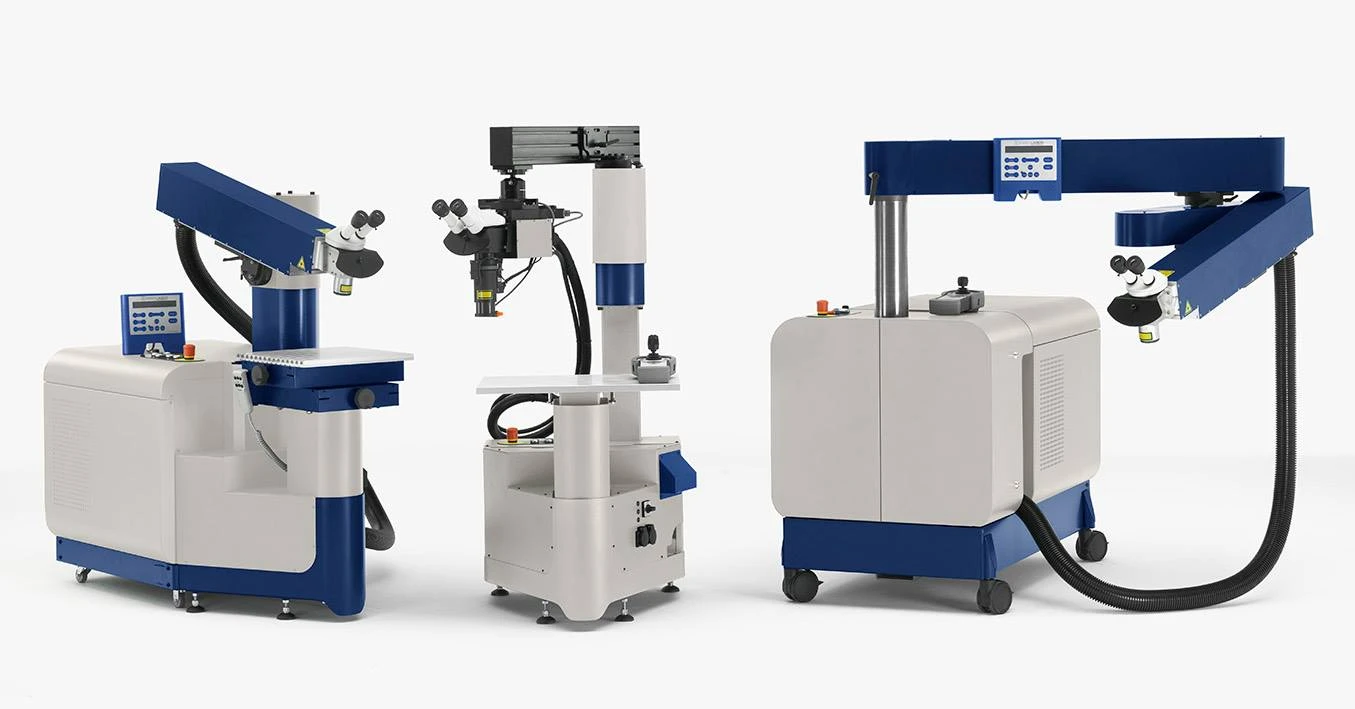
How a German manufacturer's laser welding systems are solving the billion-dollar problem of precision repair downtime for Europe's top tooling, medical, and aerospace firms.
Let's talk about a problem that's costing manufacturers across Europe millions. It's not always the big equipment failure. More often, it's the small stuff. A worn sealing edge on a critical mold, a hairline crack in an aerospace jig, a chipped cavity in a medical device tool. These tiny defects can shut down entire production lines. The traditional fix? Outsourced TIG welding or, worse, a full, costly remake. But there's another way, and it's coming straight from a workshop in Hanau, Germany.
Sigma Laser, founded back in 2005, saw this pain point clearly. They're not just another machine builder. They've built their entire philosophy around solving one core headache: how to perform precise, repeatable repairs without the destructive heat and agonizing downtime that comes with conventional methods.
### The Real Cost of a Simple Repair
We all know the drill. A tool fails. You ship it out for repair. Then you wait. And wait. The transport, the queue time, the paperwork—all while your press or assembly line sits silent. The invoice from the repair shop is just the start. The real killer is the lost output and the missed delivery deadlines that can damage client relationships.
And for industries like medical devices or aerospace? The stakes get even higher. Re-making a validated mold can trigger a mountain of new qualification steps. Rework on a flight-critical fixture needs perfect traceability. It's a logistical and financial nightmare.
### A Laser-Focused Solution
This is where Sigma Laser's approach changes the game. They champion laser welding as a "repair-first" strategy. Think of it as surgical precision for metal. Instead of bathing a large area in heat, it adds material only exactly where it's needed. The heat-affected zone is incredibly small, which means less distortion, less risk of softening the surrounding material, and way less time spent on post-repair polishing and grinding.
For a plant manager, this means bringing a $50,000 mold back to spec without a complete strip-down or a $100,000 remake. For procurement, it means keeping approved tooling in service years longer. That's a direct impact on the bottom line.
### The Machine That Comes to You (or Stays Put)
Sigma's real genius might be in their product flexibility. They offer six core systems, but they all share a common, open-frame, five-axis design. This isn't about forcing your workpiece to fit the machine. The philosophy is simple: fit the machine to the task.
- **Mobile Systems:** Need to fix a massive, installed die? Roll a Sineo or Sirius unit right up to the press. These are open, wheeled workstations with no workpiece size or weight limit. They eliminate the need for risky lifting, trucking, and re-rigging.
- **Stationary Systems:** For toolrooms that prioritize repeatability, the Sidanus and Siega lines offer a fixed, powerful station. Saved programs ensure every repair on a batch of parts is identical, shift after shift.
As one industry veteran put it, "The consistency is what sells it. It turns a repair from an art form into a documented, repeatable process."
Their technology backs this up. From their patented Super Pulse Technology (SPT) for controlled energy delivery to the Sigomatic control software, everything is built for precision and consistency. It's no surprise they've won accolades like the German Design Award, or that their client list includes names like Airbus, Siemens, and Continental across more than 25 countries.
For European manufacturers staring down production delays and soaring tooling costs, Sigma Laser isn't just selling machines. They're offering a different way of thinking: keep critical repairs in-house, under control, and on schedule. In today's competitive landscape, that kind of edge isn't just nice to have—it's essential.