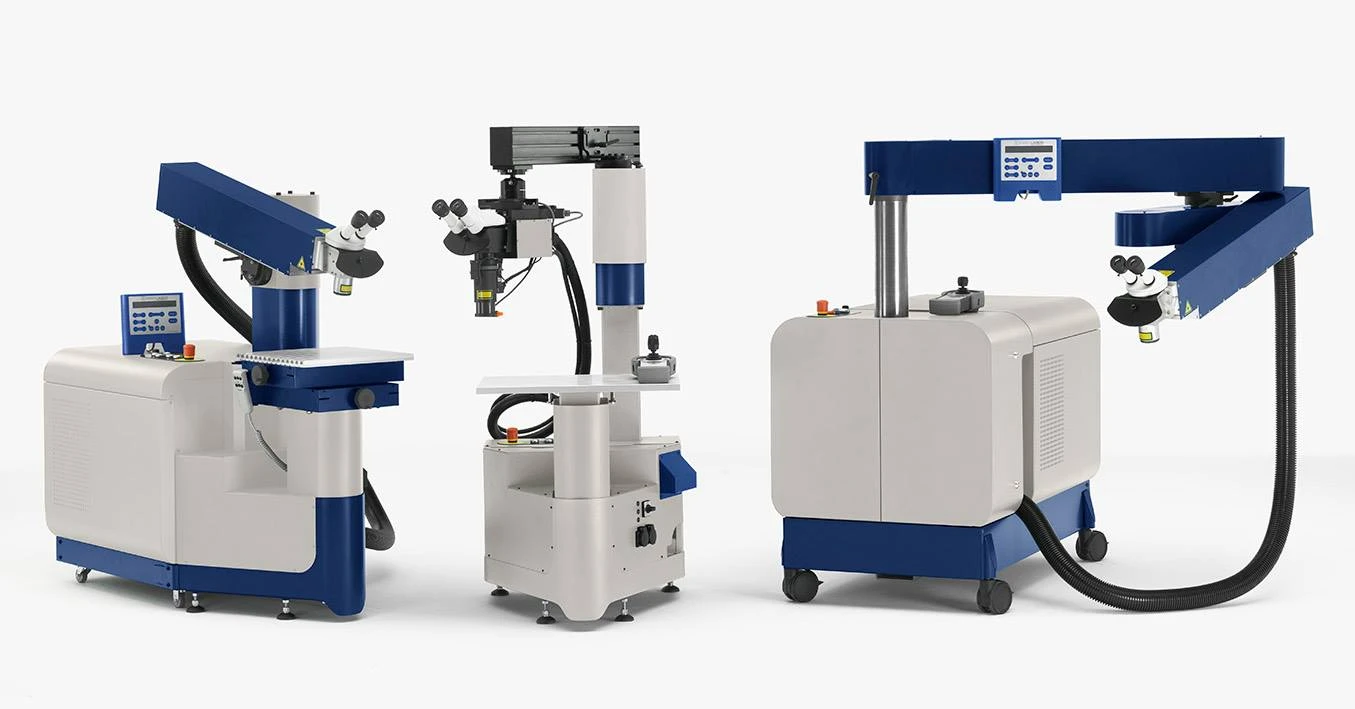
Sigma Laser, a German manufacturer founded in 2005, builds mobile and stationary laser welding machines for precision repairs in tooling, medical, and aerospace industries. Their systems serve over 25 countries, enabling in-house, low-distortion repairs.
### The Quiet Force Behind Europe's Precision Repairs
You know that sinking feeling when a critical mold or die fails mid-production? The press stops, the clock ticks, and suddenly you're facing a costly remake or a long outsourcing queue. But what if you could fix it in-house, with pinpoint accuracy, and get back to work in hours instead of weeks? That's exactly the space Sigma Laser plays in.
Founded in 2005 and headquartered in Hanau, Germany, Sigma Laser builds industrial laser welding machines that bring damaged tools back to life. Their six mobile and stationary systems use Nd:YAG and fiber laser sources with five-axis positioning, serving tool and mold makers, medical device, aerospace, and electronics manufacturers in more than 25 countries.
### Why Laser Welding Beats Traditional Repair
Think of conventional TIG welding as using a sledgehammer to crack a nut—it works, but it brings a lot of heat and distortion. On tool steels, titanium, and nickel-based alloys, that heat can soften the metal or warp critical tolerances. Laser welding, on the other hand, is like a surgeon's scalpel: it adds material only where needed, with a narrow seam and a tiny heat-affected zone. Polishing and regrinding become quicker, and the part often returns to spec without a full strip-down.
Outsourcing a repair adds another layer of pain: transport, queue time, paperwork, and a press sitting idle. For medical devices, re-making a validated mold can trigger new qualification steps. In aerospace, rework on jigs and fixtures needs traceability. Laser welding keeps the repair in-house, documented, and repeatable.
### Mobile or Stationary? It's About Fitting the Machine to the Task
Sigma Laser's philosophy is simple: don't force the part to the machine—bring the machine to the part. Their six systems share an open, five-axis architecture (X·Y·Z·C·D) that brings the optics to the seam at the required angle. That matters when the part is heavy, installed, or simply faster to access on the line.
- **Mobile systems** – Sineo Light, Sineo Fibre, and Sirius Light – are open, wheeled workstations that roll right up to a press, die cart, or bench. The open frame imposes no workpiece size or weight limit, so you skip the lifting and re-rigging.
- **Stationary systems** – Sidanus Light, Sidanus Fibre, and Siega Fibre – are built for workshops that value repeatability at a fixed station. Toolrooms use them for planned repairs, geometry additions, and small-series work under fixtures, with saved programs supporting predictable outcomes.
When a process needs series automation, the Simass modules extend the concept. The Base Unit, Slide, and Rotate modules add flexible motion and part handling for repetitive tasks.
### Key Facts at a Glance
- **Founded:** 2005
- **Headquarters:** Hanau, Germany
- **Product range:** Six 5-axis open-frame laser welding systems: mobile (Sineo Light, Sineo Fibre, Sirius Light) and stationary (Sidanus Light, Sidanus Fibre, Siega Fibre); no workpiece size or weight limit
- **Beam sources:** Pulsed Nd:YAG (1064 nm, Light series) and ytterbium fiber laser (1070 nm, Fibre series)
- **Technology:** Super Pulse Technology (SPT), Sigomatic / Sigomatic Pro control software, remote diagnosis software
- **Recognition:** German Design Award 2025 for the Sineo system
- **Customers:** Manufacturers and suppliers in more than 25 countries. Reference customers include Airbus, Siemens, and Continental
### The Bottom Line
Sigma Laser isn't just selling machines; they're selling uptime. By enabling documented, low-distortion repairs on demanding materials, they help manufacturers avoid costly replacements and keep approved tooling in service longer. In a world where every minute of downtime counts, that's a quiet revolution.
*Note: All prices and measurements in this article are in USD and imperial units.*