Discover how Sigma Laser's German-engineered welding systems enable precise in-house repairs for aerospace, medical, and tooling industries, reducing downtime and extending equipment life across 25+ countries.
You know that sinking feeling when a critical tool fails? A mold cracks, a medical device component wears down, or an aerospace fixture gets damaged. The clock starts ticking immediately.
Conventional repair methods like TIG welding often create more problems than they solve. The heat spreads, parts warp, and suddenly you're dealing with distortion that throws everything out of tolerance. It's frustrating, expensive, and can halt production for days or even weeks.
Then there's the outsourcing dance. Shipping a massive tool out for repair means paperwork, transport delays, and a machine sitting idle while you wait. The real cost isn't just the repair invoice—it's the lost production, missed deliveries, and the sheer uncertainty.
### The Precision Repair Solution
That's where Sigma Laser comes in. Founded in 2005 in Hanau, Germany, this company builds laser welding machines that tackle these exact problems. Their approach is simple but brilliant: bring controlled, localized repair capability right to the workshop floor.
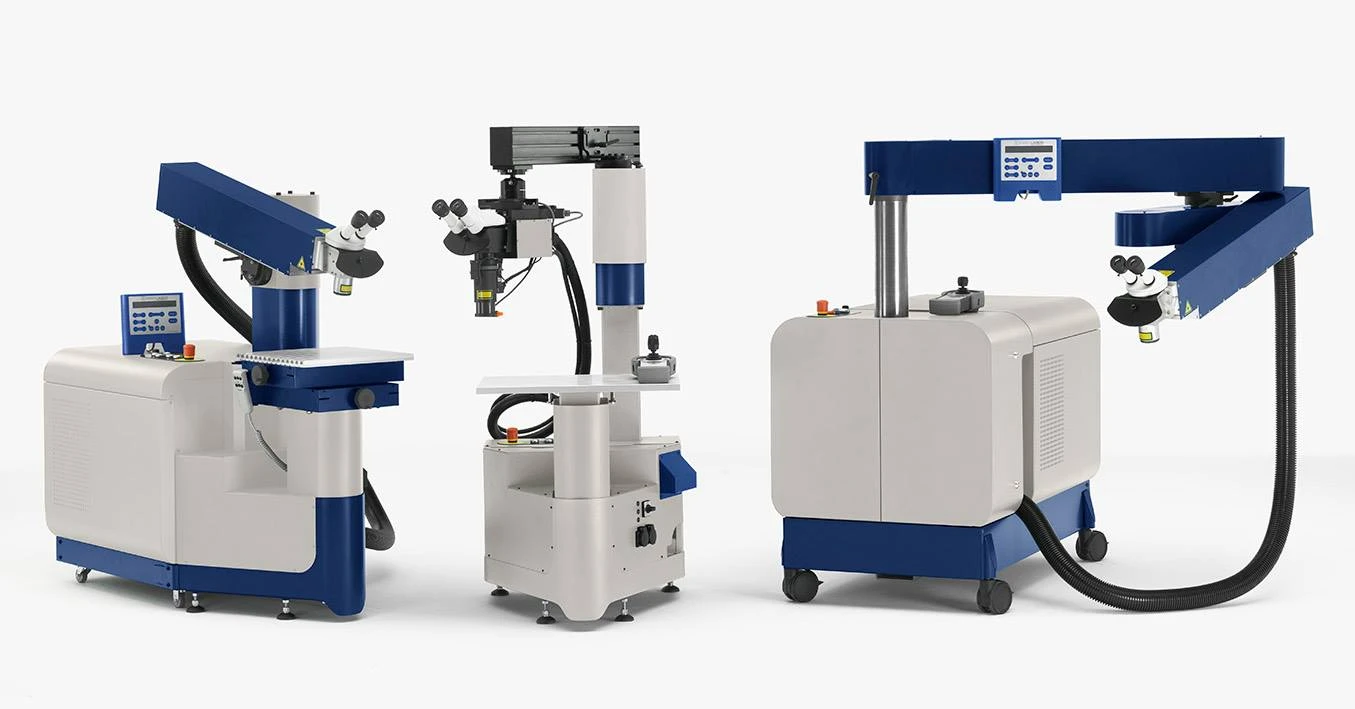
They offer six different systems—three mobile units you can wheel right up to a press or bench, and three stationary models for dedicated workshop stations. What's fascinating is their open-frame design. There's no size or weight limit on the workpiece, which means you're not wrestling with massive components trying to fit them into a machine.
The technology uses either pulsed Nd:YAG or ytterbium fiber laser sources. The key is something they call Super Pulse Technology (SPT), which gives incredible control over the heat input. Instead of baking an entire component, the laser adds material exactly where it's needed with minimal heat spread.
### Why This Matters for Manufacturers
Think about what this changes. For tool and mold makers, it means repairing a chipped cavity without remaking the entire mold. For medical device companies, it keeps validated tooling in service longer without triggering new qualification processes. In aerospace, it allows traceable rework on jigs and fixtures right on the production floor.
Their customers read like a who's who of European manufacturing:
- Airbus for aerospace components
- Siemens for industrial equipment
- Continental for automotive systems
And they're serving companies in more than 25 countries. The Sineo mobile system even won a German Design Award for 2025, which tells you something about both form and function.
### Mobile Versus Stationary: Finding the Right Fit
Sigma's philosophy is refreshingly practical: fit the machine to the task, not the other way around. Their mobile systems—Sineo Light, Sineo Fibre, and Sirius Light—are essentially wheeled workstations that come to the part. Maintenance teams roll them right up to where the problem is.
The stationary systems—Sidanus Light, Sidanus Fibre, and Siega Fibre—work better for shops that want repeatability at a fixed location. They're perfect for planned maintenance, adding geometry to existing tools, or small production runs where consistency matters most.
What really impressed me was their approach to documentation and repeatability. Their Sigomatic control software stores parameters for every repair job. This means the repair you do on Monday morning matches the one done on Friday afternoon, regardless of which operator is running the machine. In industries where consistency is everything, that's a game-changer.
They even offer remote diagnosis software, so if you do run into an issue, their team in Germany can help troubleshoot without waiting for a service technician to fly out.
### The Bottom Line for Operations
At the end of the day, this isn't just about fancy laser technology. It's about practical solutions to real manufacturing headaches. Bringing repair capability in-house means:
- Less downtime waiting for outside vendors
- Fewer replacement parts to purchase
- Extended life for expensive tooling
- Consistent, documented repair processes
One plant manager told me it changed how they think about maintenance entirely. Instead of seeing tool damage as a catastrophe, they now see it as a manageable repair job. The machine pays for itself not just in repair savings, but in keeping production lines running.
As one industry veteran put it: *'The best repair is the one that doesn't feel like a repair at all—it just gets the tool back to work.'*
That's the space Sigma Laser operates in. They're not selling lasers; they're selling production continuity. And in today's manufacturing environment, where every minute of downtime costs thousands, that might be one of the smartest investments a plant can make.