Financial Times Appoints Aaron Kirchfeld as Top European Business Reporter
Jan de Vries ·
Listen to this article~4 min
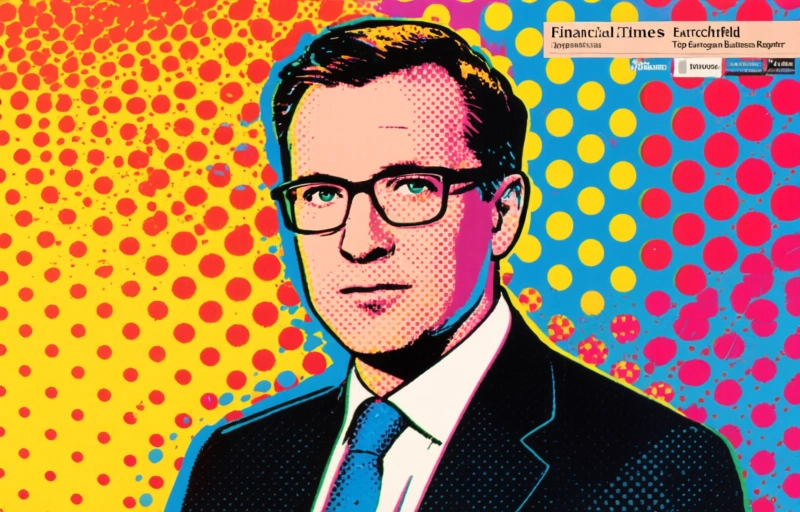
The Financial Times has appointed Aaron Kirchfeld as chief European business correspondent, a strategic move that will shape coverage of Europe's complex economic landscape for professionals and investors.
The Financial Times just made a significant move in its European coverage. They've named Aaron Kirchfeld as their new chief European business correspondent. This isn't just a routine personnel change—it's a strategic decision that signals how the FT plans to cover the complex business landscape across the continent.
Kirchfeld brings a deep well of experience to this critical role. He's been reporting on European finance and corporate stories for years, building a reputation for sharp analysis and breaking important news. His promotion reflects the FT's commitment to having seasoned journalists in key positions, especially as Europe navigates economic uncertainty and shifting trade dynamics.
### What This Appointment Means for Business Coverage
When a major publication like the Financial Times puts someone in charge of European business reporting, it's worth paying attention. Kirchfeld will likely shape how stories about mergers, market trends, and corporate strategies are told. His perspective will influence what readers—including professionals and investors—understand about the European economic environment.
Think about it this way: Europe's business scene is like a complicated chessboard with pieces moving in different directions. Having a correspondent who knows the players and the rules intimately helps make sense of it all. Kirchfeld's appointment suggests the FT wants to double down on authoritative, insider coverage rather than surface-level reporting.

### The Evolving Role of Business Journalism
This move happens against a backdrop where business journalism matters more than ever. With global supply chains shifting and digital transformation accelerating, companies need clear, reliable information to make decisions. Correspondents like Kirchfeld don't just report events—they provide context that helps professionals connect the dots.
Here's what experienced business journalists typically bring to the table:
- Deep source networks across industries and governments
- Ability to explain complex financial concepts clearly
- Historical perspective to distinguish trends from temporary blips
- Skepticism that questions official narratives
Kirchfeld's track record suggests he checks these boxes. His previous work has often focused on how policy changes in Brussels or Frankfurt translate to boardroom decisions in London, Paris, or Berlin.

### Why This Matters for American Professionals
You might wonder why an appointment at a British newspaper should matter if you're focused on business in the United States. The connection is tighter than you'd think. European and American economies are deeply intertwined, with countless companies operating on both sides of the Atlantic.
Consider these points:
- Many U.S. corporations have significant European operations
- EU regulations often influence global standards
- Cross-border mergers and acquisitions frequently link American and European firms
- Economic developments in Europe impact global markets
Having a knowledgeable correspondent covering European business means American professionals get better intelligence about their overseas partners, competitors, and markets. It's like having a skilled interpreter for the language of European commerce.
As one industry observer noted recently, "The quality of business reporting often comes down to the experience and access of individual journalists. Promotions like this signal where publications are investing their resources."
### Looking Ahead
Kirchfeld steps into this role at a challenging time for European business. Between energy transitions, digital privacy regulations, and post-Brexit adjustments, there's no shortage of complex stories to cover. How he approaches these topics—what he emphasizes, what connections he draws—will shape business conversations in boardrooms and trading floors.
The Financial Times clearly believes he's the right journalist for this moment. His appointment reminds us that behind every major publication's coverage are individual reporters with particular backgrounds, sources, and perspectives. Those human elements ultimately determine what stories get told and how we understand the business world.
For professionals keeping tabs on European markets, this is one personnel change worth noting. The lens through which we view European business just got a new focus, and that focus belongs to someone with substantial experience watching how money, power, and policy intersect across the continent.