FT Names Aaron Kirchfeld Chief European Business Correspondent
Jan de Vries ·
Listen to this article~4 min
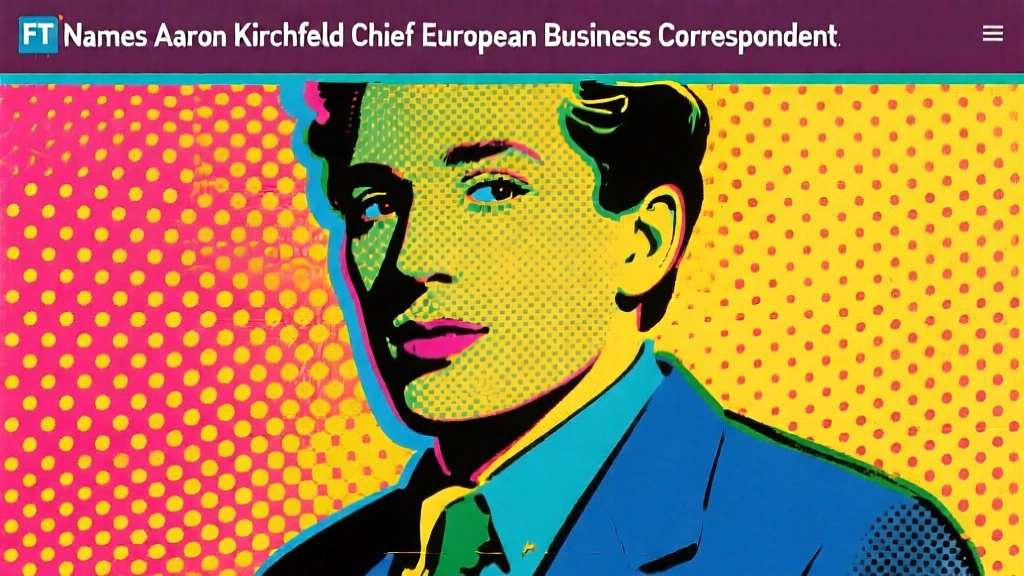
The Financial Times appoints Aaron Kirchfeld as chief European business correspondent, signaling a focus on in-depth analysis for global readers tracking the EU's complex economic landscape.
The Financial Times just made a significant move in its European coverage. They've named Aaron Kirchfeld as their new chief European business correspondent. This isn't just a routine personnel change—it's a signal about where the FT sees the biggest stories unfolding.
For professionals in the United States looking at the European market, this kind of editorial leadership shift matters. It tells you who's shaping the narrative, whose analysis carries weight, and ultimately, which angles on European business you'll be reading about most.
### What This Appointment Means for Readers
Kirchfeld's promotion suggests the FT is doubling down on deep, analytical business reporting from Europe. Think less about quick headlines and more about the underlying forces driving mergers, market shifts, and regulatory changes. If you're doing business across the Atlantic, this is the perspective you need.
His track record speaks for itself. He's been with the FT for years, building a reputation for digging into complex corporate stories. He doesn't just report the 'what'—he explains the 'why' and the 'so what' for a global audience.
### The Bigger Picture for European Business Coverage
This appointment comes at a crucial time. Europe's economic landscape is... let's call it 'interesting.' You've got energy transitions, geopolitical realignments post-Ukraine, and a regulatory environment that's constantly evolving. Having a seasoned correspondent leading coverage means readers get context, not just chaos.
It reminds me of a conversation I had with a client last week. They were trying to understand new EU sustainability reporting rules and felt lost in the technical jargon. Good journalism—the kind a chief correspondent oversees—translates that complexity into actionable insight.
### Why Leadership Changes Matter in Journalism
You might wonder why a single appointment deserves attention. Here's the thing: the person in this role decides which stories get priority, which trends get highlighted, and which voices get heard. They set the tone.
- They influence which sectors get the spotlight—fintech, green energy, traditional manufacturing.
- They build sources at the highest levels of European corporations and governments.
- They mentor younger reporters, shaping the next generation of coverage.
In many ways, Kirchfeld's lens becomes your window into European business. For American professionals, that's a valuable asset. It's like having a trusted guide in a complex market.
### Looking Ahead: What to Expect
So, what can readers anticipate? Probably a continued focus on the intersection of business, finance, and policy. The lines between those worlds are blurring, especially in Europe. A corporate decision in Berlin often ties directly to a regulation from Brussels and financing from London or Frankfurt.
Kirchfeld's challenge—and our opportunity as readers—is to make sense of that interconnectedness. The stories that will matter aren't isolated to one country or one industry. They're about the flow of capital, the movement of talent, and the new rules of engagement for global business.
For anyone with interests in Europe, from investors to entrepreneurs to policy watchers, this is a development worth noting. The messenger shapes the message, and the FT just chose a key messenger for one of the world's most important economic regions. Keep an eye on the byline—it's about to carry even more weight.