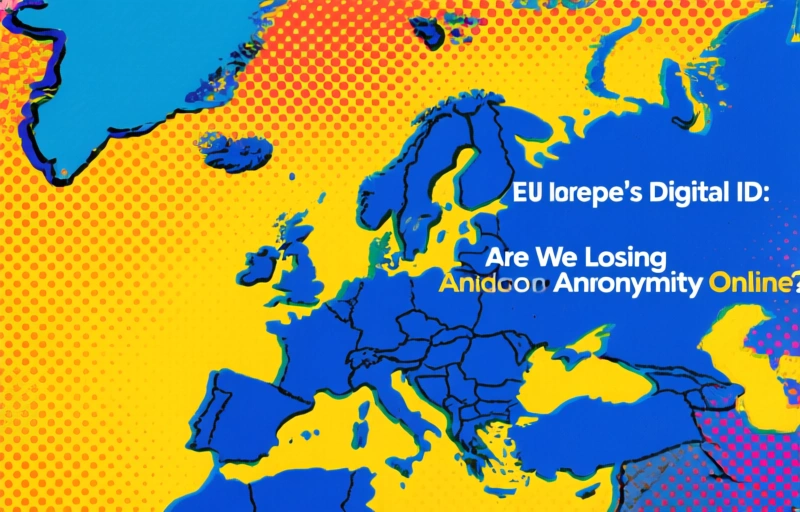
Europe's Digital ID: Are We Losing Anonymity Online?
Jan de Vries ·
Listen to this article~4 min
Europe's expanding digital identity infrastructure raises serious concerns about privacy, anonymity, and online participation. The EU Inc proposal could change how we access the internet forever.
Europe is rolling out a massive digital identity system called EU Inc. It sounds like a good idea on paper. But as it grows, people are starting to ask tough questions about privacy and whether we're giving up our right to be anonymous online.
### What Is EU Inc, Exactly?
EU Inc is a proposal to create a unified digital identity for every citizen in the European Union. Think of it like a digital passport that you'd use to access government services, vote, or even log into websites. The goal is to make things simpler and more secure. But here's the catch: it could also mean that every time you go online, you're tied to your real identity.
That might not sound scary at first. But consider this: right now, you can browse the internet without anyone knowing who you are. You can read news, join forums, or even protest without fear of being tracked. With a mandatory digital ID, that anonymity could vanish.
### The Privacy Problem
Privacy advocates are worried. They say that linking internet access to a verified identity is a slippery slope. Once the system is in place, governments could track everything you do online. That includes your searches, your messages, and even your location.
- **Surveillance risk**: Your digital footprint becomes a permanent record.
- **Censorship potential**: Authorities could block access if they don't like what you're saying.
- **Data breaches**: Hackers could steal millions of identities in one go.
It's not just about privacy. It's about freedom. If you can't participate online without showing your ID, you lose the ability to speak freely without consequences.
### Anonymity Is a Shield
Think of anonymity like a raincoat. You don't wear it because you're planning to do something bad. You wear it because sometimes you just don't want to get wet. Online, anonymity protects whistleblowers, activists, and ordinary people who need to share information without fear.
> "Anonymity is not about hiding. It's about being able to speak without being silenced."
If Europe moves toward identity-linked internet access, that shield disappears. The EU Inc proposal doesn't explicitly ban anonymous browsing, but critics say the infrastructure could be used to enforce it later.
### What This Means for US Professionals
You might think this is a European issue, but it matters for people in the United States too. Tech companies that operate globally will have to comply with these rules. That means your data could be affected if you use European services. Plus, if the system works in Europe, other countries might copy it.
- **Global impact**: US firms may adopt similar practices.
- **Business risks**: Companies could face new compliance costs.
- **Innovation slowdown**: Strict identity rules can stifle startups and free expression.
### The Bottom Line
Europe is sleepwalking into a system that could change the internet forever. The EU Inc proposal has good intentions, but it needs careful thought. We need to balance security with the right to privacy. Otherwise, we might wake up one day and realize we've traded our freedom for convenience.
What do you think? Is this a step forward or a step too far?