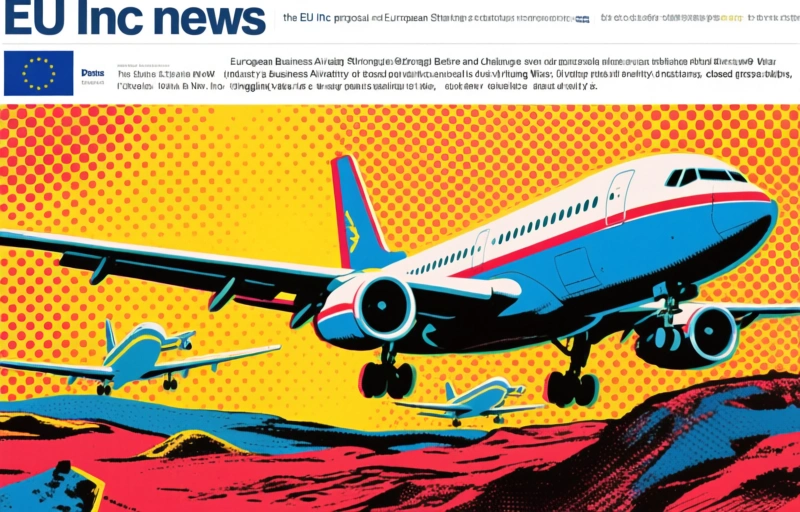
European Business Aviation Struggles Before and During War
Jan de Vries ·
Listen to this article~3 min
European business aviation faced challenges even before the war in Ukraine. Now, the industry is struggling to adapt to a new reality of sanctions, closed airspace, and uncertainty.
### The State of European Business Aviation
The European business aviation sector has been facing a tough reality. Even before the war in Ukraine broke out, the industry was already showing signs of weakness. It wasn't just a minor dip; it was a clear trend that had industry insiders worried. Think of it like a slow leak in a tire—not a blowout, but enough to make you question how long you can keep driving.
### Pre-War Challenges
Before the conflict, several factors were already weighing on the market. Economic uncertainty was a big one. Companies were tightening their belts, and that meant fewer private flights. The cost of fuel was creeping up, too. Then there was the lingering impact of the pandemic, which had reshaped how people traveled. Many businesses had gotten used to virtual meetings and were questioning the need for in-person travel.
- **Economic uncertainty** led to reduced spending on business aviation.
- **Rising fuel costs** made each flight more expensive.
- **Post-pandemic habits** kept many executives grounded.
It was a perfect storm of challenges that had already put the industry on shaky ground.

### The Impact of War
When the war in Ukraine started, it didn't just add to the problems—it amplified them. Suddenly, there were new sanctions, closed airspaces, and a general sense of instability. For a sector that relies on predictability and trust, this was devastating. The war didn't create the weakness; it just made everything worse.
> "The conflict turned a difficult market into a nearly impossible one for many operators."
Operators had to reroute flights, deal with higher insurance premiums, and manage client anxiety. It wasn't just about logistics anymore; it was about survival.
### What This Means for the Future
Looking ahead, the European business aviation market is at a crossroads. Recovery won't happen overnight. It'll take time for confidence to return. But there are glimmers of hope. Some operators are finding ways to adapt, like focusing on shorter routes or offering more flexible pricing. Others are investing in sustainable aviation fuel to appeal to eco-conscious clients.
- **Short-term adaptation** includes flexible pricing and route adjustments.
- **Long-term strategies** involve sustainability and technology upgrades.
But for now, the industry is holding its breath. The war has changed the landscape, and it's unclear what the new normal will look like. One thing is certain: the old playbook no longer applies.
### Final Thoughts
If you're following this space, keep an eye on how operators respond. The ones who innovate will likely survive. The ones who don't might not make it through. It's a harsh reality, but business aviation has always been about resilience. Let's see if the sector can find its wings again.