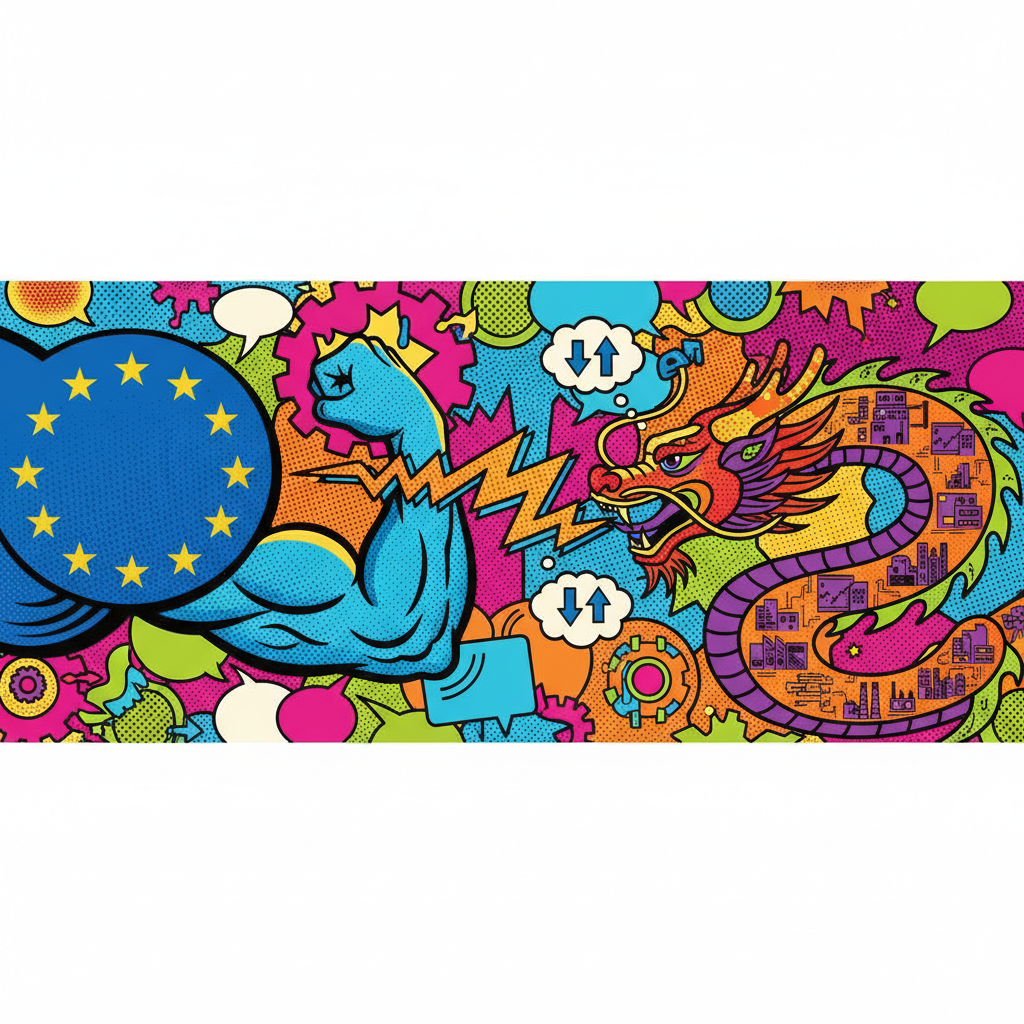
The EU warns China that growing trade imbalances and market barriers are straining economic ties. A call for rebalancing on Europe Day signals potential changes ahead.
The European Union has sent a clear message to China this Europe Day: the current economic relationship isn't working, and it's time for change. Trade imbalances and market barriers are putting serious strain on ties between both sides.
### What's Really Going On?
For years, the EU has watched its trade deficit with China grow. It's not just about numbers on a spreadsheet. European companies face real hurdles when trying to do business in China, from strict regulations to limited market access. Meanwhile, Chinese goods flow pretty freely into Europe.
That imbalance is starting to hurt. And the EU is saying enough is enough.
### The Core Issues
Let's break down what's actually causing the friction:
- **Trade deficit:** The EU imports way more from China than it exports there. That gap keeps widening.
- **Market barriers:** European businesses struggle to compete in China due to restrictions, licensing issues, and local favoritism.
- **Intellectual property concerns:** Protecting ideas and innovations remains a challenge for EU companies operating in China.
- **Subsidies and state aid:** Chinese state-owned enterprises often get advantages that private European firms don't have.
These aren't new problems, but they've reached a tipping point.
### A Call for Fairness
The EU isn't looking for a fight. It's asking for balance. The message is simple: if China wants to keep enjoying access to European markets, it needs to open its own markets more. That means less red tape, better protection for foreign businesses, and fair competition.
Think of it like a two-way street. For a long time, traffic has mostly flowed one way. Now the EU wants both lanes moving equally.
### What This Means for Startups
For European startups and companies looking to expand, this shift matters. If the EU gets what it's asking for, doing business in China could become easier, with fewer barriers and more opportunities. But if tensions escalate, trade restrictions could make things harder.
It's a delicate dance. The EU wants cooperation, not confrontation. But it's also drawing a line in the sand.
### The Bigger Picture
This isn't just about economics. It's about values. Europe Day celebrates unity, democracy, and open markets. The EU's warning to China reflects those principles. Fair trade, mutual respect, and balanced relationships are at the core.
China has responded by saying it wants stable ties. But words need to match actions. The EU is watching closely.
### What Happens Next?
Negotiations are ongoing. The EU has tools at its disposal, like tariffs or trade barriers, but it prefers dialogue. The hope is that China will take steps to rebalance the relationship before things get worse.
For now, the ball is in China's court. The EU has made its position clear. How China responds will shape the future of one of the world's most important economic partnerships.
### Key Takeaways
- Trade imbalances and market barriers are straining EU-China relations.
- The EU wants fairer access to Chinese markets for its companies.
- Startups and businesses should watch for policy changes that could affect expansion plans.
- A balanced relationship benefits both sides, but action is needed now.
This is a developing story. Stay tuned for updates as negotiations unfold.