EU-India Deal: Beyond Trade to Boost Manufacturing
William Williams ·
Listen to this article~4 min
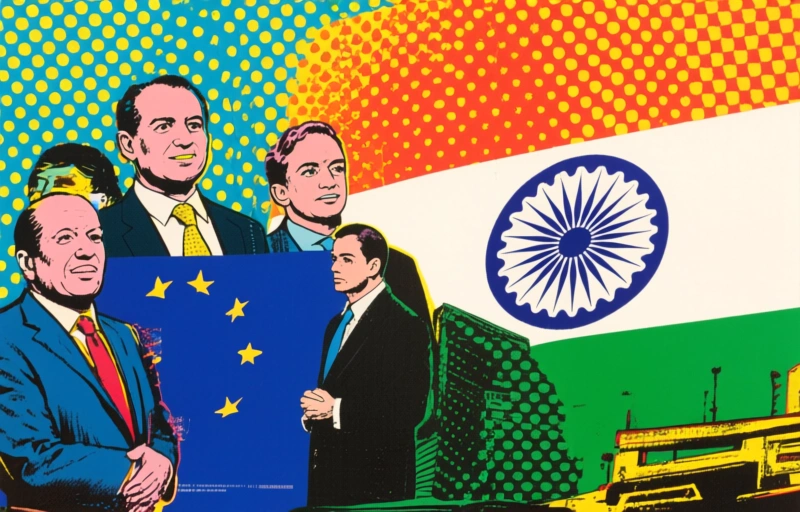
India's Piyush Goyal states the new EU-India deal transcends traditional trade, aiming to significantly boost the manufacturing sector through deeper collaboration and integration.
So, you've probably heard the headlines about the EU and India shaking hands on a new deal. But here's the thing—it's not just another trade agreement. According to India's Commerce and Industry Minister, Piyush Goyal, this partnership has the potential to fundamentally lift the manufacturing sector. That's a big deal, and it's worth unpacking what that actually means for businesses across Europe.
We often think of these agreements in terms of tariffs and quotas. Lower barriers, more goods flowing. But this one seems to be aiming higher. It's about creating a framework that doesn't just exchange finished products, but potentially reshapes how and where things are made.
### What's Different About This Agreement?
The key shift here is moving from a simple buyer-seller relationship to a collaborative partnership. It's the difference between buying a car and jointly designing a new engine. The deal is expected to cover areas like:
- **Sustainable Technology Sharing:** Facilitating the flow of green manufacturing tech.
- **Supply Chain Integration:** Making cross-border production networks more resilient and efficient.
- **Standards Alignment:** Working towards common technical and quality standards to smooth operations.
This isn't about overnight change. It's about laying the tracks for a more integrated industrial future. For European manufacturers, it could mean new opportunities for investment, joint ventures, and accessing India's vast talent pool and growing market—all within a more predictable and supportive framework.

### The Manufacturing Lift: A Realistic Outlook
Can a trade deal really 'lift' an entire sector? It's a fair question. The lift Goyal mentions likely comes from increased investment and technology transfer. When barriers to collaboration fall, companies can optimize their operations globally. A European firm might find it more viable to set up a specialized component factory in India, feeding into its wider supply chain.
It also creates a push for modernization. To meet shared standards and compete in a larger, integrated market, manufacturers on both sides will need to up their game. This drives innovation and efficiency. As one analyst recently noted, "The most successful trade pacts today are those that build ecosystems, not just markets."
Of course, challenges remain. Differences in regulatory environments and execution on the ground will be crucial. But the intent signals a move towards deeper economic interdependence.
### What This Means for European Business Pros
For you, as a business professional watching European markets, this is a signal to look beyond traditional import/export figures. Start considering:
- **Strategic Partnerships:** Is there a potential Indian partner for R&D or production?
- **Supply Chain Strategy:** Could this agreement open more cost-effective or resilient sourcing options?
- **Market Access:** Does it change the calculus for selling advanced industrial goods or services in India?
The narrative is shifting from transactional trade to transformational partnership. It won't happen automatically, but the framework is being built. For forward-thinking companies, that means the time to analyze and engage is now, not when the final details are locked in. Keep an eye on the implementation chapters—that's where the real impact on manufacturing will be written.