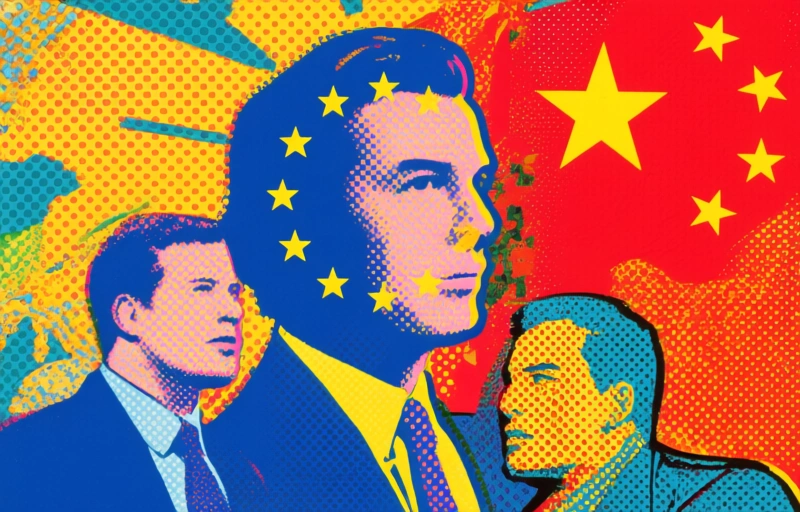
European companies are deepening ties with China amid trade tensions. Learn how businesses balance geopolitical risks with market opportunities in this insightful analysis.
European companies are deepening their ties with China, even as trade disputes escalate over a surge in Chinese exports. This trend highlights the complex relationship between economic opportunity and geopolitical risk.
### Why EU businesses are looking east
For many European firms, China remains an essential market. Despite growing tensions over export surges and tariffs, the potential for growth is too big to ignore. Chinese consumers still crave European luxury goods, machinery, and high-tech products. At the same time, China's manufacturing capabilities offer cost advantages that are hard to match elsewhere.
- China is the EU's second-largest trading partner
- Many European companies have long-standing supply chains in China
- The Chinese middle class continues to expand, driving demand

### The export surge that's changing everything
Recently, China has ramped up its exports in sectors like electric vehicles, solar panels, and steel. This flood of goods has sparked concerns in Europe about unfair competition and market disruption. The EU has responded with investigations and potential tariffs, but businesses on the ground are taking a more pragmatic approach.
> "We can't afford to pull out of China just because of political noise. The market is too important." — A European supply chain executive
### Balancing risk and reward
Operating in China isn't without its challenges. Companies face regulatory hurdles, intellectual property risks, and the constant threat of geopolitical flare-ups. Yet, for many, the rewards outweigh the risks. They're investing in local partnerships, diversifying supply chains, and hedging their bets.
- Some firms are moving production to Southeast Asia
- Others are doubling down on Chinese R&D centers
- A few are exploring joint ventures to navigate regulations
### What this means for US professionals
If you work in e-commerce or startup incorporation, this trend offers lessons. The EU-China dynamic shows how businesses can adapt to tension without losing sight of growth. For US companies eyeing global expansion, the key is to stay flexible, monitor policy shifts, and build resilient supply chains.
In the end, the story isn't just about trade wars. It's about how smart companies find opportunities even when the headlines are scary. Whether you're in Europe, the US, or anywhere else, the ability to adapt will always be your strongest asset.