EU Energy & Lisbon Mayor Unveil Urban Sustainability Plans
William Williams ·
Listen to this article~4 min
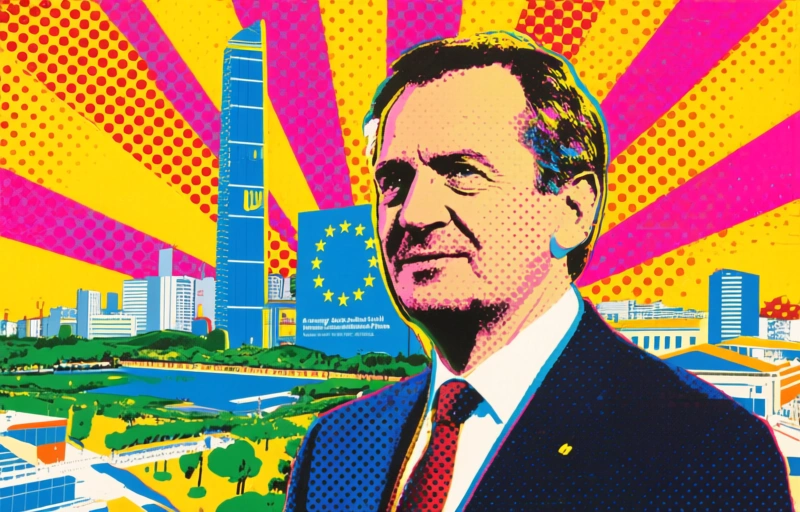
The European Commissioner for Energy and Housing and Lisbon's Mayor held a pivotal joint briefing, signaling major shifts in urban sustainability policy and creating clear opportunities for business investment in Europe's green future.
If you're following European business and urban development, you probably caught wind of the recent high-level meeting in Lisbon. It wasn't just another press conference. The European Commissioner for Energy and Housing sat down with the Mayor of Lisbon for a joint briefing, and the signals they sent are crucial for anyone in the corporate and municipal sectors.
We're talking about a direct line between EU-level policy and local implementation. When these two figures share a stage, it means the strategies discussed aren't just theoretical. They're about to hit the ground, and that affects investment, regulation, and the future shape of our cities.
### What This Partnership Means for Business
For business professionals, this kind of alignment is a major indicator. It tells us where public funding and regulatory support will flow in the coming years. The focus is squarely on sustainable urban development—think energy-efficient housing, integrated public transport, and green infrastructure. It's the blueprint for the next decade of European city planning.
Companies in construction, renewable energy, smart tech, and finance should be paying close attention. The policies shaped here will create new markets and redefine existing ones. It's about building cities that are not only livable but also economically resilient and energy-independent.

### Key Themes from the Announcement
The dialogue highlighted several interconnected priorities. First, there's a huge push for decarbonizing the housing stock. Old buildings are energy sieves, and retrofitting them is now a top-tier economic and environmental priority. Second, they emphasized making housing more affordable and accessible, which is a social stability issue as much as an economic one.
Finally, there was strong talk about integrated planning. You can't solve energy, transport, and housing in silos anymore. The future is holistic. As one official noted, *"The city of tomorrow is built on the connections between where we live, how we move, and the energy we use."* That's a powerful guiding principle.
For professionals, here are the immediate takeaways:
- **Policy Certainty:** Joint announcements reduce regulatory risk for long-term projects.
- **Funding Streams:** Aligned priorities mean coordinated EU and municipal funding.
- **Innovation Demand:** Solutions for efficiency and integration will be in high demand.
- **Public-Private Models:** Expect more collaborative projects between cities and corporations.

### The Bigger Picture for European Cities
Lisbon is often seen as a testbed. What happens here doesn't stay here. Successful initiatives tend to get scaled across the Mediterranean and then into broader European networks. So, this press conference was about more than one city. It was about proving a model.
The underlying message is that Europe's economic future is urban and sustainable. The old growth models are exhausted. The new ones are being built, literally, from the ground up in partnerships like this one. It's a complex puzzle, but the pieces—policy, investment, technology—are finally starting to fit together in a coherent picture.
For analysts and business leaders, the task now is to read the map these officials are drawing. The opportunities are substantial, but they require a shift in thinking. It's no longer just about building things; it's about building systems that work together for people, the planet, and profit. That's the real conversation that started in Lisbon, and it's one we all need to be part of.