EU Capital Markets Union 2026: Centralized Supervision Push
Jan de Vries ·
Listen to this article~5 min

The EU's push for centralized capital markets supervision by 2026 changes everything for business formation. Six major economies want unified rules—here's what it means for your European expansion plans and timing.
Hey there. Let's talk about something that's about to reshape the European business landscape. It's not just another policy shift—it's a fundamental change in how capital moves across the continent. And if you're thinking about forming a company in the EU, you need to understand what's coming.
### What's Actually Happening Here?
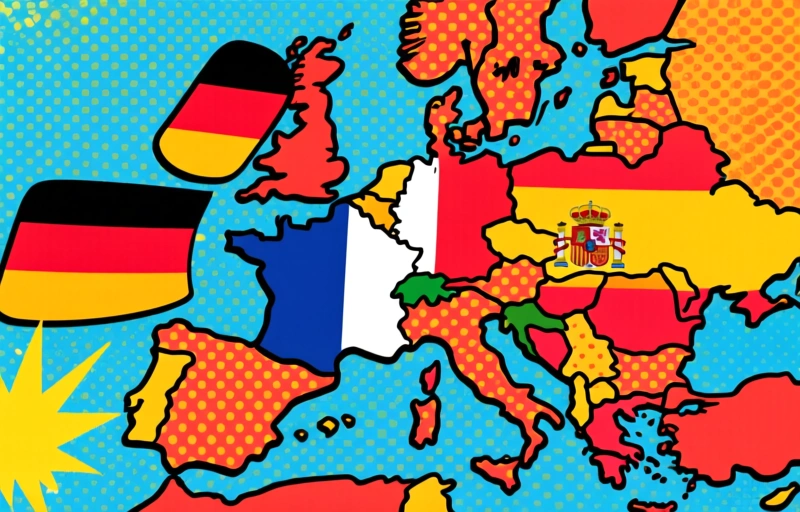
Six of Europe's biggest economies—Germany, France, Italy, Spain, the Netherlands, and Poland—are pushing hard for centralized supervision of the EU's capital markets by 2026. Think about that for a second. Right now, each country has its own rules, its own regulators, its own way of doing things. It's like trying to play a game where every state has different rules.
What they're proposing would change all that. A single supervisory framework. One set of rules. One oversight body. The goal? To create something that actually functions like a unified market, not just a collection of separate ones.
### Why This Matters for Your Business
Here's the thing—regulatory changes aren't just paperwork. They're opportunities. Or obstacles. Depending on how you approach them. When supervision becomes centralized, several things happen:
- Compliance gets simpler (one framework instead of twenty-seven)
- Cross-border investment becomes smoother
- Access to capital improves for businesses across the EU
- The playing field levels out
But here's what I've learned working with international businesses: simplicity on paper doesn't always mean simplicity in practice. The transition period? That's where the real challenges—and opportunities—will be.

### The Company Formation Angle
Now, let's connect this to what you're probably thinking about: forming a company in the EU. This push toward centralized supervision changes the calculus. Suddenly, choosing where to incorporate isn't just about tax rates or local regulations. It's about positioning yourself within a system that's becoming more integrated by the day.
> "The best time to plant a tree was twenty years ago. The second-best time is now." That old saying applies perfectly here. Getting established before these changes fully take effect gives you first-mover advantage.
Consider this: if you wait until 2026 when everything's settled, you'll be competing with everyone else who had the same idea. But if you move now, during the transition, you can:
- Navigate the existing systems while they're still familiar
- Build relationships with local authorities before they're absorbed into the centralized structure
- Establish your business footprint before the rush
- Adapt gradually as the changes roll out
### Practical Steps Forward
So what should you actually do? First, don't panic. These changes are evolutionary, not revolutionary. They'll roll out over time. But you should start paying attention now.
Here are three immediate actions:
1. **Review your target markets**—Which countries are pushing hardest for these changes? Their local environments might shift first.
2. **Consult with formation services**—Find providers who understand both current regulations and the coming changes.
3. **Consider timing**—Is it better to incorporate now under current rules, or wait for the new framework?
### The Bigger Picture
At the end of the day, this isn't just about regulations. It's about vision. The EU is trying to create a capital market that can compete globally with the likes of Wall Street. They want to make it easier for European businesses to grow, and for international businesses to invest in Europe.
For American professionals looking at the EU market, this represents a significant opportunity. The barriers are coming down. The red tape is getting trimmed. The market is becoming more accessible.
But—and this is important—it also means the competition will increase. As the market becomes more attractive, more businesses will enter. Your advantage lies in understanding these changes before everyone else does.
### Making Your Move
Look, I get it. Regulatory changes can feel overwhelming. Especially when they're happening in another continent with different languages and legal traditions. But here's the reality: the businesses that succeed in the next decade will be those that see these changes not as obstacles, but as pathways.
The EU Capital Markets Union by 2026 isn't just a policy goal. It's a signal. A signal that Europe is serious about creating a business environment that works. Your job is to decide how you're going to respond to that signal.
Start conversations with formation services. Ask them how they're preparing for these changes. Look at case studies of businesses that have successfully navigated similar transitions. And most importantly, keep your eyes on the horizon—not just the road immediately in front of you.
The landscape is changing. The question isn't whether you should pay attention. The question is what you're going to do with the information now that you have it.