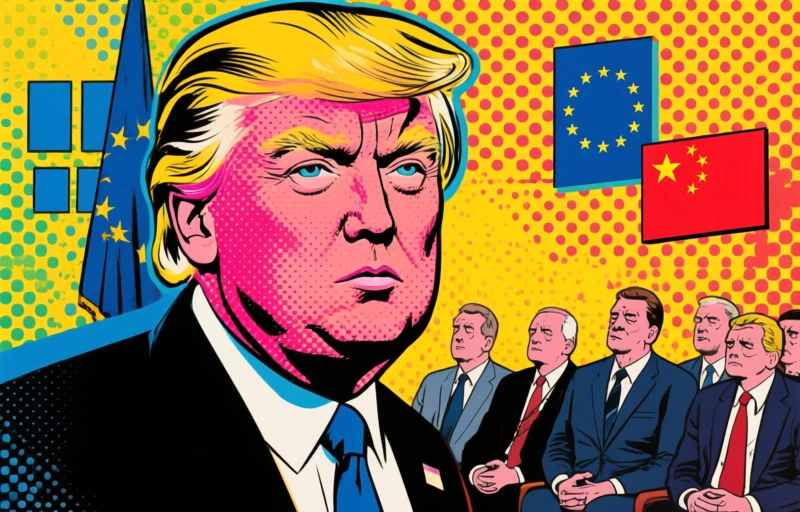
European business leaders watch Trump's China visit with concern, as it could reshape trade dynamics and impact EU companies. Learn what's at stake for startups and multinationals alike.
European business leaders are watching Donald Trump's visit to China with a mix of curiosity and concern. This trip could reshape trade dynamics between the world's two largest economies, and Europe is caught in the middle.
### What's at Stake for European Companies?
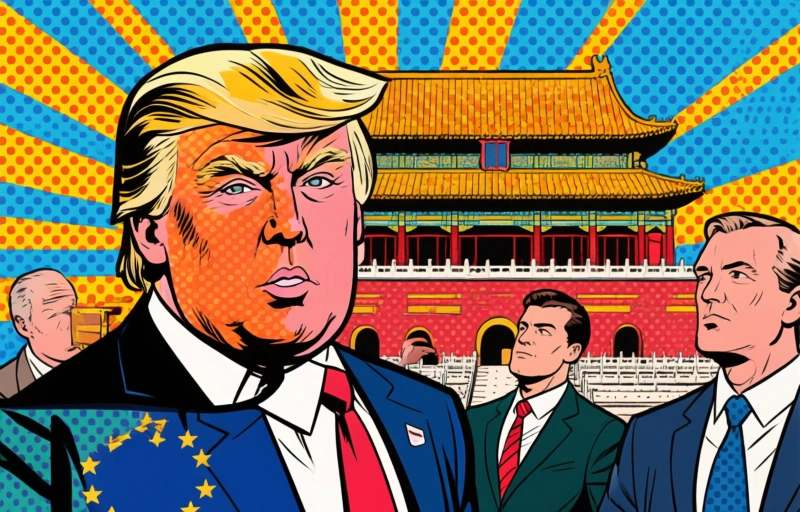
When Trump lands in Beijing, European executives know that any deal or tariff announcement could ripple across the Atlantic. The EU relies on stable US-China relations to keep supply chains predictable. A sudden shift in trade policy might force European firms to rethink their export strategies or face new costs.
Here's what European business leaders are focused on:
- **Tariff risks**: If the US imposes new tariffs on Chinese goods, Chinese manufacturers may flood European markets with discounted products.
- **Supply chain shifts**: Companies might need to move production out of China to avoid US penalties, impacting European assembly lines.
- **Currency fluctuations**: Trade tensions often weaken the yuan, making Chinese exports cheaper and undercutting European competitors.
### A European Perspective on the Visit
One senior executive from a German automotive supplier told me, "We're not in the room, but we feel every tremor." That sums up the sentiment. European businesses have invested heavily in China over the past two decades. Now they worry that a US-China trade war could erase those gains.
For example, a French aerospace company with factories in both the US and China could face double jeopardy: higher tariffs on components shipped either way. The uncertainty alone is damaging, as companies delay investment decisions until the political landscape clears.
### Why This Matters for EU Startups
You might wonder what this has to do with small European startups. The answer is everything. Many young tech companies rely on affordable Chinese manufacturing or US venture capital. If trade barriers go up, their cost structures explode. A hardware startup in Berlin might see its production costs jump by 20 percent overnight if tariffs on Chinese electronics rise.
European founders are now asking: Should we incorporate in the US to avoid trade friction? Or should we stay in Europe and hope the EU negotiates favorable terms? The EU Inc proposal, which aims to simplify cross-border business incorporation within Europe, could offer a homegrown solution. If passed, it would let startups register once and operate across all 27 member states, reducing their reliance on either the US or China.
### What the Numbers Show
According to recent trade data, the EU exported over $200 billion worth of goods to China in 2023, while importing nearly $500 billion. That imbalance makes Europe vulnerable. Any disruption in US-China relations could widen the gap or trigger retaliatory measures.
A survey by the European Chamber of Commerce found that 62 percent of European companies in China consider the business environment less favorable than a year ago. Trump's visit could either calm those nerves or deepen the anxiety. European leaders are hoping for a measured approach that avoids a full-blown trade war.
### The Bottom Line
For European business leaders, Trump's China visit is not just a photo op. It's a high-stakes moment that could redefine global trade rules. Whether you're running a multinational conglomerate or a five-person startup in Amsterdam, the outcome will affect your bottom line.
The smartest move right now is to stay flexible. Diversify supply chains. Keep an eye on the EU Inc proposal. And maybe avoid putting all your eggs in one trade basket.
> "Trade is not a zero-sum game, but it feels like one when you're not at the table." -- Anonymous European trade official